
Why visit
Why Visit Zion with LABUSA Travel
A Canyon You Explore by Shuttle
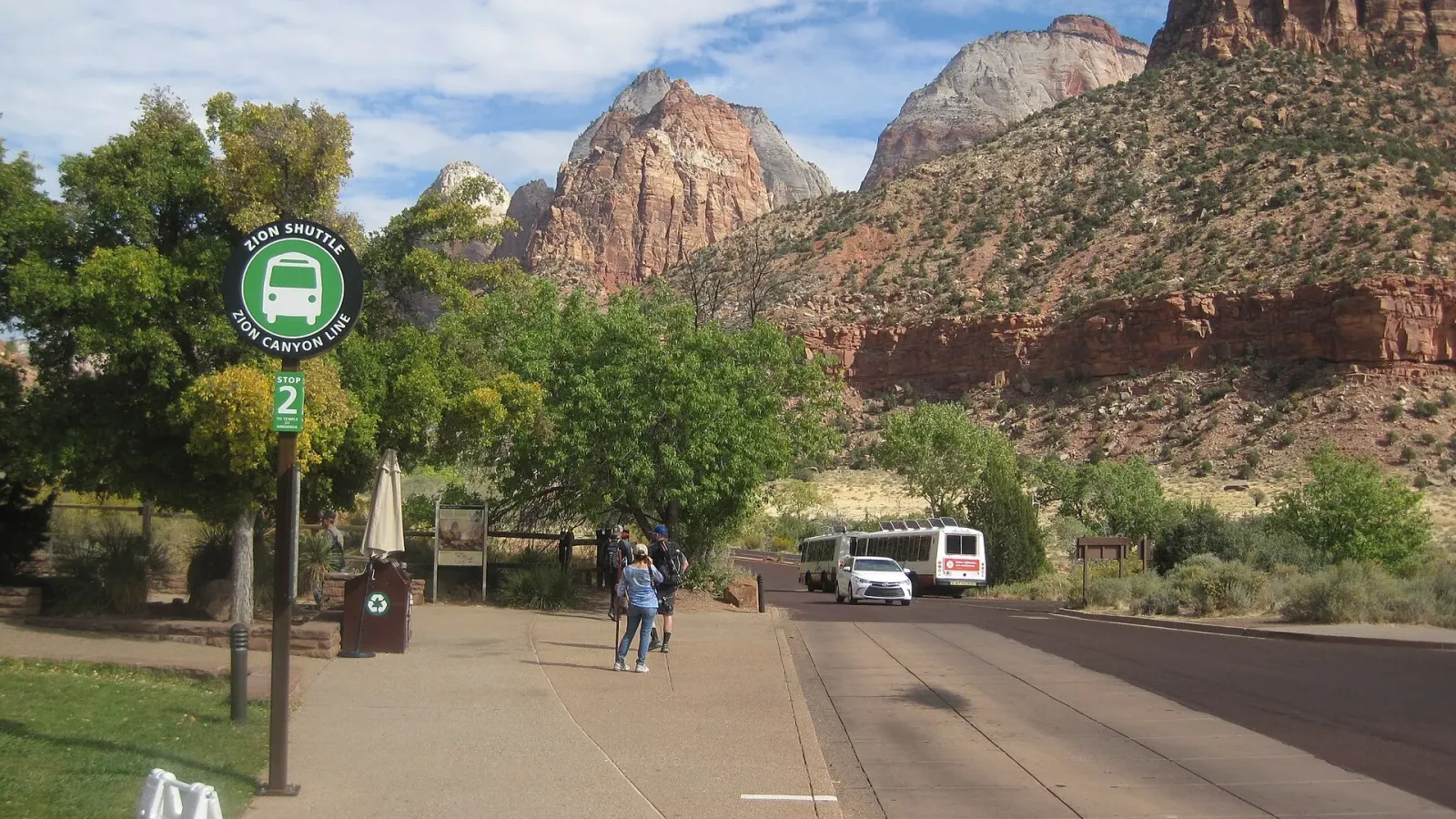
For most of the year, private cars stay out of Zion Canyon Scenic Drive and free shuttles carry visitors between nine stops. Groups can ride to the end of the canyon and walk back between stops at their own pace. No ticket or reservation is needed to ride.
River Walks and Big Hikes in One Place
The same canyon holds a paved riverside path and some of the park's most demanding hikes. Families and seniors can walk the Pa'rus Trail or Riverside Walk, while experienced hikers plan for The Narrows or a permitted climb to Angels Landing. One trip can suit very different energy levels.
Thousands of Years of Human History
People have lived in this region for thousands of years. NPS describes Virgin Branch Puebloan and Fremont groups settling the area, and Southern Paiute people, who called the place Mukuntuweap, meaning straight canyon. The Zion Human History Museum, about a mile from the South Entrance, offers exhibits and park films, and it closes in winter.
Top places to visit
Top Places to Visit
in Zion
-
Zion Canyon Scenic Drive
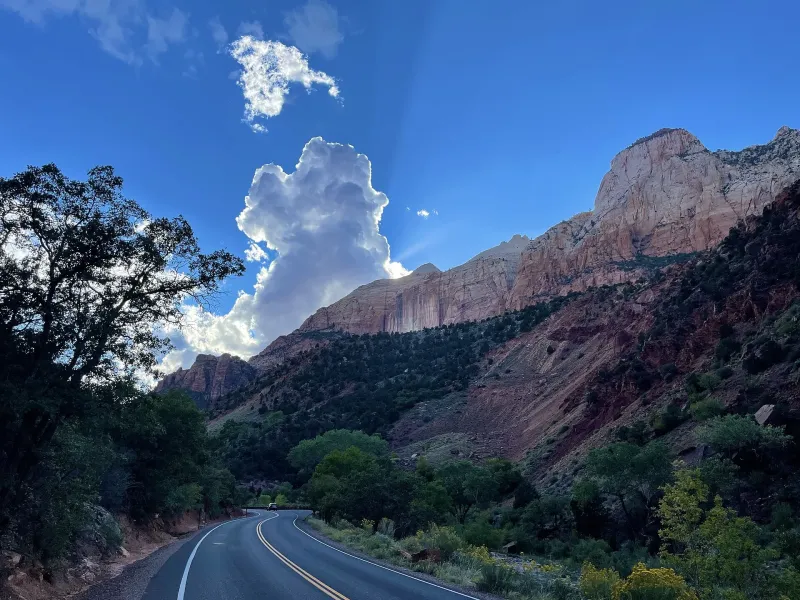
The scenic drive follows the floor of Zion Canyon from Canyon Junction to the Temple of Sinawava. During the shuttle season it is closed to private vehicles, and the Zion Canyon Line takes about 45 minutes each way with stops at trailheads and Zion Lodge. Riders can get off at any open stop and board the next shuttle when ready.
-
Riverside Walk and The Narrows
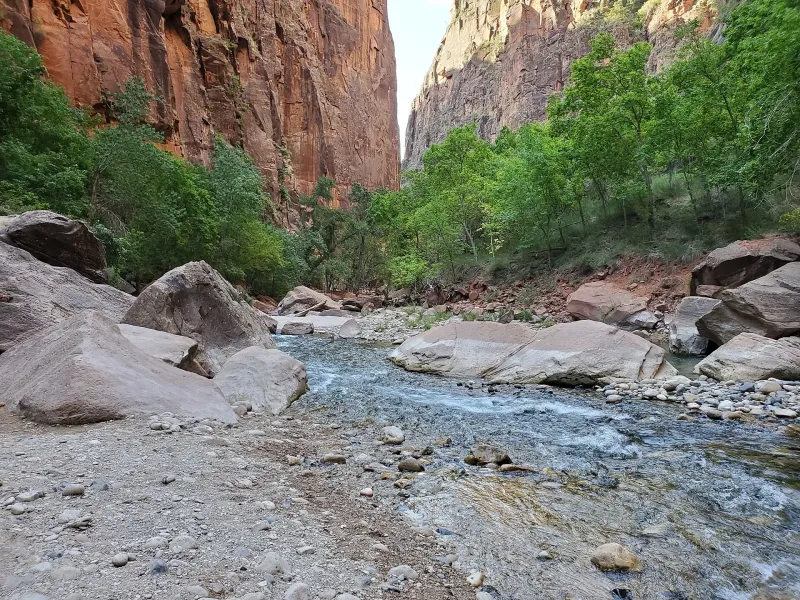
The paved Riverside Walk follows the Virgin River for 1 mile from the Temple of Sinawava to the start of The Narrows. Beyond that point, the hike is in the river itself, where canyon walls rise about 1,000 feet and the river can be only 20 to 30 feet wide. The Narrows closes when the river runs high or a flash flood warning is issued, so check conditions on the day.
-
Angels Landing and Scout Lookout
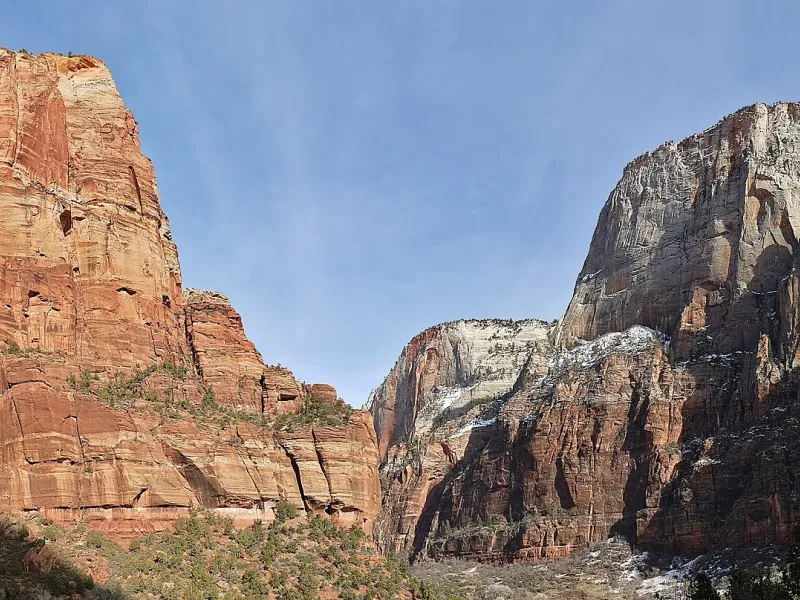
Angels Landing is one of Zion's best-known hikes and is strenuous, finishing with a chains section beyond Scout Lookout. In recent seasons everyone hiking the chains section from Scout Lookout has needed a permit from a lottery on recreation.gov. Hikers can reach Scout Lookout without a permit, which makes it a natural turnaround point for anyone without one.
-
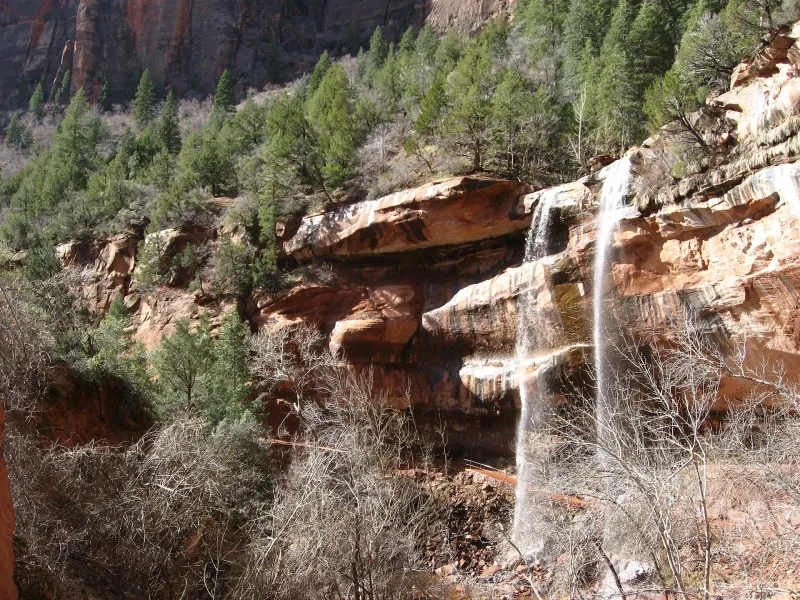
Emerald Pools
The Emerald Pools trails begin near Zion Lodge. The Lower Emerald Pool Trail is about 0.6 mile one way from the Zion Lodge shuttle stop and is mostly concrete, with some steep sections. Hundreds of people hike to Emerald Pools on busy days, so an early start helps.
-
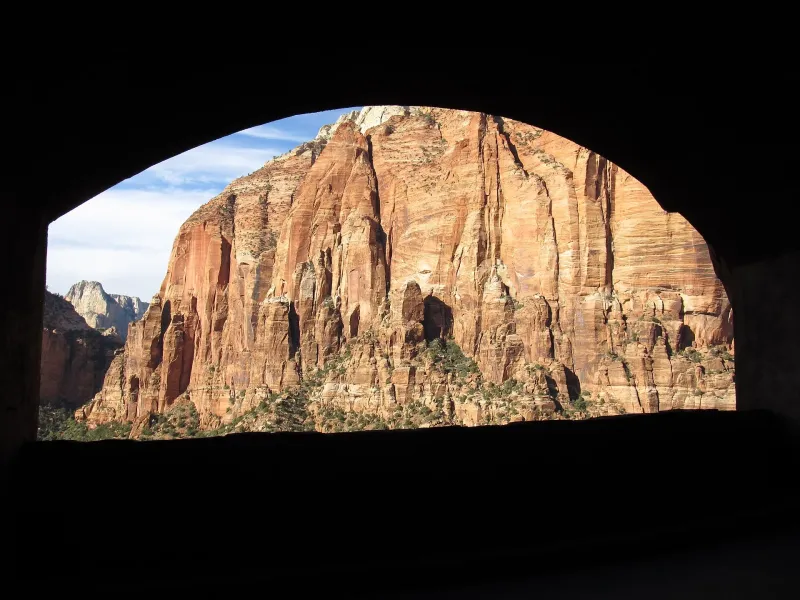
Zion-Mount Carmel Highway and Tunnel
Completed in 1930, this historic highway climbs east from Canyon Junction through switchbacks and the Zion-Mount Carmel Tunnel. It is listed on the National Register of Historic Places and is the direct route toward Bryce Canyon and the North Rim of the Grand Canyon. Strict size limits apply to large vehicles, so motorcoaches and big RVs may need another route.
-
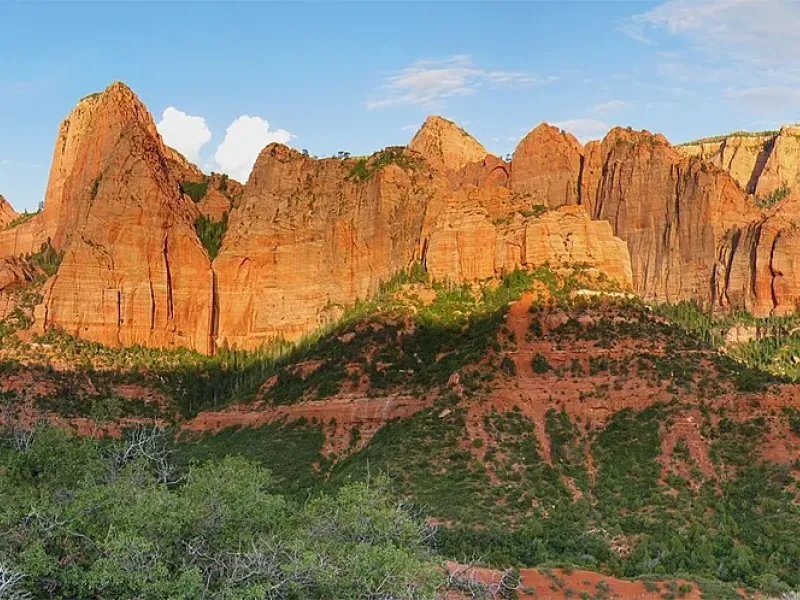
Kolob Canyons
Kolob Canyons sits in the park's northwest corner at Exit 40 on Interstate 15, about 40 miles from Zion Canyon. A five-mile scenic drive leads to viewpoints over narrow box canyons and cliff walls about 2,000 feet high. It is a quieter alternative to the main canyon, though the road can close in winter for snow and ice.
Before you go
Zion
Travel Guide & Tips
-
Best Time to Visit Zion
Zion is open all year, and it is busy from early February through late November. Spring and fall avoid the hottest weather, since summer daytime temperatures regularly exceed 100°F, while December and January tend to be quieter outside the holidays, with winter daytime temperatures typically between 30°F and 60°F.
Mid to late summer brings monsoon rains that raise the risk of flash floods, especially in slot canyons such as The Narrows. Most people hike The Narrows in summer and early fall, when the water is lower and warmer, but spring snowmelt can close it. Shuttle seasons, river closures and permit windows change each year, so check the NPS conditions page before you lock in dates.
Suggested trip length: 2 to 3 days.
-
Getting There & Getting Around
- Nearest airports: St. George Regional Airport is about 49 miles from the park and Cedar City Regional Airport about 60 miles. The nearest major international airports are Harry Reid International in Las Vegas, about 170 miles away, and Salt Lake City International, about 300 miles away.
- The South Entrance and a pedestrian entrance sit at the north end of Springdale, beside Zion Canyon. The East Entrance is 13 miles west of Mount Carmel Junction on State Route 9, and Kolob Canyons has its own entrance at Exit 40 on Interstate 15.
- Free shuttles have run in recent years from spring through fall: the Springdale Line serves stops in town, and the Zion Canyon Line serves the scenic drive. Parking inside the park often fills early, so many visitors park in Springdale and ride in.
- Zion Lodge is the only lodging inside the park, and during the shuttle season only guests with a reservation can drive to it. Springdale and other nearby towns offer more hotels, and park campgrounds require reservations and fill almost every night from mid-March through late November.
- Groups traveling by coach or large RV should check the NPS large vehicle limits. Vehicles over the limits cannot drive between Canyon Junction and the East Entrance, though a large vehicle lot by the Zion Canyon Visitor Center can be reached from the South Entrance.
-
Zion Travel Tips
- No reservation is needed to enter the park or ride the shuttle in recent seasons, but Angels Landing has required a permit through seasonal and day-before lotteries. One application can cover up to six people, so a group leader can apply for a small party.
- Everyone entering the park needs a park pass, even when just passing through on State Route 9. The park charges an entrance fee, the America the Beautiful pass covers entrance fees at national parks, and groups, commercial tours and visitors who are not U.S. residents may pay differently. See the NPS fees page for details.
- Summer heat regularly passes 100°F, and day and night temperatures can differ by more than 30°F. Carry water, start early and bring layers.
- Flash floods can happen at any time in narrow canyons. Toxic cyanobacteria have been found in park waters, so do not drink river water or submerge your head in it.
- Stay at least 100 feet from deer, bighorn sheep, California condors and mountain lions, and at least 50 feet from squirrels, birds and reptiles. Feeding any wildlife is illegal in national parks.
- Mobile phone service is unreliable in parts of the canyon, including the Angels Landing permit checkpoint. Print or download permits and maps before you set out.
- Zion uses Mountain Time and observes daylight saving time, while most of Arizona does not. When pairing Zion with the Grand Canyon in summer, expect a one-hour clock change at the state line.
Signature experiences
Signature Zion
Experiences
-
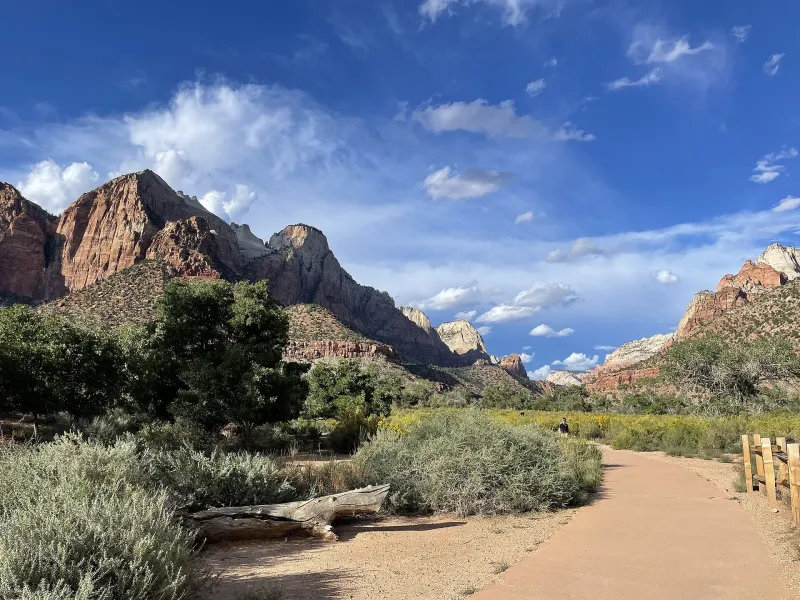
Accessible and Senior-Friendly Sightseeing
All Zion Canyon shuttles are wheelchair accessible, and the visitor center, restrooms, picnic areas and Zion Lodge are accessible. The Pa'rus Trail is the park's most accessible path, paved and wide with little elevation change along the Virgin River from the Zion Canyon Visitor Center. NPS also lists Riverside Walk as wheelchair-friendly with assistance, and an all-terrain wheelchair is available to borrow at the visitor center. Visitors who cannot ride the shuttle for medical reasons can ask at the visitor center about a permit to drive up the canyon.
-
Wildlife and Safety
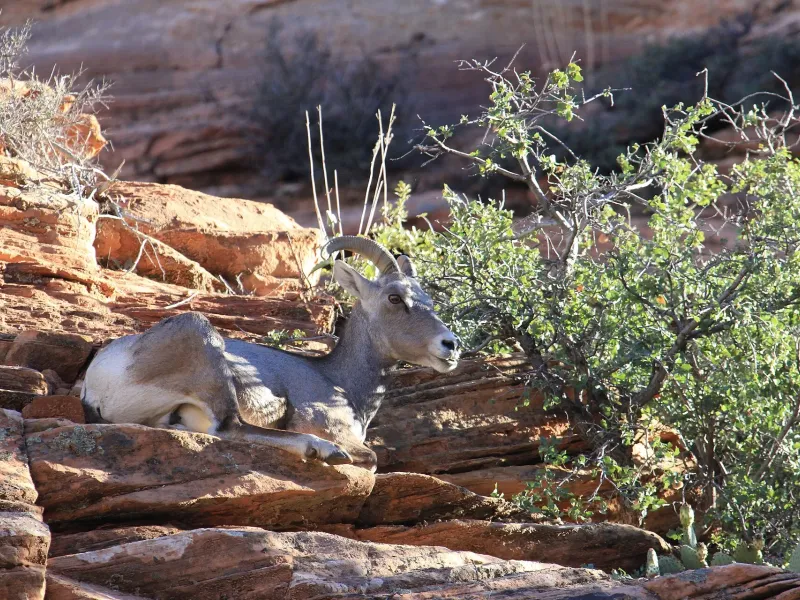
Mule deer, bighorn sheep and California condors live in and around Zion, and small rodents such as squirrels can bite people who try to feed them. Keep the NPS distances, never feed animals and use a zoom lens for photos. Heat and flash floods are the bigger hazards, so check the weather and flash flood forecast before any canyon hike. Our advisors plan active days for the cooler morning hours and build in shaded breaks.
-
Suggested Itinerary: Three Days in Zion
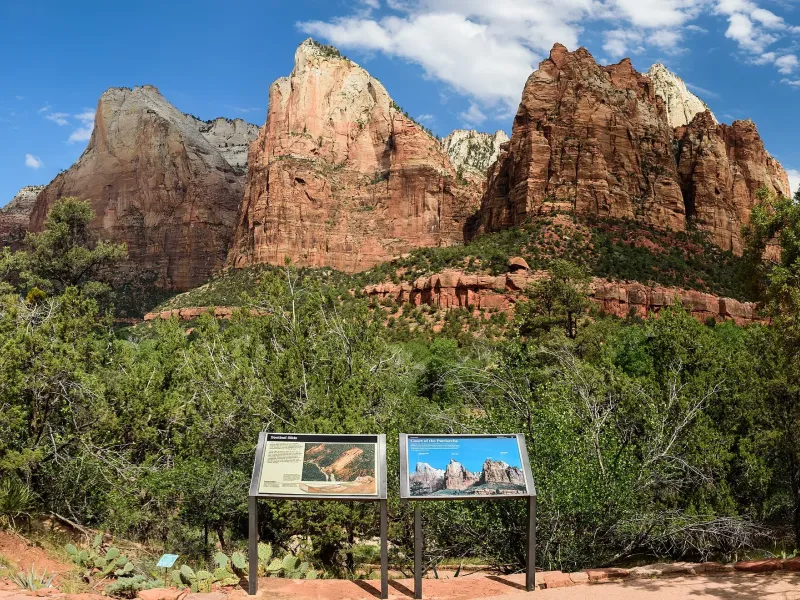
Day one could start at the Zion Canyon Visitor Center with a walk on the Pa'rus Trail and a visit to the Zion Human History Museum. Day two could ride the shuttle to the Temple of Sinawava for Riverside Walk, then stop at Zion Lodge and the Lower Emerald Pool Trail on the way back. Day three could cover Kolob Canyons, or the Zion-Mount Carmel Highway toward Bryce Canyon for travelers continuing the trip. This is a suggested plan our advisors adapt to your group, not a scheduled departure.
LABUSA Travel advisors plan Zion trips for individuals, families, seniors and organized groups. We fit days to the shuttle schedule, handle lodging in Springdale and nearby towns, and build Southwest routes that pair Zion with Bryce Canyon or the Grand Canyon. Keep planning with our U.S. National Parks collection, accessible travel in the United States and the United States for senior travelers. Prefer a guided trip? Utah's Mighty Five is our 11-day tour through Zion and four more of Utah's national parks.
Shuttle schedules, permit lotteries, river closures and trail closures at Zion change through the year. Before you travel, check the official NPS site for current conditions, alerts and fees. Visit the official Zion National Park website.
Common questions
Zion Travel FAQs
- Do we need a reservation to visit Zion National Park?
- In recent seasons, no reservation, permit or ticket has been needed to enter the park or ride the shuttle. You do need a park pass. Angels Landing and overnight wilderness trips require permits, so check the NPS permits page before you go.
- How does the Angels Landing permit work?
- In recent seasons NPS has run a seasonal lottery months ahead and a day-before lottery, both through recreation.gov. The permit covers the chains section beyond Scout Lookout, and no permit is needed to hike to Scout Lookout. Print or download the permit, because phone service at the checkpoint is unreliable.
- Can we drive our own car through Zion Canyon?
- During the shuttle season, which has run daily from March through November in most years, Zion Canyon Scenic Drive is closed to private vehicles. You can still drive the Zion-Mount Carmel Highway and the Kolob Canyons road. Outside the shuttle season the scenic drive opens to cars but can close for the day when parking fills.
- Is Zion a good fit for seniors or travelers with limited mobility?
- Yes, with planning. The accessible shuttles, the paved Pa'rus Trail and Riverside Walk let travelers see the canyon without a strenuous hike. Summer heat is the main concern, so spring and fall visits and early starts work best.
- Can we combine Zion with Bryce Canyon or the Grand Canyon?
- Yes. The Zion-Mount Carmel Highway is the direct route toward Bryce Canyon and the Grand Canyon's North Rim, though large vehicles must take longer alternate routes. Our advisors can build a Southwest itinerary that links these parks at a comfortable pace.