
Why visit
Why Visit Yellowstone with LABUSA Travel
Most of the World's Geysers in One Park
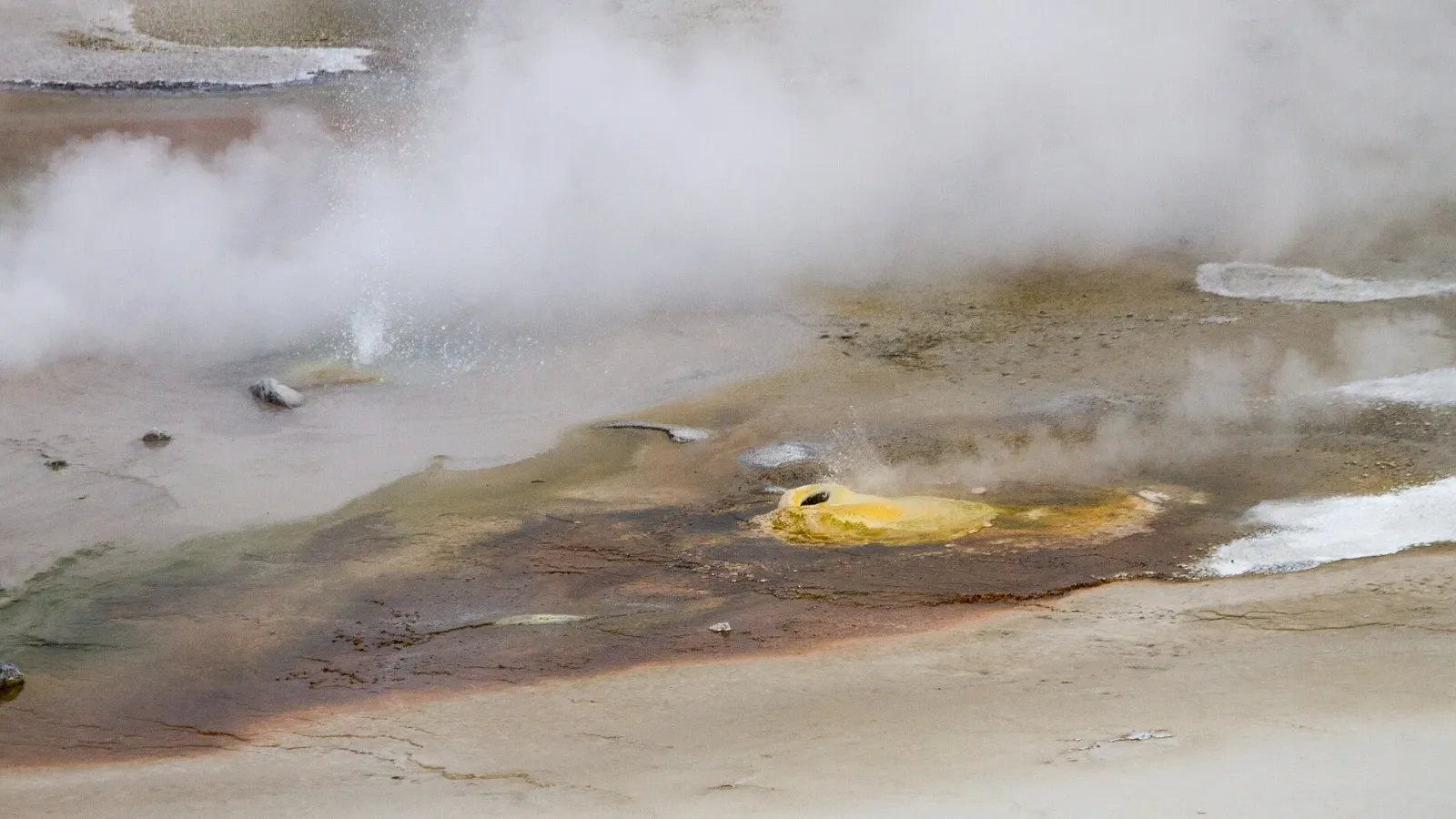
The National Park Service estimates well over 10,000 hydrothermal features in Yellowstone, and more than half of the world's active geysers are here. Boardwalks lead through the basins, so travelers can see hot springs, mudpots and erupting geysers at close range on foot. No two visits look quite the same, because the features change from season to season.
Wildlife You Can Watch From the Road
Lamar Valley and Hayden Valley are among the best places in the park to see bison, elk, wolves and bears. NPS notes that the safest and often best view is from inside a vehicle, which makes wildlife watching practical for seniors and young children. Binoculars and a spotting scope matter more than walking.
Thousands of Years of Human History
People have spent time in the Yellowstone region for more than 11,000 years, and 27 tribes have ancestral and modern connections to the park. It was established as the world's first national park in 1872. The Yellowstone Tribal Heritage Center at Old Faithful and historic sites such as the Old Faithful Inn and Fort Yellowstone add depth to a nature trip.
Top places to visit
Top Places to Visit
in Yellowstone
-
Old Faithful and the Upper Geyser Basin
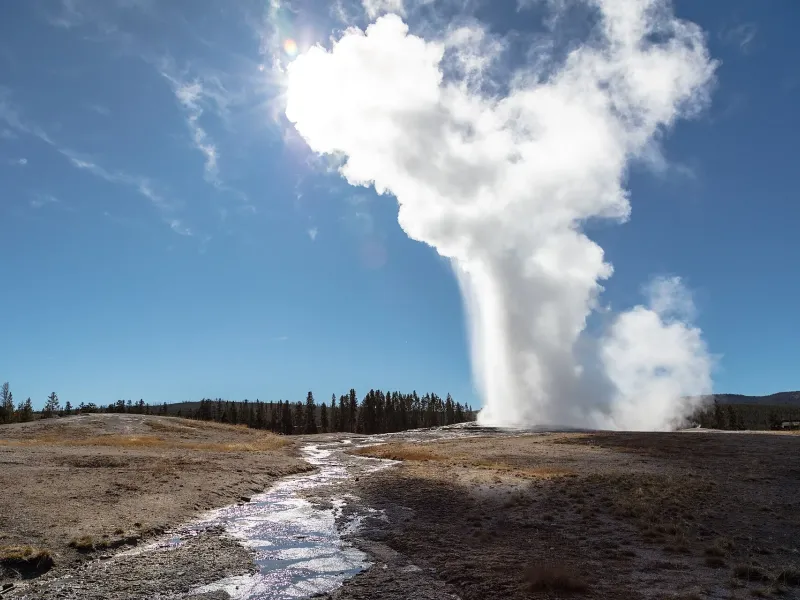
Old Faithful is one of six geysers that park rangers currently predict, and the next eruption window is posted at the Old Faithful Visitor Education Center, at the lodges and in the NPS App. Accessible walkways lead from every parking area to the viewing area, and boardwalks continue through the Upper Geyser Basin, home to the largest concentration of geysers in the park. Predictions are not posted while the visitor center is closed, typically early November to mid-December and mid-March to mid-April.
-
Grand Prismatic Spring
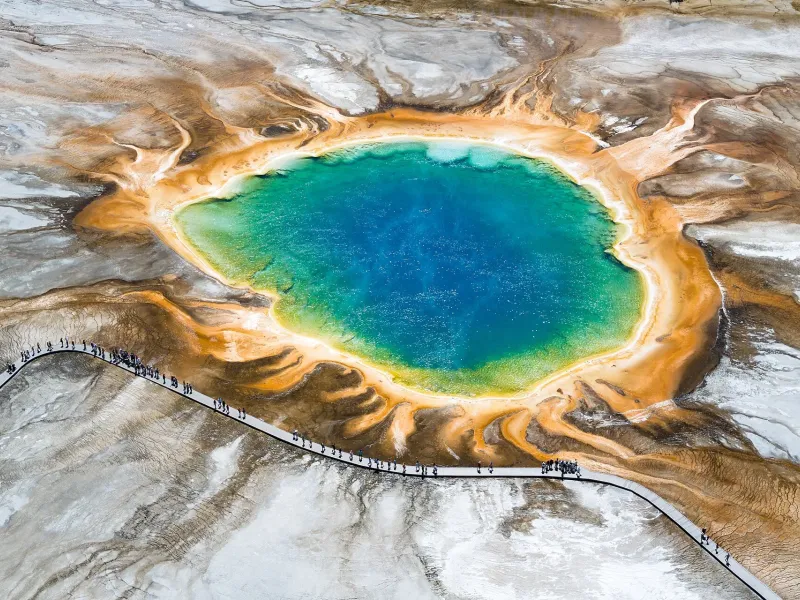
Yellowstone's largest hot spring, about 370 feet across and more than 121 feet deep, sits in the Midway Geyser Basin about five and a half miles north of the Old Faithful area. A boardwalk with accessible parking loops past its edge. The overlook trail from the Fairy Falls Trailhead gives the classic view from above, but NPS rates it steep and not accessible.
-
Grand Canyon of the Yellowstone
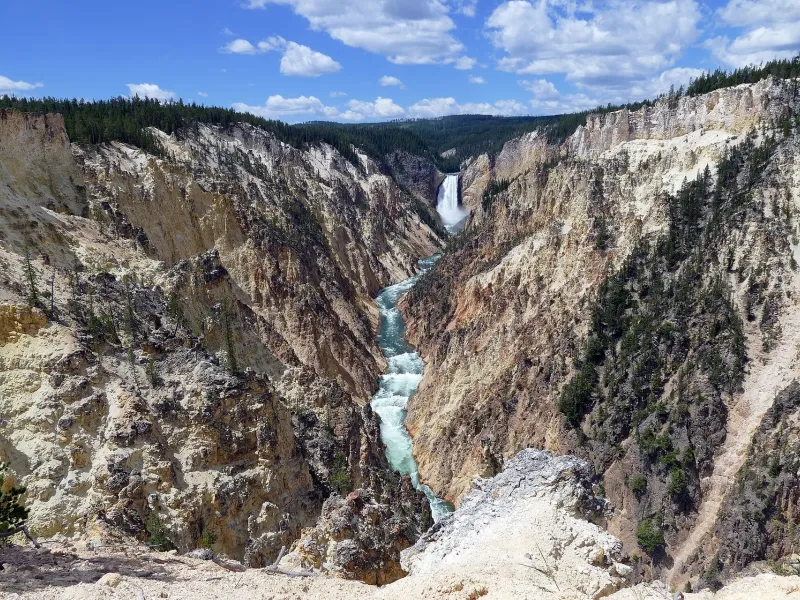
This canyon runs roughly 20 miles, and its 308-foot Lower Falls is visible from Artist Point, Lookout Point, Red Rock Point and the South Rim Trail. The 109-foot Upper Falls has its own viewpoints. The yellow walls come mainly from iron compounds in rock altered by heat, not from sulfur. North Rim Drive and South Rim Drive bring the main overlooks within a short walk of parking.
-
Lamar Valley
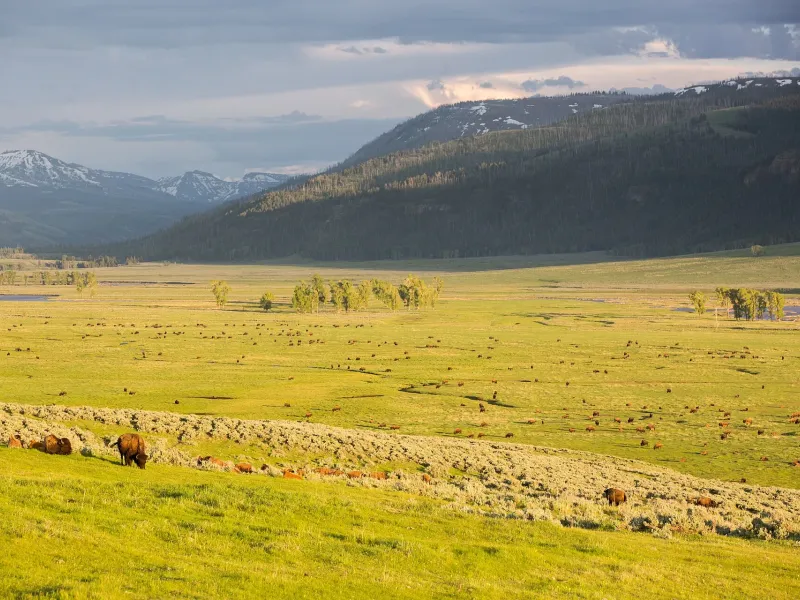
Lamar Valley is one of the major summer ranges for bison and elk, which draws wolves and grizzly bears. It lies on the road between the North and Northeast entrances, the only park road typically open to regular vehicles all year, so it is the one valley reachable by car in winter. Pullouts with wayside exhibits line the drive, and the historic Lamar Buffalo Ranch can be seen from the road.
-
Hayden Valley
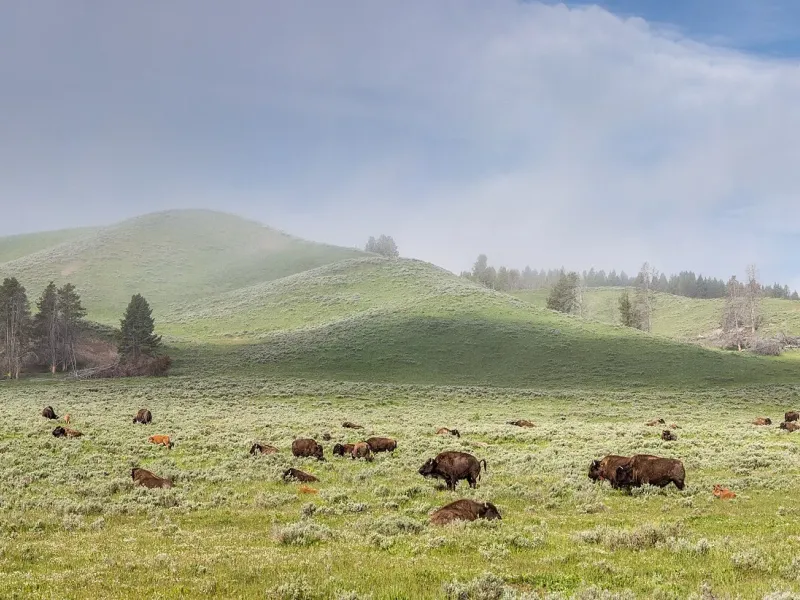
In the Canyon area, the Yellowstone River winds through the open grassland of Hayden Valley. Bison are often seen here from spring through the fall rut, grizzly bears hunt in spring and early summer, and pelicans, geese and bald eagles work the river. Traffic slows when animals are near the road, so use the designated pullouts.
-
Mammoth Hot Springs
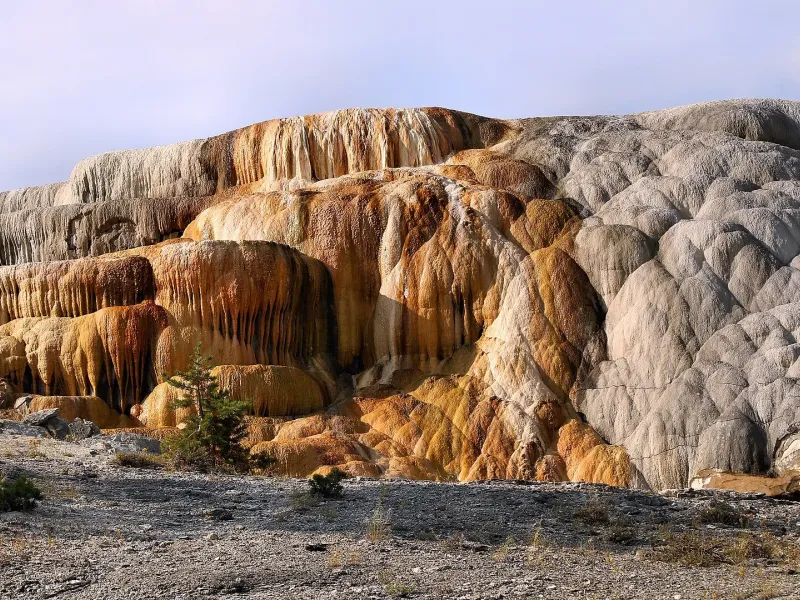
Near the North Entrance, hot water rising through limestone builds travertine terraces that look nothing like the geyser basins to the south. Some boardwalk sections are accessible, and Upper Terrace Drive offers views of the hot springs from a short loop road that RVs and trailers cannot use. Several amenities at Mammoth are typically open year-round, alongside the Albright Visitor Center and historic Fort Yellowstone.
Before you go
Yellowstone
Travel Guide & Tips
-
Best Time to Visit Yellowstone
June through September is Yellowstone's busiest season, when almost all lodges, campgrounds and visitor services are open. In recent seasons most park roads have opened to regular vehicles in stages from mid-April, with all roads typically open by Memorial Day weekend, and have closed to regular traffic in early November. May and late September bring fewer people, cold nights and active wildlife, such as bison calves in Lamar Valley in spring and the elk rut at Mammoth Hot Springs in fall, but some services are reduced.
Winter is a different trip. Most roads close to regular vehicles, the road between the North and Northeast entrances typically stays open, and the interior is reached only by commercially guided snowcoach or snowmobile, usually from mid-December to mid-March. Old Faithful Snow Lodge and Mammoth Hot Springs Hotel are the two lodges that open in winter. Opening dates shift with the snow every year, so check the NPS park roads page for this year's projected dates.
Suggested trip length: 3 to 4 days.
-
Getting There & Getting Around
- Airports: commercial airlines serve Bozeman and Billings in Montana, Cody and Jackson in Wyoming, and Idaho Falls in Idaho all year, and West Yellowstone's airport has had seasonal flights from Salt Lake City from early May to mid-October. Pick the airport that matches your entrance, because driving between entrances takes several hours.
- Entrances: the park has five entrance stations, including the North Entrance at Gardiner, Montana, the Northeast Entrance near Cooke City, Montana, the West Entrance at West Yellowstone, Montana, and the South Entrance, which is reached from Jackson through Grand Teton National Park. Several close to regular vehicles in winter, so confirm the status of yours before booking.
- Getting around: there is no public transportation inside the park, so you need a vehicle or a guided tour. About 50 miles of road separates Old Faithful from the Grand Canyon of the Yellowstone, the speed limit is 45 mph unless posted lower, and wildlife, weather and road work regularly make drives longer than NPS averages.
- Lodging in the park: nine lodging options at Old Faithful, Canyon, Lake, Grant Village, Mammoth and Tower-Roosevelt are run by the authorized concessioner, Yellowstone National Park Lodges. NPS advises booking as early as possible because rooms fill quickly.
- Gateway towns: West Yellowstone, Gardiner and Cooke City sit at the West, North and Northeast entrances, and Jackson, Wyoming, is the base for pairing Yellowstone with Grand Teton National Park, which charges its own entrance fee.
- Bus and coach: bus service runs from Bozeman to West Yellowstone year-round, and seasonal commercial transportation connects the park with Bozeman, Cody and Jackson. There is no train service to the park.
-
Yellowstone Travel Tips
- Entry: in recent seasons Yellowstone has not required a vehicle reservation, only an entrance pass, and buying the pass online before you arrive saves time at the gate. Check the NPS fees page for this year's rules.
- Fees and passes: the park charges an entrance fee that covers seven consecutive days, and the America the Beautiful pass covers entrance fees at national parks. In recent seasons non-US residents aged 16 and over have also paid an additional per-person fee unless admitted with an annual or America the Beautiful pass, so international travelers should read the NPS fees page.
- Thermal areas: stay on boardwalks and designated trails, keep children close and walking, and never touch thermal water or runoff. Swimming or soaking in hot springs is illegal, pets are not allowed on boardwalks or in thermal areas, and NPS reports that more than 20 people have died from burns after entering or falling into hot springs.
- Wildlife: stay at least 100 yards from bears, wolves and cougars and at least 25 yards from all other animals, including bison and elk. Carry bear spray on any trail and hike in groups of three or more. Bear spray cannot go on airplanes, so buy or rent it in the park or a gateway town.
- Weather and altitude: Mammoth Hot Springs sits at about 6,200 feet and Yellowstone Lake at 7,782 feet, so nights are cool even in midsummer and snow is possible at high elevations even in June and September. July brings frequent afternoon thunderstorms and sometimes wildfire haze. Pack warm layers and take it slowly in the thinner air.
- Roads and timing: road construction starts each year as soon as roads are clear of snow, and delays are common. Check the NPS park roads page before each day's drive, and arrive at an entrance before 7 a.m. or after noon in summer to avoid the heaviest lines.
- Time and connectivity: the whole park is on Mountain Time (MT, UTC-7) and observes daylight saving time. Cell service is not available everywhere, so download the NPS App and offline maps before you arrive.
Signature experiences
Signature Yellowstone
Experiences
-
Accessible and Senior-Friendly Sightseeing
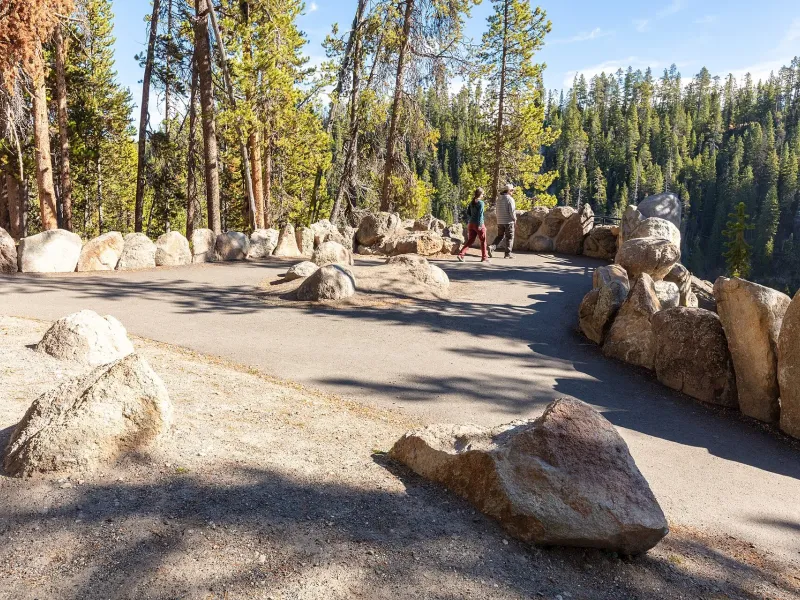
Many of Yellowstone's signature sights can be reached without a hike. Accessible walkways run from every parking area to Old Faithful, the Midway Geyser Basin boardwalk at Grand Prismatic Spring has accessible parking, and the Upper Falls viewpoints and Artist Point have accessible walkways. A short asphalt trail with gentle grades leads to a view of Tower Fall. Films at the Canyon and Old Faithful visitor centers are captioned with audio description available, and NPS asks for at least three weeks' notice to arrange accessibility services for ranger programs. Some paths are not suitable for limited mobility: the Brink of the Lower Falls path has many steps, and the Grand Prismatic overlook trail is steep.
-
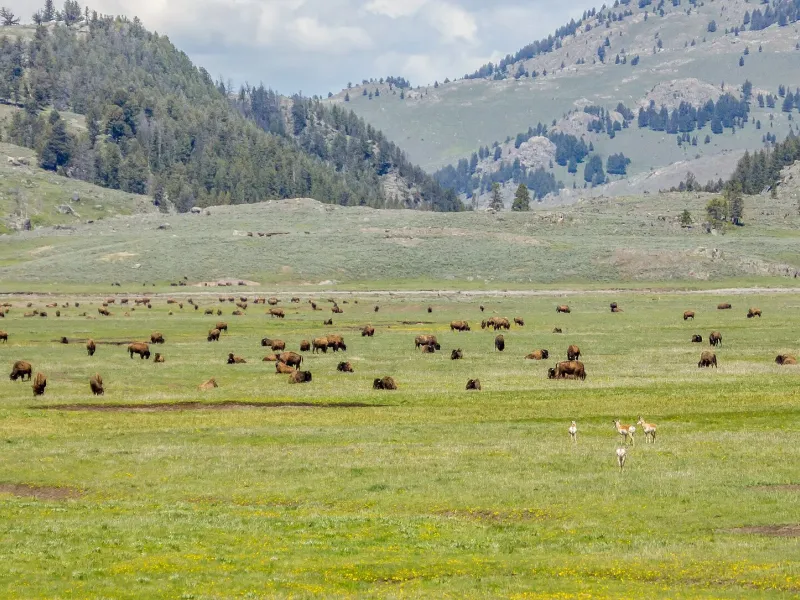
Wildlife and Safety
Yellowstone's animals are wild, and NPS sets firm minimum distances: 100 yards from bears, wolves and cougars and 25 yards from everything else, including bison and elk. Each year visitors are injured by wildlife after getting too close. The safest view is usually from your vehicle, parked in a designated pullout, with binoculars or a long lens. Dawn and dusk in Lamar and Hayden valleys are the most productive times, and rangers at visitor centers can tell you about recent sightings.
-
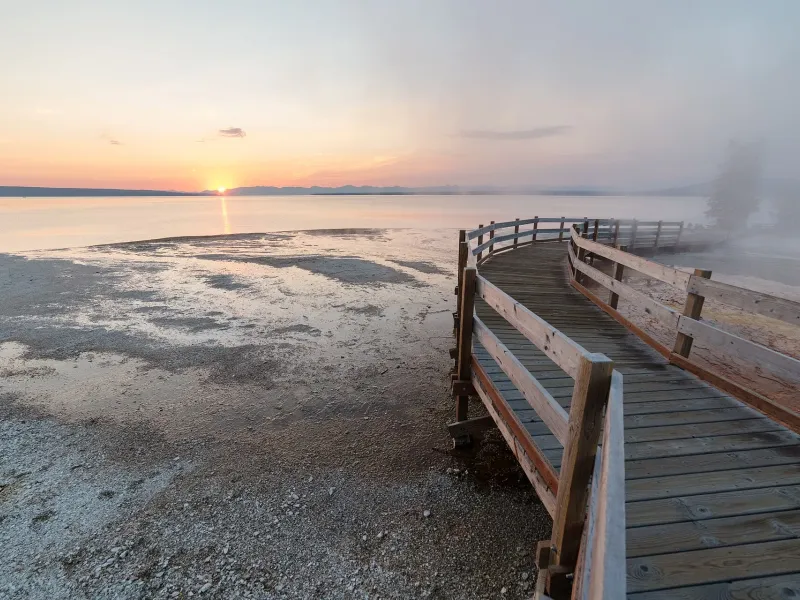
Suggested Itinerary: Four Days on the Grand Loop
Day one, enter at West Yellowstone, stop at Grand Prismatic Spring and spend the evening at Old Faithful. Day two, drive to Yellowstone Lake and through Hayden Valley to Canyon Village. Day three, walk the North Rim and South Rim viewpoints of the Grand Canyon of the Yellowstone. Day four, start before dawn in Lamar Valley, then see the Mammoth terraces and leave by the North Entrance at Gardiner. This is a suggested plan our advisors adapt to your season, pace and lodging, not a scheduled departure.
LABUSA Travel advisors plan Yellowstone trips for individuals, families, seniors and organized groups. We match the right gateway airport and entrance to your season, sequence lodging so drives stay manageable, arrange guided touring or a chartered coach where it helps, and build in time for the early mornings that wildlife watching rewards. Keep planning with our U.S. National Parks collection, our in-depth Yellowstone: Visitor and Heritage Guide, accessible travel in the United States and the United States for senior travelers.
Yellowstone's roads, services and rules change with the weather and from year to year. Before you travel, check the official National Park Service site at nps.gov/yell for current road status, alerts, entrance fees and operating dates. Visit the official Yellowstone National Park website.
Common questions
Yellowstone Travel FAQs
- Do I need a reservation to enter Yellowstone?
- In recent seasons Yellowstone has not required a vehicle reservation, only a park entrance pass, which you can buy online in advance or at an entrance station. Lodging and campgrounds inside the park do need reservations and fill far in advance. Check the NPS fees page for this year's requirements.
- When are Yellowstone's roads open to cars?
- In recent seasons most roads have opened to regular vehicles in stages from mid-April to late May and closed in early November, depending on snow. The road between the North Entrance at Gardiner and the Northeast Entrance is the only road typically open to regular vehicles all year. Check the NPS park roads page for this year's projected dates.
- How many days do we need in Yellowstone?
- Plan at least three to four days to see the geyser basins, the Grand Canyon of the Yellowstone and one wildlife valley without rushing. Distances are long and wildlife stops traffic, so it helps to stay in two different areas of the park or its gateway towns rather than one.
- Is Yellowstone a good choice for travelers with limited mobility?
- Yes, with planning. Old Faithful, the Grand Prismatic Spring boardwalk, the Upper Falls viewpoints, Artist Point and the Tower Fall overlook all have accessible routes, and much wildlife viewing happens from a vehicle. Some trails are steep or have steps, and elevations of 6,000 to nearly 8,000 feet can tire anyone.
- How close can we get to bison and other wildlife?
- NPS requires visitors to stay at least 100 yards from bears, wolves and cougars and at least 25 yards from all other animals, including bison and elk. If an animal moves toward you, back away to keep that distance. Never feed wildlife, and never leave food unattended.