
Why visit
Why Visit Olympic with LABUSA Travel
Three Parks in One
Olympic protects glacier-capped mountains, old-growth temperate rain forests and a separate strip of wild coastline, and about 95 percent of the park is wilderness. No road crosses the interior, so each area has its own entrance road off Highway 101. In a few days you can stand in subalpine meadows, walk under moss-draped maples and watch waves break around sea stacks.
One of the Wettest Places in the Lower 48
Pacific storms meet the Olympic Mountains and drop their moisture on the western valleys, where the Hoh Rain Forest averages about 140 inches of precipitation a year. The same storms bury Hurricane Ridge in an average of 30 to 35 feet of snow, while Port Angeles in the rain shadow stays far drier. That range explains the park's remarkable variety of forests and wildlife.
A Living Tribal Homeland
NPS recognizes eight Olympic Peninsula tribes with a continuing relationship to the park: the Lower Elwha Klallam, Jamestown S'Klallam, Port Gamble S'Klallam, Skokomish, Quinault, Hoh, Quileute and Makah. Their ancestors lived throughout the peninsula and ceded lands through treaties in 1855 and 1856. Today their reservations lie along the peninsula's shores, and First Beach near Rialto Beach is part of the Quileute Indian Reservation.
Top places to visit
Top Places to Visit
in Olympic
-
Hoh Rain Forest
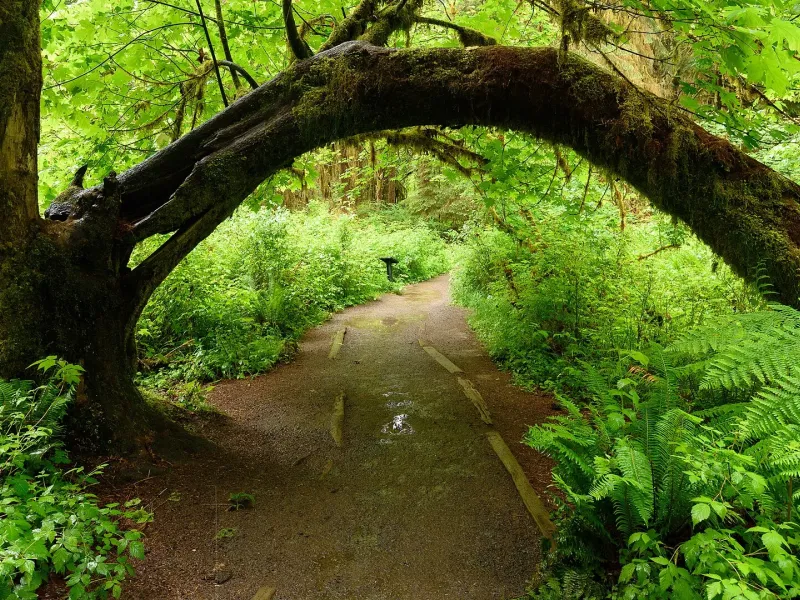
The Hoh is one of the finest remaining temperate rain forests in the United States, with Sitka spruce, western red cedar and bigleaf maple draped in moss and ferns. The Hall of Mosses Trail is a 0.8-mile loop from the visitor center and the Spruce Nature Trail a 1.2-mile loop, while the 0.1-mile Mini Rain Forest Trail has gentle grades. The Hoh is about two hours by car from Port Angeles and under an hour from Forks.
-
Hurricane Ridge
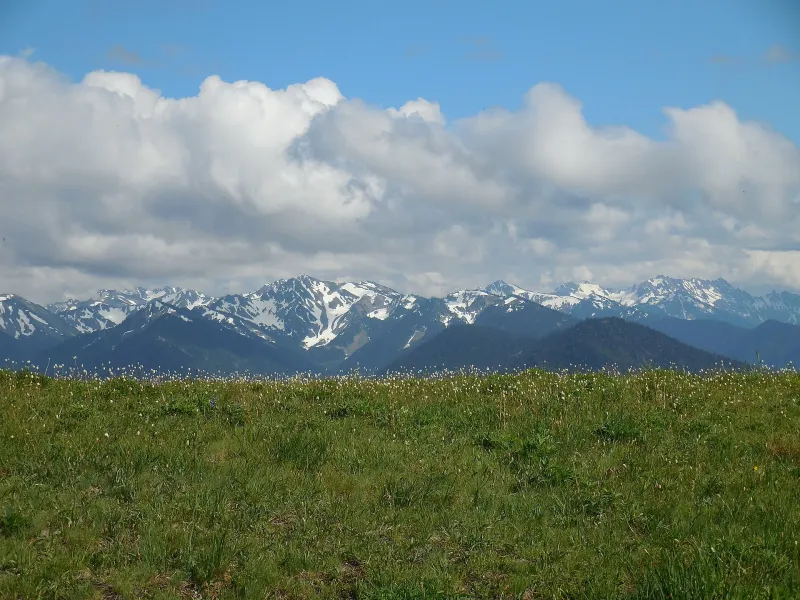
Hurricane Ridge, 17 miles south of Port Angeles at 5,242 feet, is the most easily reached mountain area in the park, with views across the Olympic Mountains and, on clear days, to the Strait of Juan de Fuca. The Hurricane Ridge Day Lodge burned in May 2023, and NPS says restrooms are available but there is no food, gift shop or drinking water, so bring your own. A replacement building is in design, and NPS says construction could start in 2028 at the earliest.
-
Lake Crescent
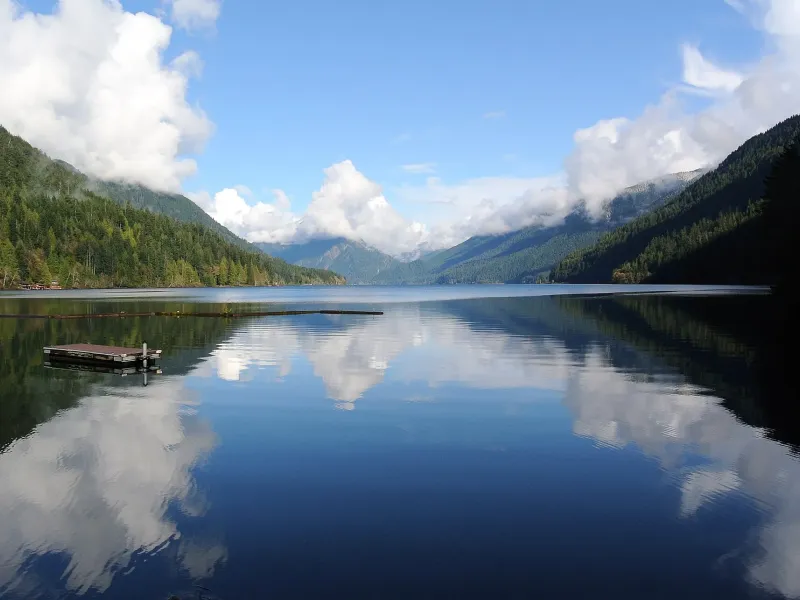
About 18 miles west of Port Angeles, Lake Crescent is a deep, glacially carved lake ringed by old-growth forest. A landslide isolated it about 7,000 years ago, leaving two trout populations found nowhere else. The 1.8-mile round trip to Marymere Falls is a favorite walk, the paved Spruce Railroad Trail follows the north shore, and Lake Crescent Lodge and Log Cabin Resort open seasonally.
-
Rialto Beach
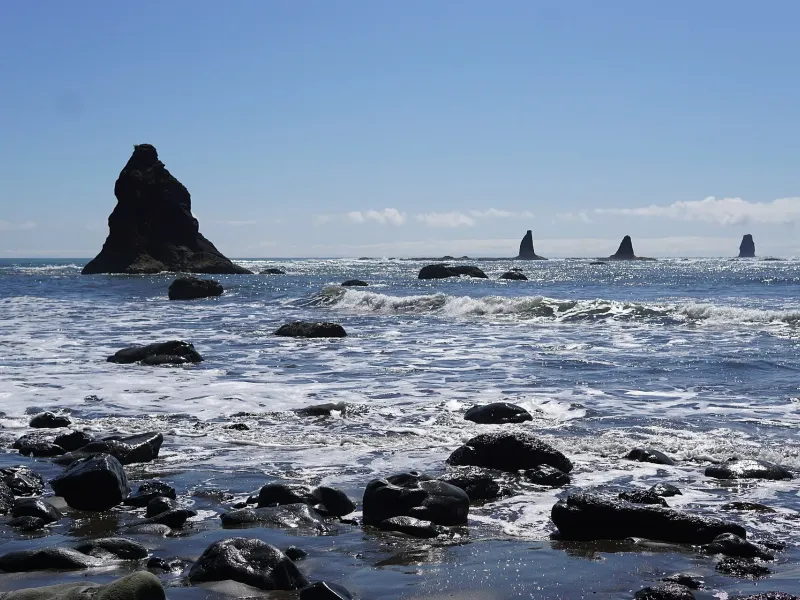
Rocky shores, giant drift logs, pounding surf and offshore sea stacks define Rialto Beach, reached by Mora Road off La Push Road about 75 miles from Port Angeles. Hole-in-the-Wall, a sea-carved arch, lies about 1.5 miles north along the beach. Parts of the coast become impassable at high tide, so carry a tide table and turn back with time to spare.
-
Ruby Beach and Kalaloch
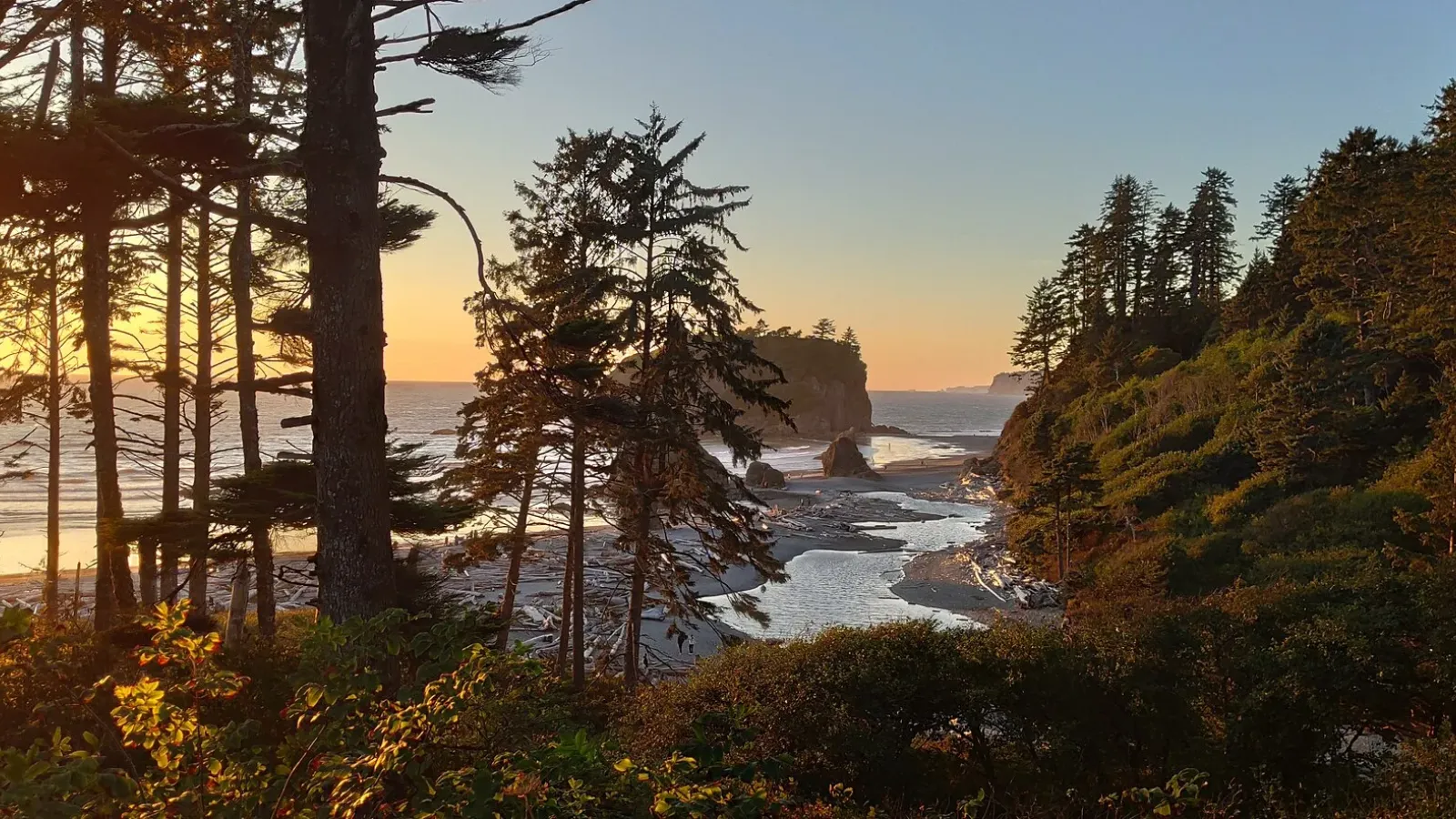
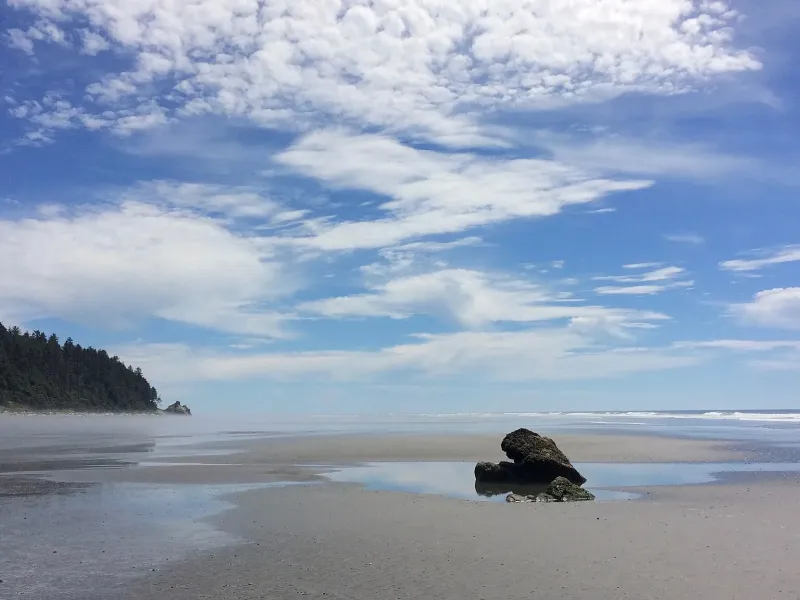
On the southern coast beside Highway 101, Ruby Beach and the Kalaloch beaches offer driftwood, rocky outcrops, sandy shores and good bird watching. Beach 4 is a good place to look for sea stars and anemones at low tide, and Kalaloch Lodge sits right above the beach. Ruby Beach has an accessible overlook at the north end of its parking lot, though NPS notes that no route down to any coastal beach in the park is accessible.
-
Sol Duc Falls
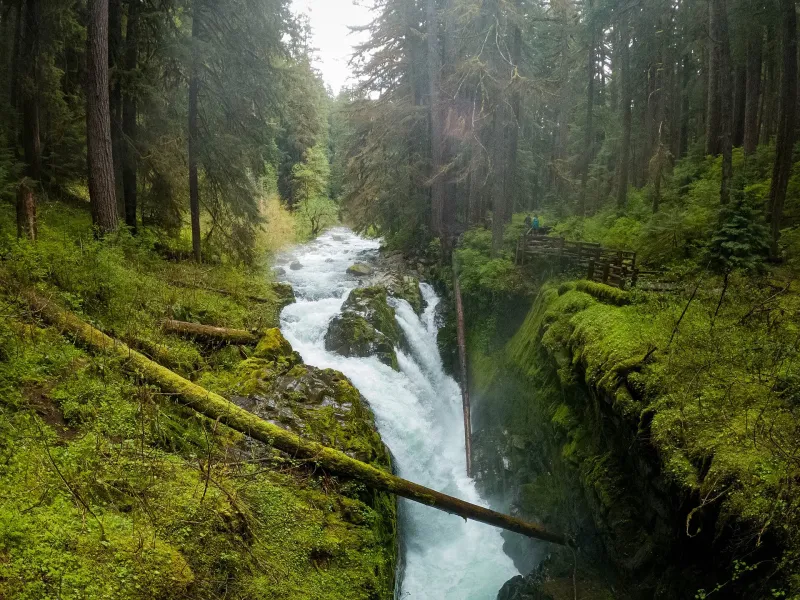
In the Sol Duc Valley, about 40 minutes west of Port Angeles, an easy mile through old-growth forest leads to the Sol Duc Falls overlook. Nearby Sol Duc Hot Springs Resort offers mineral pools and lodging and is generally open from late March to late October. The Sol Duc Road closes seasonally, so check its status before you go; in late fall, coho salmon leap the Salmon Cascades about 5 miles down the road.
Before you go
Olympic
Travel Guide & Tips
-
Best Time to Visit Olympic
July and August are the most popular months, with mild to warm weather, the most roads and facilities open and a full range of ranger programs. May, June and September are good alternatives: the park is still busy, but lines at Hurricane Ridge and the Hoh are shorter. Rain is possible in any season, snow can linger in the high country into June, and fog often hangs over the coast even on sunny days.
From October through May some roads, campgrounds and facilities close or cut their hours, and most of the year's rain falls between November and April. Winter suits storm watching on the coast and deep green rain forest walks, and Hurricane Ridge has offered snow play on weekends in recent winters, weather permitting. Check current conditions before you set your dates.
Suggested trip length: 3 to 4 days.
-
Getting There & Getting Around
- Seattle-Tacoma International Airport is the closest major airport, and Victoria International serves travelers coming from British Columbia. The trip from Sea-Tac to the peninsula involves either a drive around Puget Sound through Tacoma or a Washington State Ferries crossing, so allow extra time and check ferry schedules.
- Highway 101 loops around most of the Olympic Peninsula and reaches nearly every park area. Interior roads end after 15 to 18 miles and none crosses the park, so travel between areas can take from half an hour to four hours or more.
- Port Angeles is the natural base for Hurricane Ridge, Lake Crescent and the Sol Duc, while Forks sits under an hour from the Hoh Rain Forest and close to Rialto Beach. The Coho ferry links Port Angeles with Victoria, British Columbia.
- Lodging inside the park includes Kalaloch Lodge (open all year) and the seasonal Lake Crescent Lodge, Log Cabin Resort and Sol Duc Hot Springs Resort; rooms book quickly in July and August.
- Public transportation reaches Port Angeles, Forks and a few park destinations, and in recent summers Clallam Transit has run a seasonal shuttle from downtown Port Angeles to Hurricane Ridge. Most of the park still requires a car.
-
Olympic Travel Tips
- No reservation is needed to enter Olympic National Park, but lodging, campgrounds and wilderness permits should be booked ahead for summer. In recent seasons several campgrounds have required reservations on Recreation.gov from mid-May or June through September.
- The park charges an entrance fee, valid for seven consecutive days, and does not accept cash. The America the Beautiful pass covers entrance fees at national parks; check the NPS fees page for current details.
- In summer, parking at Hurricane Ridge and the Hoh fills and traffic is held at the entrance station, with waits of one to two hours. Arrive before 10 am or after 5 pm at the Hoh, and before 10 am or after 2 pm at Hurricane Ridge. There is no gas or food at the Hoh.
- Hurricane Ridge Road is open in summer, but in winter it has opened only Friday through Sunday in recent seasons, weather permitting, and all vehicles must carry tire chains. NPS reported the road closed for ice and rockfall in late November 2026, so call the road and weather line at 360-565-3131 before driving up.
- Keep at least 50 yards from all wildlife and never feed animals. Roosevelt elk can be aggressive, especially around calves and during the fall rut, and black bears and cougars live in the park.
- Cell service is spotty, with little or none at the Hoh and on the beaches. Download maps before you go, and avoid rental cars that need a cell signal to unlock or start.
- Layer up for every day: weather changes quickly, rain is possible in any season, and conditions on the coast, in the rain forest and on the ridge can differ on the same afternoon.
Signature experiences
Signature Olympic
Experiences
-
Accessible and Senior-Friendly Sightseeing
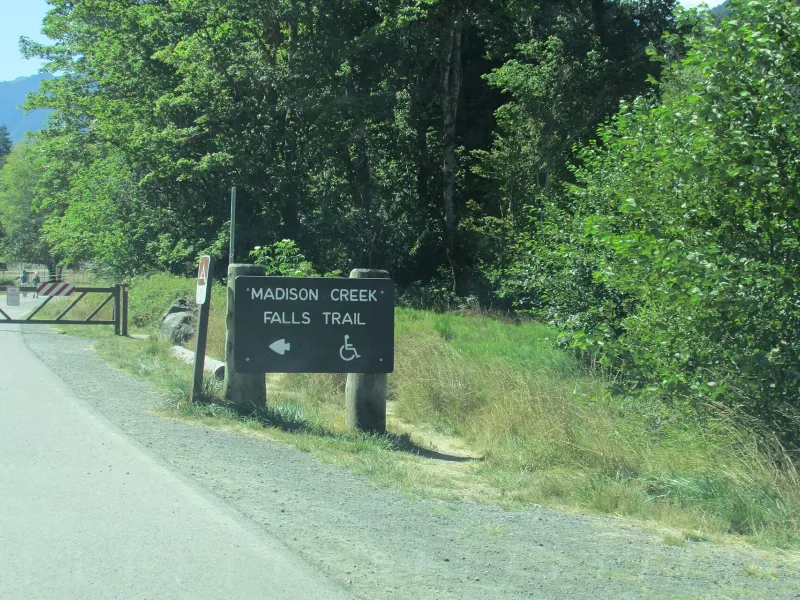
At Hurricane Ridge, the center paved path from the parking area to the overlook is the widest and gentlest of three trailheads there, with views of the mountains and, on clear days, the Strait of Juan de Fuca. In the Hoh, the 0.1-mile Mini Rain Forest Trail has gentle grades, while the Hall of Mosses has steep sections and large steps. Madison Falls in the Elwha area is a 0.1-mile paved path to a 60-foot waterfall, and Ruby Beach has an accessible overlook. NPS states that no route to the coastal beaches is accessible, and the Hurricane Hill Trail, though paved, is very steep with exposed edges.
-
Wildlife and Safety
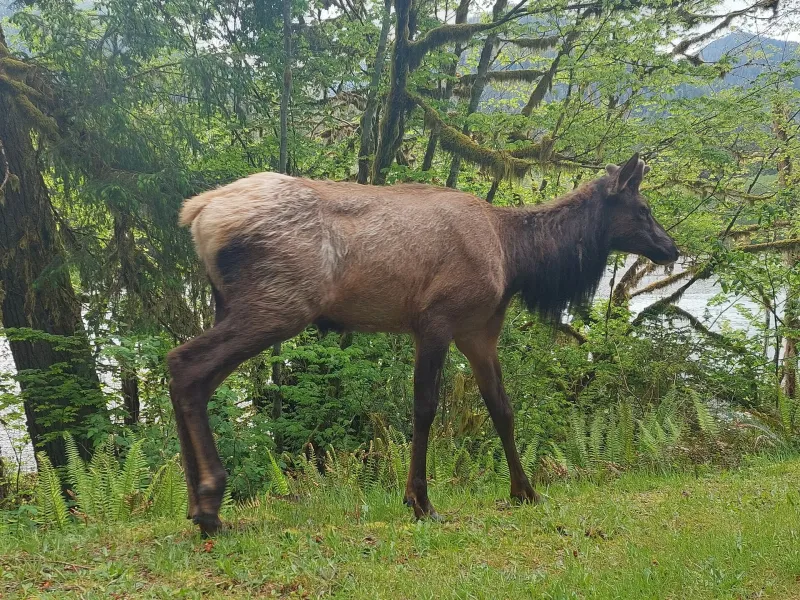
Roosevelt elk are seen year-round in the Hoh, often at dawn and dusk, and black-tailed deer graze the Hurricane Ridge meadows in spring. Park regulations require at least 50 yards between people and wildlife, and all food must be stored securely. On the coast, rising tides can trap hikers at headlands, and winter storms drive large waves and shifting drift logs. Carry a tide chart, keep children close and never underestimate the Pacific.
-
Suggested Itinerary: Four Days on the Olympic Peninsula
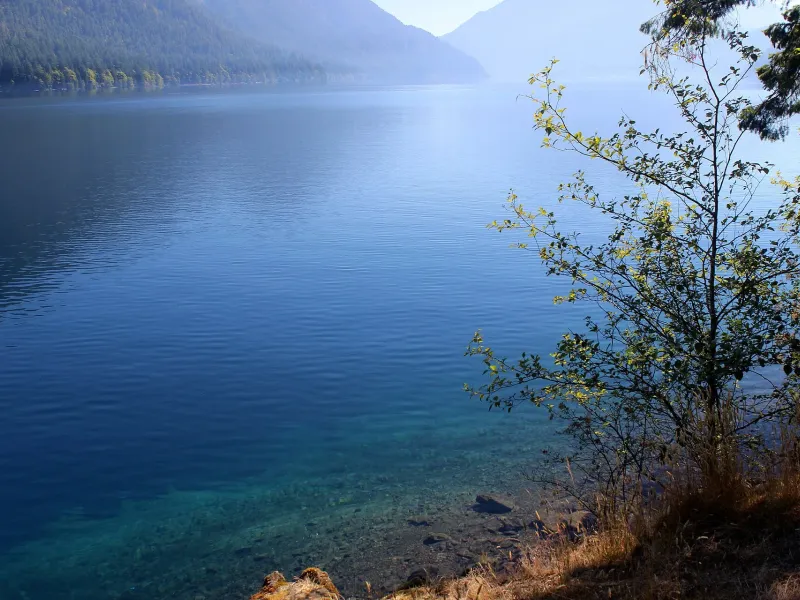
Day one starts in Port Angeles at the Olympic National Park Visitor Center, then climbs to Hurricane Ridge when the road is open. Day two follows Highway 101 past Lake Crescent with a walk to Marymere Falls, and Sol Duc Falls when its road is open. Day three is for the Hoh Rain Forest early in the day and Rialto Beach at low tide, and day four follows the southern coast to Ruby Beach and Kalaloch. This is a suggested plan that our advisors adapt to your group, the season and current conditions, not a scheduled departure.
LABUSA Travel plans Olympic National Park trips for individuals, families, senior travelers, multigenerational groups and organized groups. Because the park's areas sit far apart on separate roads, our advisors focus on the right base towns, manageable driving days, ferry timing and early starts at the busiest spots. We plan and coordinate your trip; lodging and services inside the park are run by the National Park Service and its concessioners. Keep planning with our U.S. National Parks collection, accessible travel in the United States and the United States for senior travelers.
Road status at Hurricane Ridge, Sol Duc and the rain forest valleys can change daily with weather and construction. Before you travel, check the official Olympic National Park website at nps.gov/olym, including its alerts and conditions page, or call the recorded road and weather line at 360-565-3131. Visit the official Olympic National Park website.
Common questions
Olympic Travel FAQs
- Do I need a reservation to visit Olympic National Park?
- No reservation is needed to enter the park. Lodging, campgrounds and wilderness permits should be reserved ahead for summer, when they fill quickly. Arriving early or late in the day is the best way to avoid long entrance lines at Hurricane Ridge and the Hoh.
- Is the Hurricane Ridge lodge open?
- No. The Hurricane Ridge Day Lodge burned on May 7, 2023, and NPS says the area has restrooms but no food, gift shop or drinking water. A replacement facility is in design, with construction possible from 2028 at the earliest. Check the park's alerts before driving up, since the road can close for weather.
- How far apart are the main areas of the park?
- They are spread around the peninsula on separate entrance roads. Hurricane Ridge is 17 miles from Port Angeles, Lake Crescent about 18 miles, the Hoh about two hours, and Rialto Beach about 75 miles. Plan a base near Port Angeles for the north side and near Forks for the Hoh and the coast.
- Can travelers with limited mobility enjoy Olympic?
- Yes, with planning. NPS describes a paved overlook path at Hurricane Ridge, the gentle Mini Rain Forest Trail at the Hoh, the paved path to Madison Falls and an accessible overlook at Ruby Beach. No route down to the coastal beaches is accessible, and our advisors can plan a trip around these stops.
- When is the best time to visit Olympic National Park?
- July and August bring the most open roads and the warmest weather, along with the biggest crowds. May, June and September offer shorter lines, while winter is the season for storm watching and the greenest rain forest. Weather is changeable all year, so pack layers and rain gear.