
Why visit
Why Visit Acadia with LABUSA Travel
Mountains Meet the Ocean
Within a short drive on Mount Desert Island you can stand on a granite summit, walk a lakeshore and watch waves surge into Thunder Hole. The 27-mile Park Loop Road ties these places together. That compact layout suits travelers who want variety without long transfers.
Roads Built for Slow Travel
John D. Rockefeller Jr. and his family gave Acadia 45 miles of broken-stone carriage roads, built from 1913 to 1940 and closed to cars. Walkers, cyclists and horse-drawn carriages share them today. Stone bridges and gentle grades make them a favorite for families and groups.
Homeland of the Wabanaki
The park lies in the homeland of the Wabanaki, the People of the Dawnland, and Wabanaki people are still here. NPS names the Houlton Band of Maliseet Indians, Mi'kmaq Nation, Passamaquoddy Tribe at Motahkokmikuk, Passamaquoddy Tribe at Sipayik and Penobscot Indian Nation. The nearby Abbe Museum, a park partner, centers Indigenous people in their own histories.
Top places to visit
Top Places to Visit
in Acadia
-
Cadillac Mountain
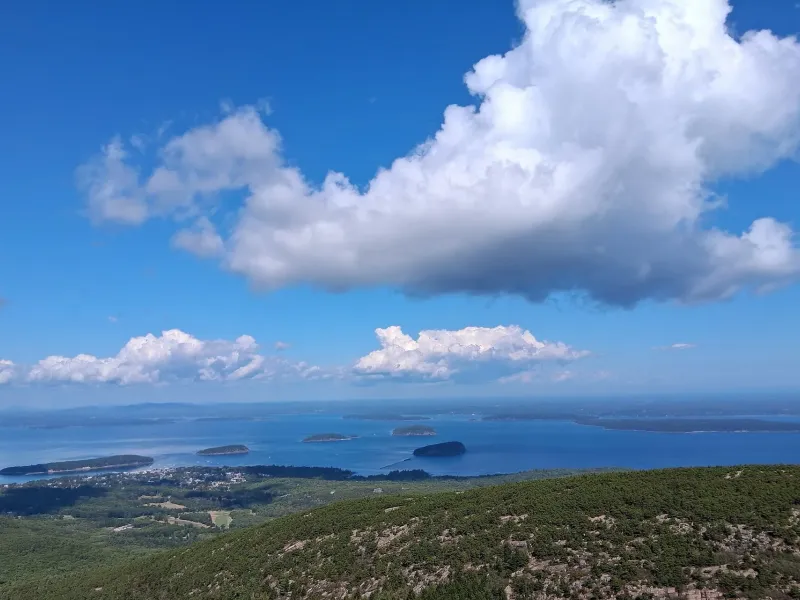
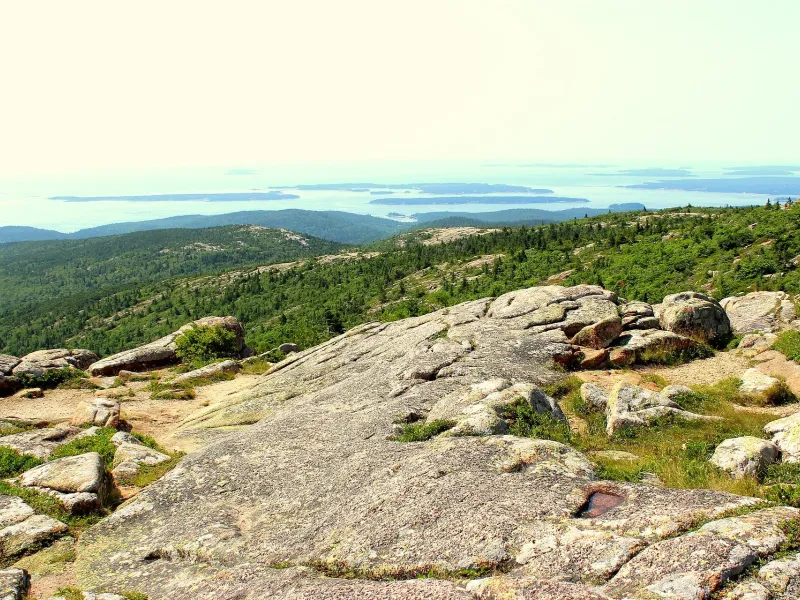
Cadillac Mountain rises to 1,530 feet and NPS describes it as the highest point on the eastern seaboard of the United States. A narrow road climbs about three miles to the summit, where a short paved loop path, waysides, restrooms and a gift shop look over Frenchman Bay and the Porcupine Islands. In recent seasons a separate vehicle reservation has been required to drive the summit road from May into late October.
-
Park Loop Road
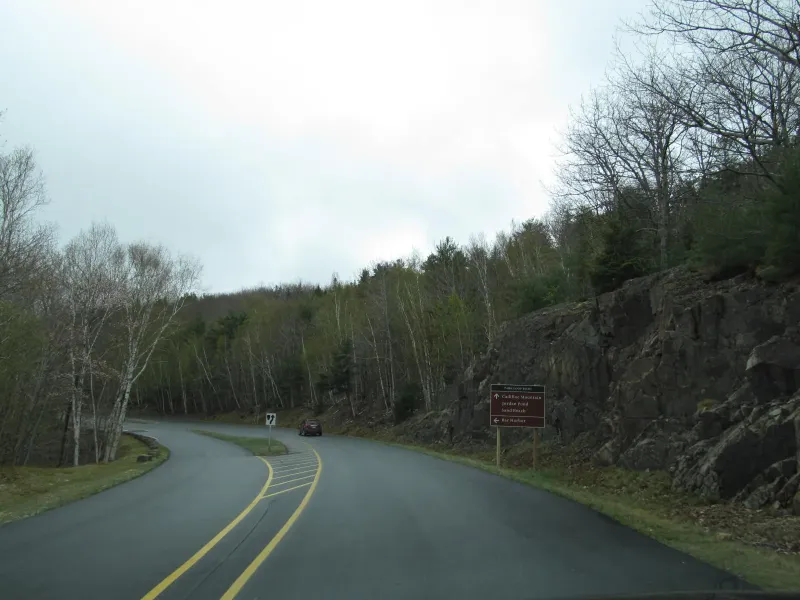
This 27-mile scenic road, built between 1921 and 1958, links Sieur de Monts, Sand Beach, Otter Point, Jordan Pond and Cadillac Mountain, starting from Hulls Cove Visitor Center. NPS recommends planning three to four hours for the full road with stops. Most of it closes to vehicles each winter, from December 1 to mid-April, weather permitting.
-
Jordan Pond
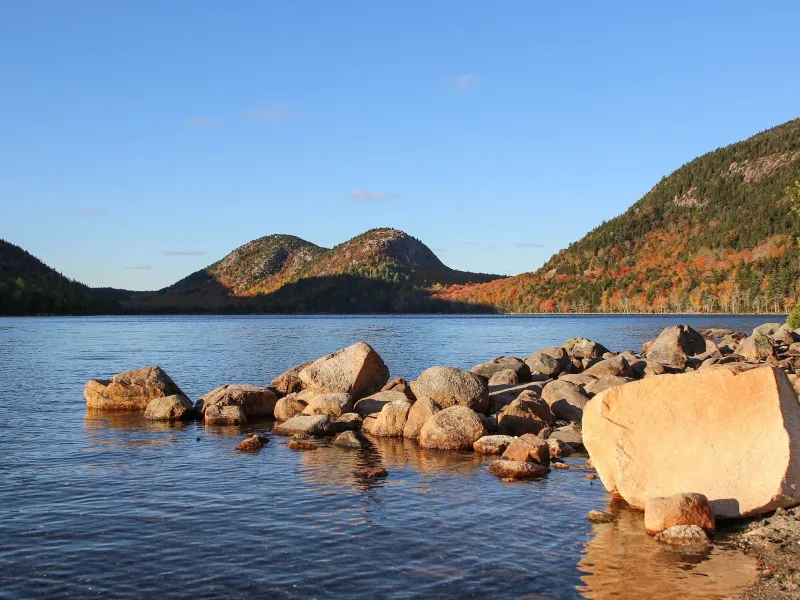
Jordan Pond sits in a glacier-carved valley framed by Penobscot and Pemetic mountains and the two rounded peaks called the Bubbles. Jordan Pond House on the south shore has served tea and popovers since the 1890s. The pond is a public water supply, so wading and swimming are prohibited, and the eastern half of the shore path is far easier than the western half.
-
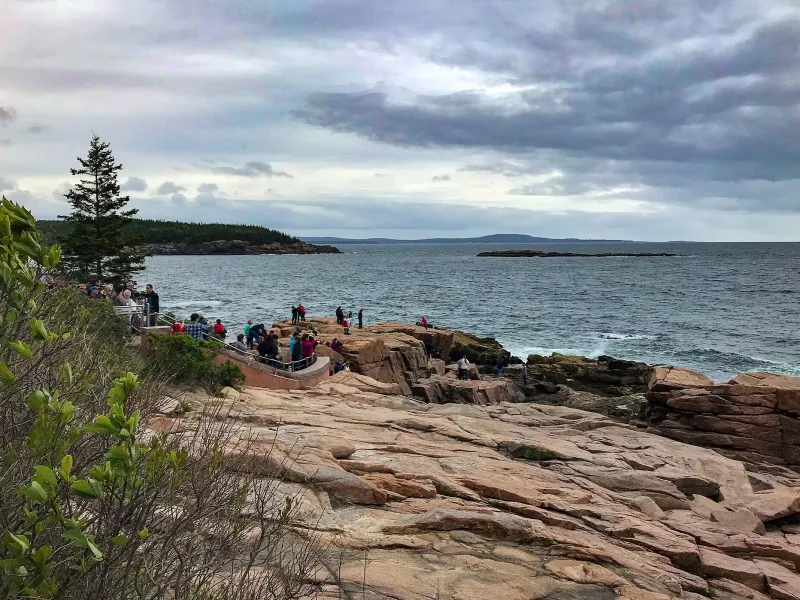
Thunder Hole and Ocean Path
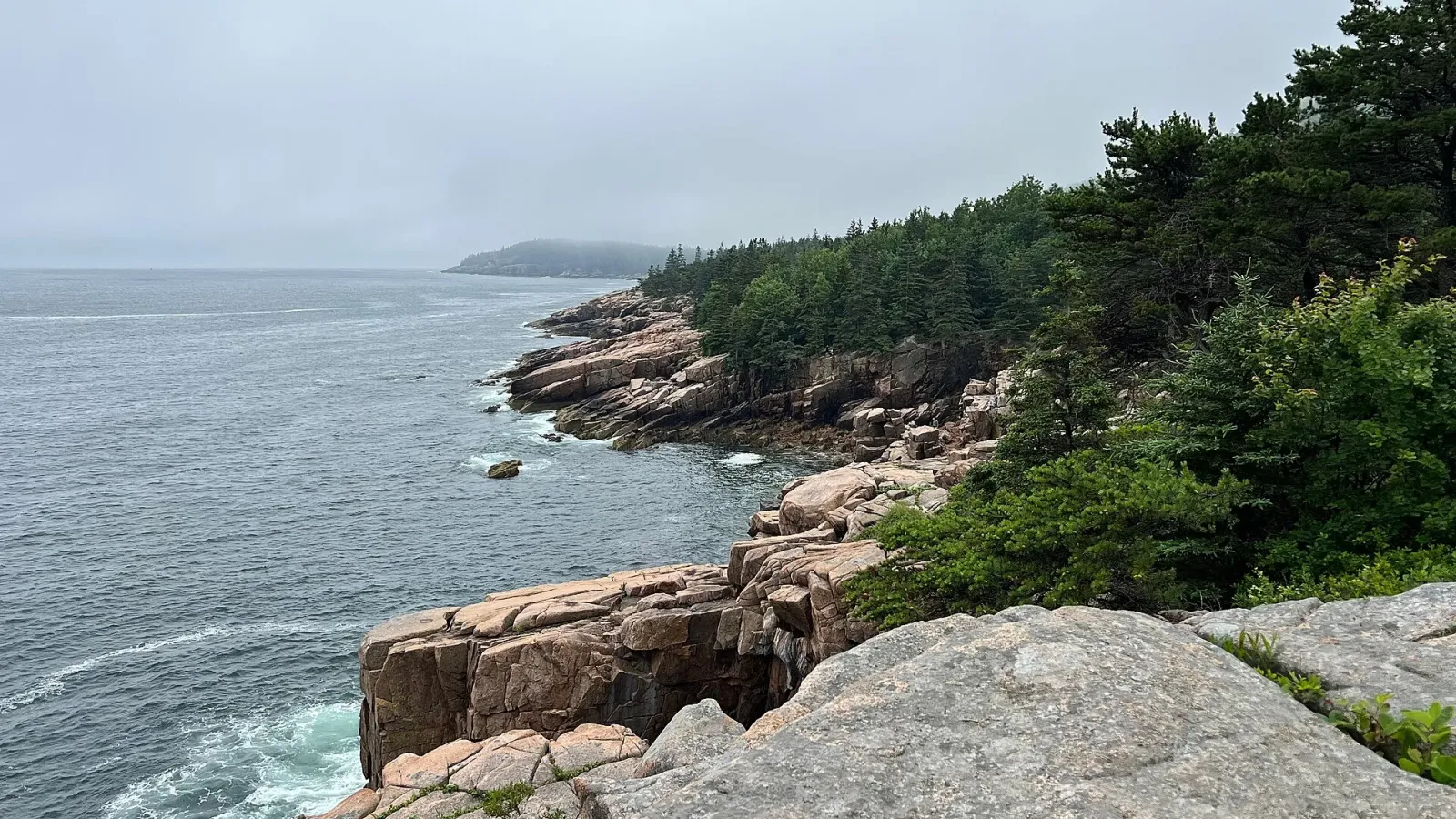
At Thunder Hole, waves driven into a narrow granite inlet push out trapped air with a booming sound, best heard one to two hours before high tide. Ocean Path follows the shore from Sand Beach past Thunder Hole toward Otter Point, and the stretch from Sand Beach to Thunder Hole is concrete and packed gravel. A wheelchair-accessible upper viewing deck overlooks the inlet; the lower stairs and deck are not accessible and are often wet.
-
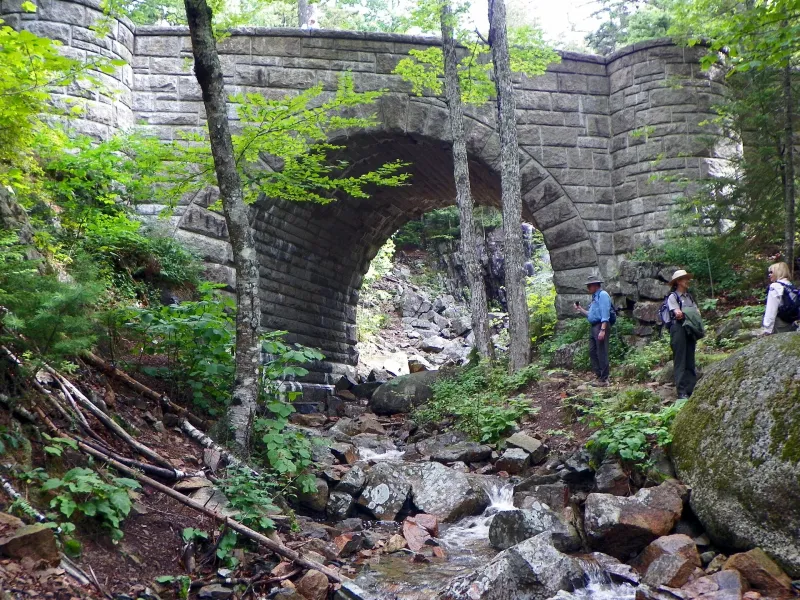
Historic Carriage Roads
Forty-five miles of carriage roads, about 16 feet wide, wind around the lakes and mountains with granite coping stones as guardrails and stone-faced bridges over streams and roads. They are closed to cars and shared by walkers, cyclists and horse-drawn carriages. NPS notes they may suit people with limited mobility, and a seasonal Island Explorer bicycle service runs from Bar Harbor to the Eagle Lake entrance.
-
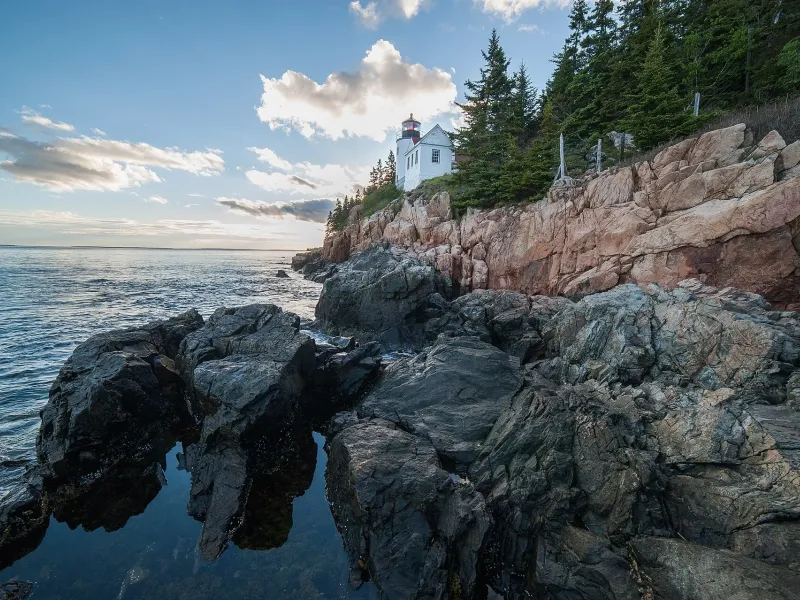
Bass Harbor Head Light Station
On the quieter west side of the island, this lighthouse marks the entrance to Bass Harbor and Blue Hill Bay and is the only lighthouse in the park easily reached by car. The tower is not open to the public, but a packed gravel overlook beside accessible parking gives good views. The small lot fills quickly, especially around sunset, and buses, trailers and RVs are not permitted.
Before you go
Acadia
Travel Guide & Tips
-
Best Time to Visit Acadia
Summer and early fall are the main seasons. Most park roads open in mid-April, the Island Explorer shuttle typically runs from late June into mid-October, and ranger programs are offered from mid-May to mid-October. Fog is common in June, July and August, and blackflies are usually most numerous from mid-May to mid-June.
Fall color begins in September and usually peaks in mid-October, anywhere from the first to the third week of the month. In winter, from December 1 to April 14, most of the Park Loop Road, including the road to Cadillac Mountain, closes to vehicles and opens to walking and winter sports. Check the NPS operating hours page for this year's dates.
Suggested trip length: 3 to 4 days.
-
Getting There & Getting Around
- Hancock County (Bar Harbor) Airport, with direct flights from Boston's Logan Airport, is about 10 miles from the park; Bangor International Airport is about an hour away, and both have car rentals.
- By car, take I-95 north to Augusta and Route 3 east to Ellsworth and Mount Desert Island, or continue to Bangor and take Route 1A to Ellsworth; the park is about 264 miles from Boston and 50 miles from Bangor.
- The fare-free, wheelchair-accessible Island Explorer bus connects park destinations, local towns and the Bar Harbor airport during its summer and fall season, but it does not serve the Cadillac summit; the Acadia Gateway Center in Trenton offers parking for riders.
- There are no hotels in the park. NPS lists two campgrounds on Mount Desert Island and one on the Schoodic Peninsula, with many accommodations in nearby towns such as Bar Harbor.
- Motor coaches and RVs should check NPS bridge clearances on the Park Loop Road, and vehicles over 21 feet are not allowed on Cadillac Summit Road.
-
Acadia Travel Tips
- An entrance pass is required year-round and must be displayed in the vehicle. The America the Beautiful pass covers entrance fees at national parks, and non-US residents 16 and over currently pay an added per-person fee unless they hold an annual or America the Beautiful pass; see the NPS fees page for current details.
- In recent seasons NPS has required a vehicle reservation to drive Cadillac Summit Road from May into late October, sold only online through Recreation.gov and not at the park. Part of the reservations open 90 days ahead and the rest two days ahead; check the NPS page for this year's dates.
- The park does not accept cash, so bring a credit or debit card for passes.
- In peak season most parking lots fill by 9 am. Start early, ride the Island Explorer when it is running, and have a backup stop in mind.
- Cell service is spotty, so carry a paper map from Hulls Cove Visitor Center and save reservation QR codes offline.
- Stay back from cliff edges and wet granite, where rogue waves can wash over ledges even in calm weather, and check for ticks after walks.
- Acadia is in the Eastern time zone (ET), and coastal weather changes quickly, so bring a rain jacket and warm layers even in summer.
Signature experiences
Signature Acadia
Experiences
-
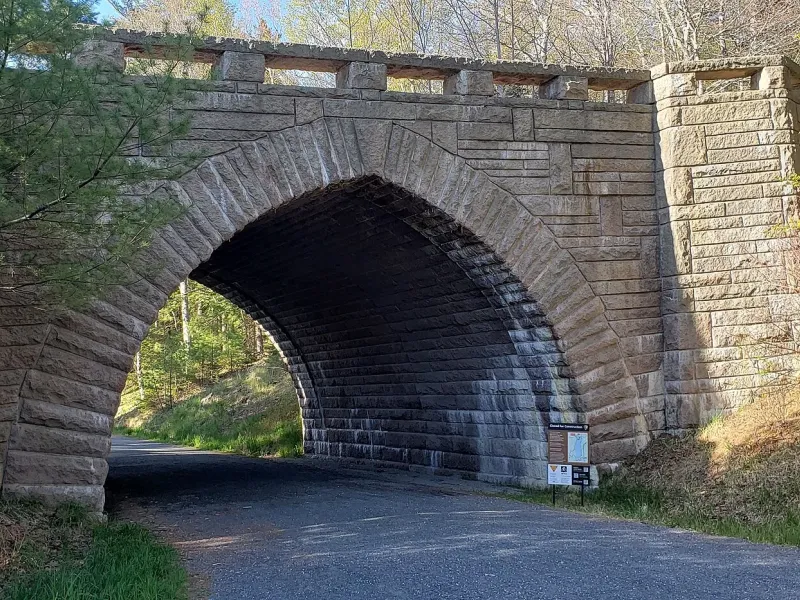
Accessible and Senior-Friendly Sightseeing
The Cadillac Summit Loop is a short paved walkway with views in every direction, though some sections are steeper. Thunder Hole has a wheelchair-accessible upper viewing deck, and the Ocean Path from Sand Beach to Thunder Hole is concrete and packed gravel. The Jesup Path at Sieur de Monts includes a boardwalk with benches, and the first loop of the Ship Harbor Trail is ADA compliant. Island Explorer buses have wheelchair lifts, and at Hulls Cove Visitor Center the rear entrance avoids the 52 steps at the front. NPS also notes that the broad, car-free carriage roads may suit people with limited mobility.
-

Wildlife and Safety
Acadia has recorded 338 bird species, including peregrine falcons on the cliffs and loons on the lakes, and ranger-led bird walks run from late spring to mid-fall. Moose and bears occur on the island but are rarely seen, and seals are best viewed from boat cruises. Do not feed or disturb any wildlife; if an animal changes its behavior, you are too close. Ticks and poison ivy are common, and the ocean at Sand Beach is cold, typically 50 to 60 degrees Fahrenheit.
-
Suggested Itinerary: Three Days on Mount Desert Island
This is a suggested plan our advisors adapt to each group, not a scheduled departure. Day one begins at Hulls Cove Visitor Center and follows the Park Loop Road to Sieur de Monts, Sand Beach and Thunder Hole, ending with tea at Jordan Pond House. Day two goes up Cadillac Mountain with a timed vehicle reservation when one is required, then a walk or carriage ride on the carriage roads. Day three explores the quieter west side, with Ship Harbor Trail and Bass Harbor Head Light Station.
LABUSA Travel advisors plan Acadia trips for individuals, families, senior travelers, multigenerational groups and organized groups. We time Cadillac reservations, choose lodging in Bar Harbor or the quieter harbors, and pace each day around easy viewpoints, the Island Explorer and the carriage roads. Keep planning with our U.S. National Parks collection, accessible travel in the United States and the United States for senior travelers.
Reservation windows, shuttle schedules and road openings change each year. Before you travel, check the official National Park Service site for Acadia National Park at nps.gov/acad for current conditions, alerts and fee information. Visit the official Acadia National Park website.
Common questions
Acadia Travel FAQs
- Do I need a reservation to visit Acadia National Park?
- Not to enter the park, which requires an entrance pass. In recent seasons NPS has required a separate vehicle reservation to drive Cadillac Summit Road from May into late October, sold online in advance through Recreation.gov. Visitors arriving on foot or by bike have not needed one.
- Does the Island Explorer shuttle go to Cadillac Mountain?
- No. The fare-free Island Explorer does not serve the Cadillac summit. It runs seasonally, typically from late June into October, between park destinations, nearby towns and the Bar Harbor airport, and riders still need a park entrance pass.
- How many days should I spend in Acadia?
- NPS reports an average stay of three to four days. That allows time for the Park Loop Road, Cadillac Mountain, Jordan Pond and a visit to the west side of the island without rushing.
- When is the best time to see fall color?
- Leaves begin turning in September, and NPS says the peak is usually mid-October, anywhere from the first to the third week. The Island Explorer and most roads are still running then, but check current schedules.
- Who are the Wabanaki?
- Wabanaki, or People of the Dawnland, is the collective name for the Maliseet, Mi'kmaq, Passamaquoddy and Penobscot, whose homeland includes the land now called Acadia. Tribal governments have a government-to-government relationship with the park. The Abbe Museum in Bar Harbor and the park's Cultural Connections programs share Wabanaki history and culture.