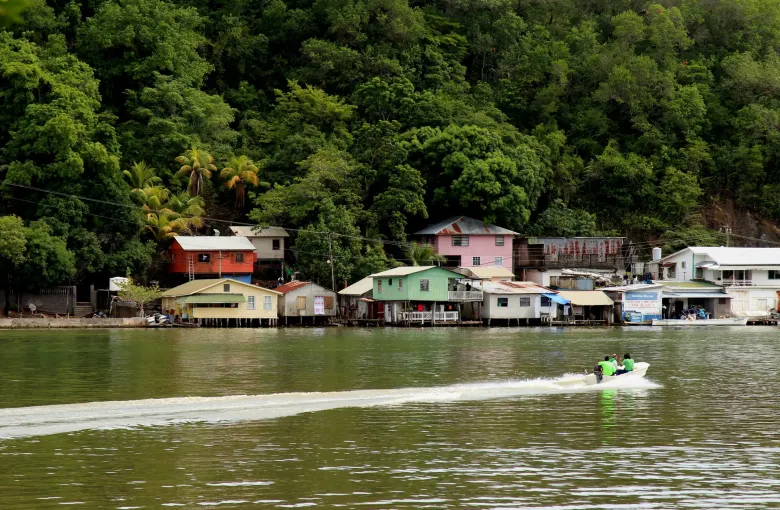
Settle the medical question before the itinerary.
Age is not the variable that matters here. What matters is whether you have a condition that could need more than first aid, because the FCDO records that emergency medical facilities on the Bay Islands are extremely limited.
Its general health advice asks every traveler to confirm before departure that the destination can provide the healthcare they may need, and that their insurance covers local treatment or unexpected medical evacuation, noting that this matters particularly for anyone with a health condition. On this island that advice is not boilerplate.
Carry regular medication in its original labeled packaging with a copy of the prescription, and do not count on replacing anything locally. The emergency number is 911.
The prescription question has to be settled weeks ahead.
The CDC recommends that travelers going to certain areas of Honduras take prescription medicine to prevent malaria, and lists the transmission areas as throughout the country and on this island and the other Bay Islands. Because it is a prescription decision it belongs to the weeks before you travel rather than the week of the sailing, and it is worth raising at the same appointment where you review whatever you already take. TravelHealthPro, writing for a British readership, describes a low risk here and recommends awareness and bite avoidance rather than tablets; both are real official positions, and the travel safety guide sets out where they diverge and why an American reader follows the first. For anyone already managing a medication schedule the useful question for a clinician is not only whether to take something, but how it sits alongside the rest.
The good news is the geography.
Roatan happens to suit an unhurried visit better than most diving destinations, because the reef comes in close. The best of the island's underwater life is reachable from the shore or from a short boat ride, which means the experience most people come for does not require a long day or a strenuous one.
A calm-water snorkel, a boat trip through the mangrove channels on the island's sheltered side, and an afternoon on a beach with shade is a complete and genuinely good day here. Nothing about it is a compromise version of somebody else's trip.
What to avoid scheduling.
Crossing the island and back in one port call, which spends the day on the road for the reasons in the transportation guide. Anything involving a transfer into a small boat from a dock without a proper step, unless you have asked the operator directly about it. And anything with no slack in it, because a fixed all-aboard time removes the option of running late.
The FCDO's instruction to travel with a reputable guide on Roatan is worth following, and a good guide will pace a day properly if you tell them what you want from it.
The practical items.
If step-free ground rather than pace is the constraint, the accessible travel guide covers what the pier offers and what lies beyond it.
Shade, water that came out of a bottle rather than a tap, and repellent at dusk for the reasons in the travel safety guide. Small denominations of cash, which the money guide explains goes further here than on most Caribbean calls.
If you would like the day built at a pace you choose rather than the one the excursion desk chose, tell us what you want from it.
Sources
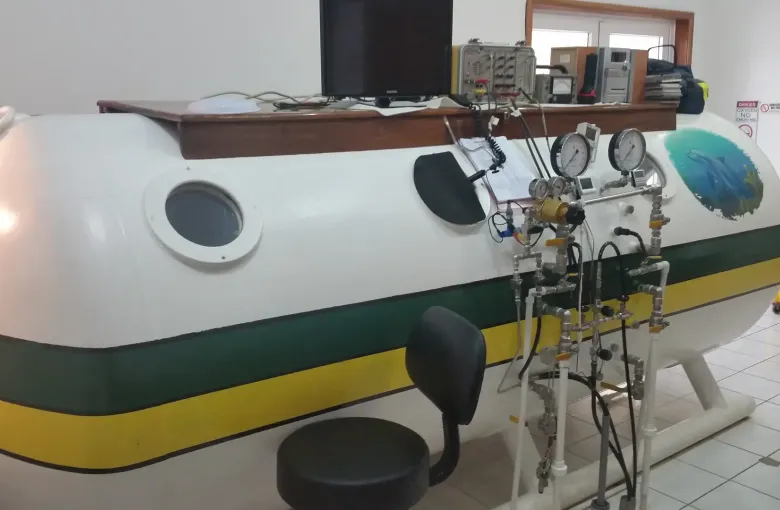
- UK Foreign, Commonwealth and Development Office: the Honduras safety and security page: that petty theft is a problem in cities and tourist areas including the Bay Islands of Roatan, Utila and Guanaja; that travelers should take particular care at bus stations, airports, isolated beaches, tourist sites and on public transport, avoid displaying valuables, and keep them locked away; that ATMs are available in the major towns and travelers should check with their hotel which ATMs to use, especially in Roatan, withdrawing inside shopping centers, changing money in hotels or banks, checking machines for tampering, avoiding large or night-time withdrawals; that US dollars are widely accepted for exchange and payment while British pounds are difficult to exchange; that there is a hyperbaric recompression chamber on Roatan and recompression facilities on Utila, but that emergency medical facilities on the Bay Islands are extremely limited; and that there is a more conservative attitude outside the capital with public displays of affection not recommended. Accessed 21 September 2026.
- UK Foreign, Commonwealth and Development Office: the Honduras health page: that the emergency medical number is 911 and a caller should ask for an ambulance; that travelers should confirm before traveling that the destination can provide the healthcare they may need and that their insurance covers local treatment or unexpected medical evacuation, which matters particularly for anyone with a health condition or who is pregnant; that vaccine recommendations should be checked at least 8 weeks before the trip and that the health risks it links to include Zika virus, malaria, dengue and yellow fever; that altitude sickness is a risk in parts of Honduras, which are inland and mountainous rather than on the Bay Islands; that tap water is not generally safe to drink while bottled water is cheap and widely available; and that the legal status and regulation of some medicines differs between countries. Accessed 21 September 2026.
- UK Foreign, Commonwealth and Development Office: the Honduras regional risks page: that the Bay Islands are generally safer than mainland Honduras, but that there have been several attacks by criminals on visitors, including on the ferries to and from mainland Honduras; that anyone visiting Roatan should travel with a reputable guide; and that a driver of a car or scooter should avoid side roads in remote areas, which can be poorly maintained and unsafe during night time hours. Accessed 21 September 2026.
- US Centers for Disease Control and Prevention: the Honduras traveler health page: that the CDC recommends travelers going to certain areas of Honduras take prescription medicine to prevent malaria; that its malaria transmission areas are given as throughout the country and on the island of Roatan and the other Bay Islands, with no transmission in San Pedro Sula or Tegucigalpa; and that it records no drug resistance, with the parasite predominantly Plasmodium vivax. Accessed 21 September 2026.
- TravelHealthPro, National Travel Health Network and Centre: the Honduras country page: that the monetary unit is the lempira; and that there is a low risk of malaria below 1,000m and in Roatan and the other Bay Islands, for which awareness of risk and bite avoidance are the recommended response, with antimalarials considered in low risk areas only in exceptional circumstances. Accessed 21 September 2026.
Other Articles
Accessible Travel in Roatan
Roatan Travel Safety and Health