The pier is the easy part, and it is not the island.
The cruise terminal at Coxen Hole is modern, level and built for volume, and for a traveler who needs step-free ground it is comfortably the most predictable part of a day here. If your plan is to be ashore, look around the terminal area and return to the ship, that is a realistic day and this guide is not going to talk you out of it.
What follows the pier is different. Roatan is a long narrow island with a ridge down the middle, one main road, and settlements that drop steeply to the water. Surfaces off the main road vary, and the FCDO's own advice warns that side roads in remote areas can be poorly maintained. Several of the places visitors most want to see, including the eastern settlements built on stilts, are reached by small boat.
The medical limit is the real planning constraint.
On most destinations an accessibility page is about surfaces and distances. Here there is a second thing, and it deserves to be stated before the practical detail.
The FCDO records that emergency medical facilities on the Bay Islands are extremely limited. For a traveler with a condition that might need more than first aid, that is a more consequential fact than any curb height, and the answer to it is the same as in the travel safety guide: insurance that genuinely covers medical evacuation, checked and confirmed rather than assumed, before you book.
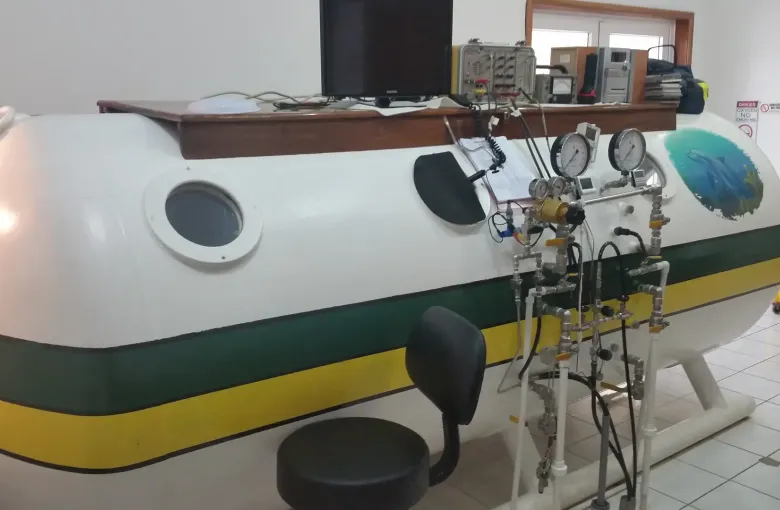
The island does have a hyperbaric recompression chamber, which is relevant to divers specifically and does not change the general picture.
What to establish before you commit.
Ask your ship which pier you are berthing at, because Coxen Hole and Mahogany Bay are different places with different layouts and transfer times. Ask any excursion operator directly about vehicle access, about the number of steps and about whether any part of the trip involves a transfer into a small boat, and ask them in writing.
Treat distance as time rather than as miles, for the reasons in the transportation guide, and build in more of it than the schedule suggests. On a fixed all-aboard time there is no margin to recover, and the entry guide explains why that time is a hard boundary.
What this page does not claim.
It does not give step counts, door widths, ramp gradients or a list of accessible operators. No source in this cluster's register publishes any of them for Roatan, and an accessibility guide that invents specifics is worse than one that admits it has none: a reader can plan around a gap they know about, and cannot plan around a confident number that turns out to be wrong.
For a visit that is unhurried rather than assisted, which is a different question, the guide for senior travelers covers the gentler version of the island.
If you tell us what you need, we will get answers from operators in writing before anything is booked. Start there.
Sources
- UK Foreign, Commonwealth and Development Office: the Honduras safety and security page: that petty theft is a problem in cities and tourist areas including the Bay Islands of Roatan, Utila and Guanaja; that travelers should take particular care at bus stations, airports, isolated beaches, tourist sites and on public transport, avoid displaying valuables, and keep them locked away; that ATMs are available in the major towns and travelers should check with their hotel which ATMs to use, especially in Roatan, withdrawing inside shopping centers, changing money in hotels or banks, checking machines for tampering, avoiding large or night-time withdrawals; that US dollars are widely accepted for exchange and payment while British pounds are difficult to exchange; that there is a hyperbaric recompression chamber on Roatan and recompression facilities on Utila, but that emergency medical facilities on the Bay Islands are extremely limited; and that there is a more conservative attitude outside the capital with public displays of affection not recommended. Accessed 21 September 2026.
- UK Foreign, Commonwealth and Development Office: the Honduras regional risks page: that the Bay Islands are generally safer than mainland Honduras, but that there have been several attacks by criminals on visitors, including on the ferries to and from mainland Honduras; that anyone visiting Roatan should travel with a reputable guide; and that a driver of a car or scooter should avoid side roads in remote areas, which can be poorly maintained and unsafe during night time hours. Accessed 21 September 2026.
- UK Foreign, Commonwealth and Development Office: the Honduras health page: that the emergency medical number is 911 and a caller should ask for an ambulance; that travelers should confirm before traveling that the destination can provide the healthcare they may need and that their insurance covers local treatment or unexpected medical evacuation, which matters particularly for anyone with a health condition or who is pregnant; that vaccine recommendations should be checked at least 8 weeks before the trip and that the health risks it links to include Zika virus, malaria, dengue and yellow fever; that altitude sickness is a risk in parts of Honduras, which are inland and mountainous rather than on the Bay Islands; that tap water is not generally safe to drink while bottled water is cheap and widely available; and that the legal status and regulation of some medicines differs between countries. Accessed 21 September 2026.
Other Articles
Roatan for Senior Travelers
Getting Around Roatan