Why this page is different from the other two
The other heritage guides in this cluster describe inscribed properties: Machu Picchu and the valley below Cuzco, both on the World Heritage List. This one describes heritage that is on no list at all, and that is the first thing a visitor needs to know rather than something to apologize for.
Peru has thirteen World Heritage properties. All are Inca, pre Inca or colonial. The Afro-Peruvian coast has no inscription because what survives here is not architecture. It is music, dance, food and devotion, held in families and in communities, and it has to be visited on those terms.
Where
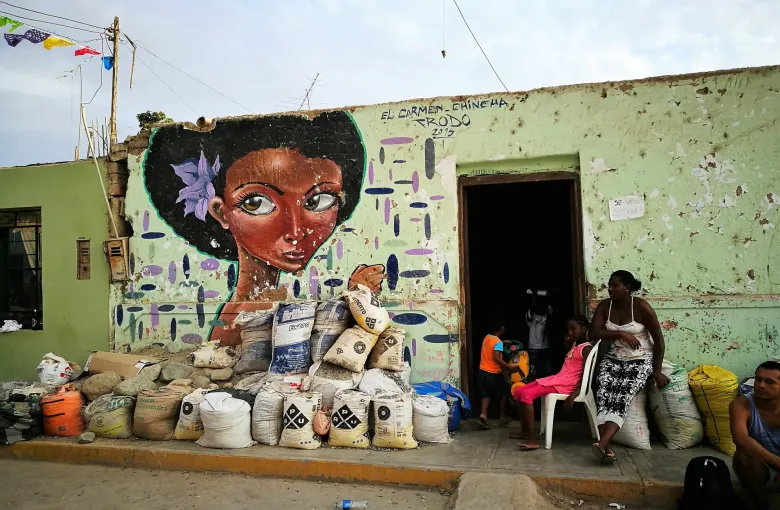
The coast south of Lima, centered on the district of El Carmen in the province of Chincha, roughly three hours by road from the capital. The valleys here were cotton and sugar estates worked by enslaved Africans, and the communities descended from them still live in the same district.
Further south there are Afro-Peruvian communities around Ica and Nasca. In the north, around Zana and Lambayeque, a separate Afro-Peruvian history developed with its own character.
What is here
The instrument
The cajon was developed on this coast: a wooden box the player sits astride and strikes with both hands. It has since traveled into flamenco and into popular music around the world. This is where it comes from, and hearing it played here by people who learned it at home is not the same as hearing it anywhere else.
The music and dance
Festejo is fast and celebratory; lando is slower and carries the older material. Both use cajon, guitar, voice and the quijada, a donkey jawbone played as a rattle. The zapateo, a competitive footwork dance, is performed at gatherings and is technically formidable.
The devotion
The Senor de los Milagros procession that fills Lima with purple each October began with an image painted by an enslaved Angolan man in the seventeenth century, in a confraternity of enslaved and free Africans. It is now one of the largest religious processions in the Americas. Our Peru festivals guide covers the October processions.
The food
Several dishes now regarded as simply Peruvian came from this kitchen, including the anticucho, made from the cuts enslaved workers were given rather than chose. Our Peru food guide takes that up.
Visiting
- Go to El Carmen. Community run peñas, family workshops and dance and cajon classes are how the district receives visitors, and they are run by the people whose heritage it is.
- Go for a festival if the dates work. Verano Negro in Chincha, and the Christmas and February gatherings, are when the district is fullest. Confirm this year's dates locally rather than carrying a date forward.
- Pay properly for teaching and performance. It is skilled work and it is the reason the tradition is still here.
- Ask before photographing. Always, and particularly at a religious event.
- Spanish matters here more than in the Cusco circuit, where English is common.
Getting there and staying
Chincha is reached by road down the coast from Lima. Use a reputable bus company or a car arranged in advance rather than a vehicle offered to you at a terminal, for the reasons in our Peru travel safety guide. Accommodation in El Carmen is simple and family run, and around a festival it needs booking ahead.
The district is agricultural and working, not a resort, and a hurried stop on the way to Paracas will miss the point of it. An overnight stay is what makes the difference.
Verify before you travel
Festival dates, workshops and community operators change from year to year. Ask locally, or through iPeru, rather than relying on a published list.
Sources
- UNESCO World Heritage Centre: Peru's State Party record: thirteen properties inscribed on the World Heritage List, nine cultural, two natural and two mixed, and the ratification of the Convention on 24 February 1982. Accessed 16 September 2026.
- UK Foreign, Commonwealth & Development Office: Peru safety and security: protests and strikes and their effect on the southern railways, street crime in Lima, Cusco and Arequipa, robbery by criminals posing as taxi drivers at Jorge Chavez airport and the bus terminals, express kidnapping, counterfeit notes and the withdrawn intis passed by street changers in Cusco, methanol in spirit drinks, the requirement to carry identification, the prohibition on photographing military sites, the illegality of carrying coca leaf out of the country, driving and overnight bus standards, the rainy season from November to May, and the earthquake and volcanic risk. Accessed 16 September 2026.
Other Articles
Peru and Diaspora Reconnection
Machu Picchu: Visitor and Heritage Guide