The short version
If you have Dutch ancestry, the odds of finding the actual village are good. The Netherlands is a small country with an old bureaucratic habit, and the two record systems that matter are both accessible: civil registration from 1811, and church registers of baptism, marriage and burial for the centuries before that.
Start at a desk, not at an airport. The research is what makes the trip worth taking, and most of the first stage can be done before you book anything.
Where the records are
Dutch archives are organized by level, and knowing which level holds what saves a great deal of time:
- Municipal and regional archives hold the civil registration: births, marriages and deaths, registered by the municipality where the event happened. This is where a named ancestor becomes a named place.
- Provincial archives hold the older church registers and much notarial material.
- The National Archives in The Hague hold the records of the state: colonial administration, emigration and shipping material, military service, and the archives of the trading companies.
- The national genealogical collection, also in The Hague, is the place to go for compiled family research and for published pedigrees.
A great deal of this is indexed and searchable online, including scanned register images, and the indexes are good enough that a specific name and an approximate decade will often produce a document rather than a hint. Dutch archives are also used to foreign inquiries and many staff work in English.
Reading a Dutch name before you search for it
Two features of Dutch names defeat searches more often than anything else.
Patronymics. Before family names were fixed, a person was commonly identified as their father's child: Jansen from Jan, Pietersen from Pieter. Family names were made compulsory under the same Napoleonic administration that introduced civil registration, which is why 1811 is such a hard boundary in this research.
Prefixes. Van, de, van der, ten and te are part of the name and are filed differently in different systems, sometimes under the prefix and sometimes under the word after it. An ancestor who emigrated may also have had the prefix merged, dropped or capitalized by a clerk at the other end, which is why the American spelling of a Dutch surname is often a poor search term for a Dutch archive.
The emigration waves, briefly
Dutch emigration happened in distinct episodes rather than continuously, and knowing which one your family belongs to tells you which records to search.
The seventeenth century moved Dutch people around the world through trade and settlement rather than as mass emigration, and its traces are in company and colonial records rather than in emigration lists.
The middle of the nineteenth century produced the wave most North American families descend from: agricultural hardship combined with religious dissent, sending whole congregations to the American Midwest. The towns they founded there still carry Dutch names, and the church records at both ends of that journey are often the best documents in the whole search.
The years after the Second World War produced the largest emigration in Dutch history, with government encouragement, to Canada, Australia, New Zealand, the United States and South Africa. This wave is recent enough that living relatives and their letters are frequently the best starting point, and recent enough that its records may still be restricted on privacy grounds.
There is also a diaspora that moved the other way, and it belongs on this page. Decolonization brought large communities from Indonesia and from Suriname to the Netherlands, and their descendants are Dutch. If that is your history, the relevant records are Dutch colonial and immigration records held in The Hague rather than emigration records, and the reading is a harder one.
⚠ What we will not tell you
We publish no rule about who is entitled to Dutch citizenship or a Dutch passport through descent. Nationality law is technical, it varies by the year of birth and the parents' circumstances, and the Dutch position on holding more than one nationality is more restrictive than many people assume.
A travel page that summarizes that in a paragraph is telling somebody something that could cost them a nationality they already have. Ask a Dutch consulate or an immigration lawyer. What we can say is the ordinary entry position: a visitor travels under Schengen area rules, which means the two passport tests and ninety days in any one hundred and eighty, and having Dutch ancestry changes none of that.
Planning the trip once you have a place
Once you have a municipality, the Netherlands is the easiest country in Europe to work in. Almost nowhere is more than a couple of hours from anywhere by train, so a single base will reach a village, its archive and its churchyard in one day.
Four practical suggestions. Write to the municipal archive before you travel, because a request that arrives in advance is frequently answered before you arrive. Ask specifically for the register images rather than an index entry. Allow a full day for the place itself rather than an hour, because the walk between a church, a farm and a graveyard is the part people remember. And take what you have with you: an emigrant's name, a ship, a date, a photograph of a farmhouse. Dutch archivists are very good at the last mile.
Verify Before You Travel
- The National Archives in The Hague, and the relevant municipal or provincial archive, for what they hold and for their reading room rules.
- A Dutch consulate or a qualified immigration lawyer, for anything about nationality by descent.
- The UK Foreign, Commonwealth & Development Office Netherlands entry requirements page, for the ordinary visitor entry rules that apply regardless of ancestry.
Sources
- UNESCO World Heritage Centre: the Netherlands’ State Party record: thirteen properties inscribed on the World Heritage List, twelve cultural and one natural. Accessed 16 September 2026.
- UK Foreign, Commonwealth & Development Office: Netherlands travel advice, including the standing pointer to separate advice for the Dutch Caribbean. Accessed 16 September 2026.
- UK Foreign, Commonwealth & Development Office: Netherlands entry requirements: Schengen area rules, the two passport tests, the Entry/Exit System, the food restrictions and the 10,000 euro cash declaration. Accessed 16 September 2026.
Other Articles
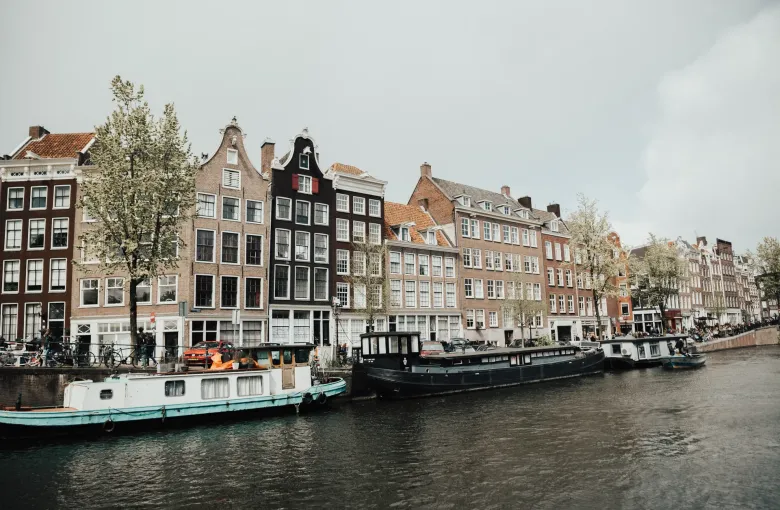
Amsterdam Canals: Visitor and Heritage Guide

Netherlands Culture and Etiquette Guide