The quick answer
Hot desert climate almost everywhere, a narrow Mediterranean strip in the north, and a temperature gap between Alexandria and Aswan wide enough that they need to be planned as different places. Rain is not a planning factor south of the coast. Heat, dust and the size of the day–night swing are.
Four Egypts, for weather purposes
The Mediterranean coast
Alexandria and the north coast are the mildest part of the country and the only part with a real rainy season, concentrated in winter. Summers are hot but tempered by the sea; winters are cool, breezy and can be genuinely wet. This is where Egyptians go in August, which tells you most of what you need to know.
Cairo and the Delta
Hot summers, mild winters, very little rain. The city’s own weather is complicated by its size: it holds heat overnight far more than the desert around it, and dust is a constant background presence rather than an occasional event.
Upper Egypt — Luxor, Aswan, Abu Simbel
The hot end of the country. Summer daytime temperatures here are the highest you will encounter on a normal Egyptian itinerary, and the difference from Cairo is large enough to change how a day is built. The compensation is winter: dry, bright, comfortable days that are close to ideal for walking a temple complex.
The Red Sea and Sinai
Hot and dry with very little rain, warm sea temperatures for much of the year, and afternoon wind that is the reason the coast is known for sailing. Sinai’s interior is high desert and cold at night in winter — anyone going up Mount Sinai before dawn needs more clothing than the coastal weather suggests.
The day–night swing
Desert air holds very little moisture, so it sheds heat quickly after sunset. A December day in Aswan can be shirtsleeve-warm at noon and cold enough for a coat by nine in the evening, and the same is true on a cruise deck. This catches out more visitors than the daytime heat does, because the daytime heat is the part everybody plans for.
The khamaseen
From roughly late March into May, hot dry winds off the Sahara carry sand and dust north across the country. The Egyptian Meteorological Authority treats this as a distinct season. It is intermittent — a day or two at a time rather than weeks — and mostly it means reduced visibility, gritty air and a sky the color of weak tea. Sites stay open. Photographs suffer. Contact lens wearers and anyone with asthma feel it.
What the numbers do not tell you
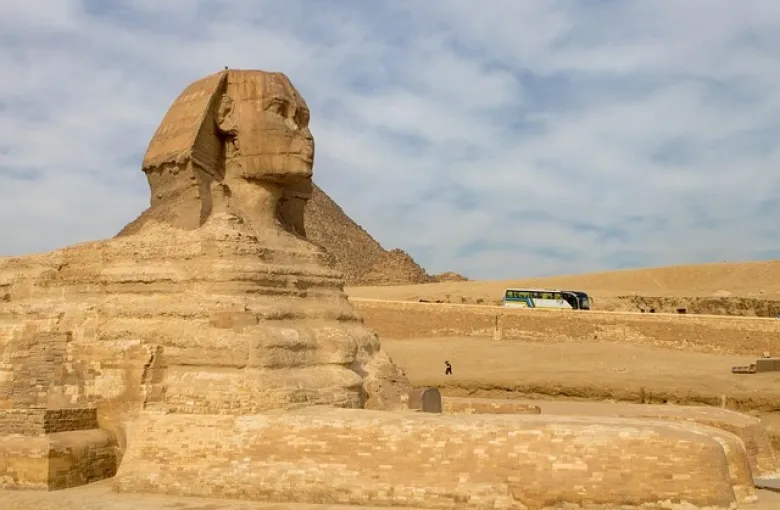
Shade is the variable that matters and the one no forecast reports. The Giza plateau, the Valley of the Kings and the open courts at Karnak have effectively none. A day that reads as manageable on a weather app can be strenuous in practice simply because there is nowhere to step out of the sun for three hours. Plan around shade and water, not around the forecast number.
Humidity works the other way. Cairo and the south are dry, so sweat evaporates and dehydration arrives without the warning signs a humid climate gives you. Drinking more than you feel you need is the standard advice here for a reason.
Common questions
Is there a rainy season worth planning around?
Only on the Mediterranean coast, and only in winter. Everywhere else, no.
Do sites close because of weather?
Rarely. Heavy dust can disrupt flights and occasionally closes a road; a rare Cairo downpour can snarl traffic for a day. Archaeological sites themselves generally stay open.
How cold does it actually get?
Cold enough at night in winter, in the desert and on the river, that a fleece and a windproof layer earn their space. Not cold enough anywhere on a standard itinerary to need serious winter clothing.
Seeing it on a LABUSA Travel journey
The weather is the reason our Egypt itineraries look the way they do — early site starts, the hot middle of the day spent on the water or in the shade, and a return to the temples when the light softens. It is a structure built around the climate rather than a schedule laid on top of it.
Other Articles
Best Time to Visit Egypt
Egypt Packing List