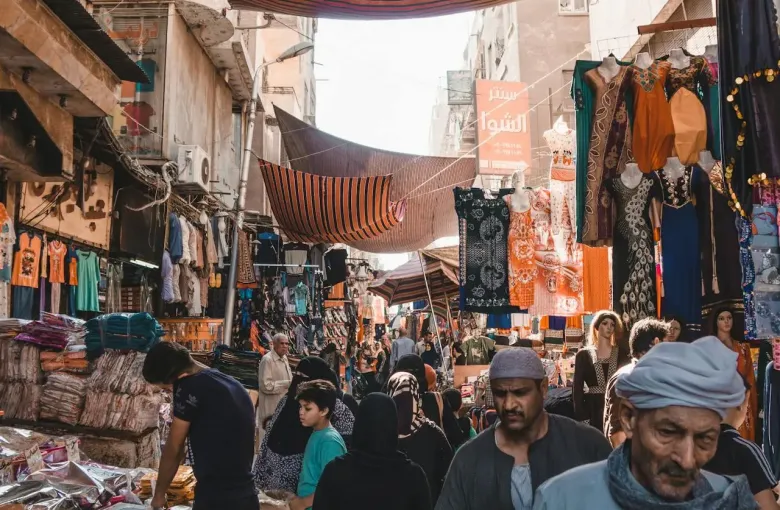
The quick answer
The currency is the Egyptian pound (EGP, written LE or £E locally). Bring a card for hotels, larger restaurants and organized tours, and carry cash for everything else — because a great deal of ordinary Egyptian commerce is still cash, and almost all tipping is. Change money at banks, licensed bureaux or your hotel, and keep the receipt.
Notes and small change
The Central Bank of Egypt issues the pound, divided into 100 piastres. In practice you will handle notes, not coins, and the problem you will actually have is the opposite of the one you expect: not getting money, but getting small money. ATMs dispense large denominations, and a large note is difficult to break for a taxi, a bottle of water or a tip. Break notes at supermarkets, hotels and larger restaurants whenever the chance comes up, and keep a working float of small ones somewhere separate from your wallet.
Why this guide gives you no exchange rate
Because any number printed here would be wrong within weeks, and a stale rate is worse than none — it anchors your sense of what things cost to a figure that has stopped being true. The Central Bank publishes current rates; check them the week you travel, not the month you book.
What is worth understanding is the shape of it rather than the number. Egypt has periodically had a visible gap between the official bank rate and what is offered informally on the street. Changing money outside the licensed system is illegal, gives you no recourse if the notes are short or counterfeit, and is a common setting for straightforward theft. Use banks, licensed exchange bureaux, hotels and ATMs. Keep the receipts — you may need them to convert leftover pounds back on the way out.
Cards and ATMs
Cards work in hotels, larger restaurants, museums, established shops and organized tour providers, mostly Visa and Mastercard. They do not work in markets, in most taxis, at small cafes, or for any of the many small transactions that make up an ordinary day. ATMs are widespread in Cairo, Alexandria, Luxor, Aswan and the Red Sea resorts, and much thinner once you leave them — draw cash before a stretch of desert or a run of small towns, not during it.
Tell your bank you are traveling. A card frozen for unusual activity on your second day is a recurring and entirely avoidable problem. Carry a second card from a different account, kept somewhere other than the first.
Baksheesh: what tipping is actually for
Tipping in Egypt is not a bonus for exceptional service. It is a normal and expected part of many transactions, and it is woven into how a lot of service work is paid. Understanding that removes most of the friction visitors feel about it.
It divides roughly three ways. There is tipping for a service you asked for — a guide, a driver, a boat crew, hotel staff — which is straightforward and where the larger amounts go. There is tipping for a small unrequested courtesy: someone opens a gate, carries a bag, points out a detail. And there is the request for money where no service was given at all, which you are entitled to decline, pleasantly and without explanation.
A few practical habits make it easy. Keep small notes accessible and separately from your main cash. Decide in advance what a day’s tipping will cost you and stop thinking about each one. Agree guiding and driving arrangements up front so nothing is ambiguous at the end. And be aware that photographing someone, or their animal, or their stall, is treated as a service in most tourist areas — ask first, and expect that yes comes with a small cost attached.
Costs, in shape rather than in figures
Egypt is inexpensive for most visitors from Europe and North America once you are there, with the significant exceptions of site entry, internal flights and quality accommodation, which are priced internationally. Museum and site tickets are set by the Ministry of Tourism and Antiquities and are revised periodically, and several major sites charge separately for individual tombs or for photography. Budget for the entries as a real line rather than an afterthought.
Common questions
Should I bring US dollars or euros?
Some hard currency is useful as a reserve and for the visa fee where that is paid on arrival, but you will spend pounds. Bring clean, undamaged notes if you bring any — torn or heavily marked foreign notes are often refused.
Can I pay in dollars?
Sometimes, in tourist settings, at a rate that will not favor you. Pay in pounds.
What do I do with leftover pounds?
Convert them before you leave, at a bank or bureau, and bring your exchange receipts. Egyptian pounds are of little use once you are out of the country.
Seeing it on a LABUSA Travel journey
On our Egypt journeys the large items — site entries, internal transport, guiding — are arranged and paid in advance, so what you carry is for the small day-to-day and for tipping. We tell you before you travel what that realistically comes to, so there are no surprises on the ground.
Other Articles
Egypt Culture and Etiquette Guide
Getting Around Egypt