The quick answer
Two things dominate the Costa Rican calendar for a visitor. Semana Santa, the week before Easter, when much of the country closes and Costa Ricans travel to the coast in large numbers. And 31 August, the Day of the Black Person and Afro-Costa Rican Culture, which is the most significant fixed date on the Caribbean coast.
Fixed dates are given below. Moveable ones are described without dates, because they shift each year and a page that pins them will be wrong.
Fixed dates
31 August, Día de la Persona Negra y la Cultura Afrocostarricense
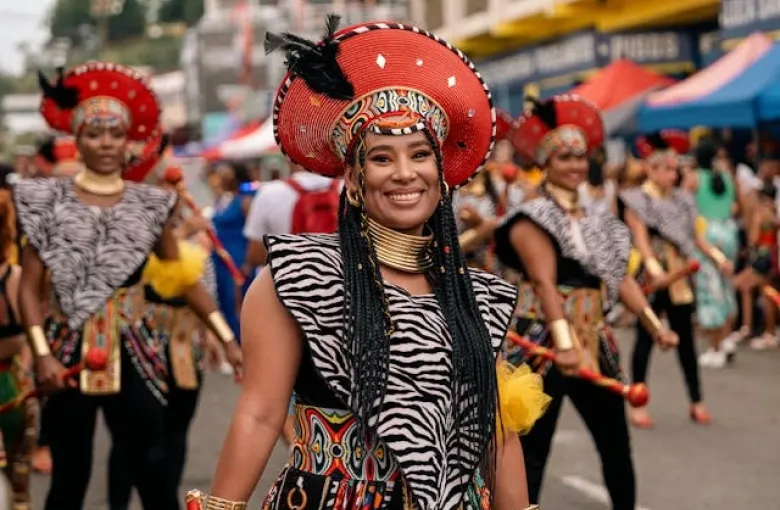
The Day of the Black Person and Afro-Costa Rican Culture. Costa Rica first decreed the date in the 1980s and formalized it in law in 2018, and it is now the center of a wider Afro-descendant heritage month. The focus is Limón, where a grand gala parade goes through the center of the city with Afro-Caribbean music, dress and food, and where the parade itself has been recognized as part of the country’s intangible cultural heritage.
If you have any interest in the Caribbean coast, this is the single best date to be there. It is also, conveniently, inside the coast’s driest window.
15 September, Independence Day
Marked across Central America. In Costa Rica the evening before carries the desfile de faroles, a lantern parade made by schoolchildren, which is genuinely charming and happens in every town. The day itself brings parades and school bands everywhere.
1 December, the anniversary of the abolition of the armed forces
Commemorates the 1948 decision, and is the date on which the country most explicitly celebrates what it chose not to be.
Christmas and the end of the year
Tamales, family, and the Tope, a large horse parade in San José on 26 December, followed by the Festival de la Luz and the Zapote fiestas around the turn of the year. This is the busiest and most expensive travel period of the Costa Rican calendar.
The moveable ones
Semana Santa
Holy Week, which moves with Easter. Thursday and Friday are effectively national shutdown days: banks, many shops and a great many restaurants close, public transport reduces sharply, and alcohol sales have historically been restricted. At the same time the beaches are at their fullest, because the whole country is on vacation. Book far ahead, expect processions in the towns, and do not plan a day that depends on anything being open.
Carnaval in Limón
A major Caribbean carnival held around the middle of October in Limón, with calypso, comparsas and a large street parade. Dates are announced locally each year and have moved, so check before building a trip around it.
Fiestas patronales
Almost every town has a patron saint festival with a bullring, food stalls, music and a tope. They are scattered across the calendar and are the most enjoyable way to see everyday Costa Rican celebration. Ask locally where and when: this is not information that is published nationally in any useful form.
What festivals mean for your plans
- Semana Santa and the Christmas and New Year period are the two times to book months rather than weeks ahead.
- Public holidays close banks and government offices and thin out bus schedules.
- Parades close streets, which matters if you are driving through a town on the day.
- Some park and museum opening arrangements change on holidays. Check with SINAC for parks.
Planning with LABUSA Travel
We will tell you what falls inside your dates and whether it is worth reshaping the trip around, and we will warn you if you have unknowingly booked into Semana Santa.
Sources
- Ministerio de Cultura y Juventud: the national cultural calendar, including Afro-Costa Rican heritage month and the commemorations of 31 August. Accessed 11 August 2026.
- Instituto Costarricense de Turismo: the national tourism board, including official entry guidance and protected-area visitor information. Accessed 11 August 2026.
- SINAC, Sistema Nacional de Áreas de Conservación: the national protected-area system, which sets opening arrangements, capacity limits and access rules for every national park. Accessed 11 August 2026.
Other Articles
Costa Rica Culture and Etiquette Guide
Afro-Costa Rican Heritage and the Caribbean Coast