What this page is, and is not
Costa Rica’s Black history is not the transatlantic slave trade story that shapes heritage travel to West Africa. It is a documented labor migration from the British West Indies, overwhelmingly from Jamaica, beginning in the late nineteenth century, with surviving records, living descendants and a continuous culture. There is no Door of No Return here and no implied ancestral link for visitors. It is a different subject and it is written as one.
The migration
From the 1870s, workers were recruited from Jamaica and other British Caribbean colonies to build the railway from the Central Valley to the Atlantic port of Limón. It was brutal work through lowland forest, and a great many died. When the railway was finished, the same labor and the same company turned to bananas, and the Caribbean lowlands became a plantation economy with an English-speaking, largely Protestant, West Indian workforce at its center.
Those workers did not think of themselves as immigrants at first. Many expected to return, kept British subjecthood, ran their own schools in English and maintained churches, lodges and mutual societies of a kind that would have been familiar in Kingston.
Exclusion, and citizenship
For decades, Afro-Caribbean residents of Limón were restricted in practice from settling in the highlands, and the banana company’s move to the Pacific coast in the 1930s was accompanied by arrangements that kept Black workers from following it. Full and unambiguous citizenship came only in the middle of the twentieth century, in the constitutional settlement that followed the 1948 civil war.
That is why the community is concentrated on one coast, why its first language was English, and why Limón’s relationship with San José is complicated. Understanding it changes what you see on a visit.
What survives, and where to see it
- Language. Limón Creole English, locally called Mekatelyu, is still spoken, particularly by older people, alongside Spanish.
- Food. Rice and beans in coconut milk, rondón, pan bon and patties. The food guide covers this properly; it is the most accessible part of the culture and the most enjoyable.
- Music. Calypso in a distinctly Costa Rican form, and a strong local tradition of its own performers.
- Churches and lodges. Anglican, Baptist and Methodist foundations in Limón and along the coast, some more than a century old.
- Cahuita. The national park that the community fought for and now co-manages with the state, which is a piece of this history you can walk through.
31 August
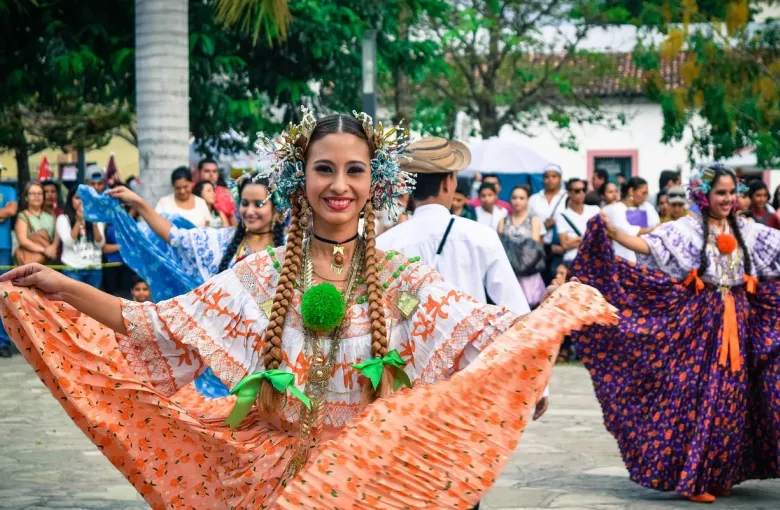
The Day of the Black Person and Afro-Costa Rican Culture, decreed in the 1980s and set in law in 2018, is the focal point of the year and of a wider heritage month. Limón holds a grand gala parade through the city, and the parade has been recognized as part of Costa Rica’s intangible cultural heritage. If you want to see this culture celebrating itself rather than explaining itself to visitors, be in Limón on that date.
If you are tracing a family
This is one of the few Black heritage stories in the Americas with usable paper. Migration was recent, recorded and administrative. Useful starting points are civil registration in Costa Rica, church records in Limón, Jamaican parish and shipping records at the far end, and the archives of the railway and fruit companies that did the recruiting.
Two honest cautions. Records are scattered across two countries and are not consolidated in any single searchable place, so this is a project rather than an afternoon. And this page states no rule about citizenship or residency by descent, because those rules change and getting them wrong would matter; ask a Costa Rican consulate.
Visiting well
Go to the coast rather than reading about it. Stay in Limón province, eat where people eat, hire guides from the community and buy from local makers. Ask before photographing people. And do not arrive treating the culture as a performance laid on for you: this is an ordinary part of Costa Rica with an extraordinary history, and it is doing perfectly well without an audience.
Planning with LABUSA Travel
We arrange Caribbean coast itineraries with local guides, around the dates that matter, and we can build a trip around 31 August for travelers who want to be there for it.
Sources
- Ministerio de Cultura y Juventud: the national cultural calendar, including Afro-Costa Rican heritage month and the commemorations of 31 August. Accessed 11 August 2026.
- Instituto Costarricense de Turismo: the national tourism board, including official entry guidance and protected-area visitor information. Accessed 11 August 2026.
- SINAC, Cahuita National Park: the park’s own official page, including its shared-governance arrangement with the community of Cahuita. Accessed 11 August 2026.
Other Articles
Cahuita and the Caribbean Coast: A Visitor Guide
Costa Rica Culture and Etiquette Guide