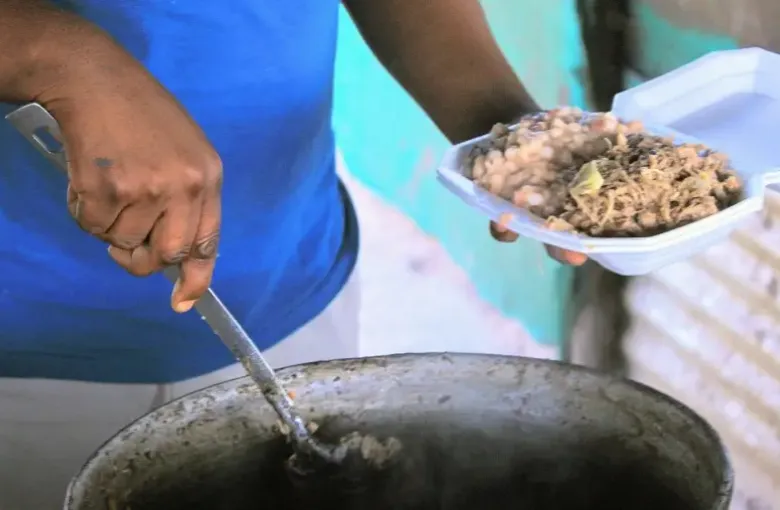
First, the words
Three words that a visitor should get right, because Batswana notice immediately:
- Botswana is the country.
- Batswana are the people — one person is a Motswana.
- Setswana is the language.
English is the official language and is used in government, business and schooling. Setswana is the national language and is what most of the country actually speaks day to day. Several other languages are spoken, among them Kalanga, Herero, Sekgalagadi and the languages of the San communities.
A few words go a very long way:
- Dumela rra — hello, sir. Dumela mma — hello, madam.
- Le kae? — how are you? Ke teng — I am fine.
- Ke a leboga — thank you.
- Pula! — rain, and the national cheer.
Greetings are the conversation, not a preface
Never open with your question. Greet first, ask how the person is, wait for the answer, and only then get to business — and use rra or mma, which carry real respect and cost you nothing.
Handshakes are usual and often include the supported form: the left hand touches the right forearm. Offer and receive with the right hand or with both. Age carries standing, and elders are addressed and served first.
Botho
Botho is the Setswana idea that a person is a person through other people — the same concept the region knows as ubuntu. In Botswana it is not an abstraction: it appears in national planning documents as one of the country's stated principles, alongside democracy, development, self-reliance and unity.
What it means for a visitor is simple. Courtesy, patience and acknowledging people are not optional politeness here; they are the thing itself.
The kgotla
The kgotla is the traditional assembly place and the institution that meets there: a public forum, presided over by a chief, where matters are discussed openly and anyone present may speak. It is not a museum piece. Kgotla meetings are still used for consultation on real decisions, and the practice sits alongside Botswana's parliamentary democracy rather than beneath it.
If you are invited to one, go, dress smartly, sit where you are put, and do not photograph without asking. Your host will guide you.
Baskets
Botswana basketry — coiled from mokola palm and dyed with bark and roots — is among the finest in Africa and is a serious craft rather than a souvenir trade. Patterns carry names: tears of the giraffe, knees of the tortoise, the flight of the swallow. The best come from the north-west, around the delta.
Buy from the maker or a community cooperative where you can, ask what the pattern is called, and expect to pay properly. A good basket takes weeks.
⚠ Traditions that UNESCO lists as AT RISK
Botswana has four elements on UNESCO's intangible heritage lists, and all four are on the List of Intangible Cultural Heritage in Need of Urgent Safeguarding rather than the Representative List:
- Earthenware pottery-making skills in Botswana's Kgatleng District — 2012
- Dikopelo folk music of Bakgatla ba Kgafela in Kgatleng District — 2017
- Seperu folkdance and associated practices — 2019
- Wosana ritual and associated practices — 2024
That distinction is worth pausing on. These are not listed as thriving showcases; they are listed because the people who hold them are few and aging and the transmission is fragile. If you have the chance to see any of them properly — through a community, not a staged show — that is a privilege, and paying the practitioners fairly is the point.
Dress and photography
Batswana dress neatly and a visitor who has made an effort is treated accordingly. Modest dress is appreciated in villages, at a kgotla and at places of worship. Beachwear belongs at the lodge pool. And no camouflage, which is restricted for civilians.
Ask before photographing people, and accept a refusal. Do not photograph government or military installations or border posts.
A word about the San
The San — also called Basarwa in Botswana — are the region's First People, with a presence here going back tens of thousands of years. Their relationship with the modern state, particularly over the Central Kalahari Game Reserve, is a contested and unresolved question that has been through Botswana's own courts.
We do not sell "bushman experiences". Where our itineraries include San-guided walks, they are run by San-owned or San-staffed operations, on their terms, and we will tell you whose they are. See our heritage and reconnection guide.
Traveling with LABUSA Travel
Where an itinerary includes a community visit, it is arranged through the community, with the introductions made properly — which is also what makes it worth doing.
Other Articles
Botswana Festivals and Celebrations
Botswana and Diaspora Reconnection