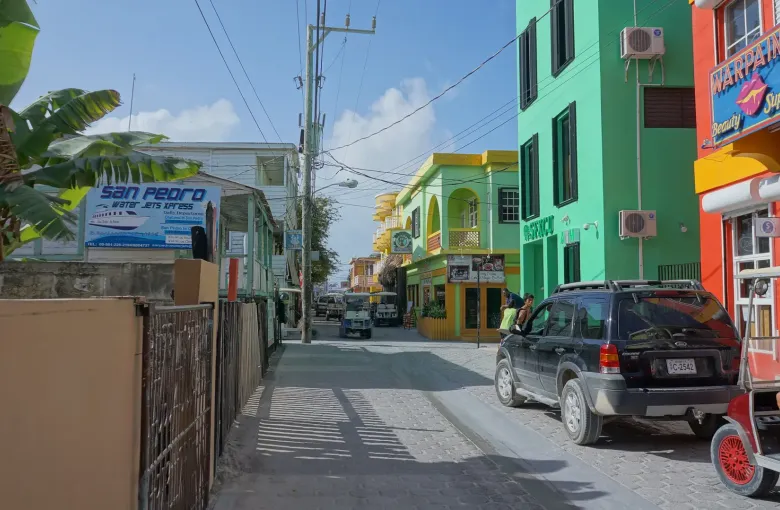
What the register actually holds about food here.
It is not a menu. It is a sentence in a UNESCO inscription about how knowledge is stored, and it is more interesting than a list of dishes would have been.
Describing the songs of the Garifuna, UNESCO records that their texts are a repository of history and traditional knowledge, naming cassava-growing, fishing, canoe-building and the construction of baked mud houses. Food knowledge here is not written down in a cookbook. It is carried in music, along with the knowledge of how to get to the fishing ground and how to build the house you eat in.
Cassava is the thread worth pulling. It is named first, it is the staple that thread runs through, and it connects the kitchen to the festivals guide and the diaspora reconnection guide, which set out who the Garifuna are and how the tradition reached this coast.
Why there is no list of dishes.
Because no source this cluster can read publishes one. That is a real gap and it is stated rather than filled. Naming dishes from general knowledge would produce a page indistinguishable from a researched one, and this series does not do that.
What follows from the gap is a suggestion rather than a list: the food knowledge described above belongs to communities, and the way to meet it is through them. A Garifuna village on the southern coast will feed you better than a page can describe.
Two practical notes that are sourced.
The first is easy. The official language is English, so menus, ingredients and questions about how something was cooked are conducted in a language most of our travelers already read. For anyone managing an allergy or a restriction, that removes the single largest friction of eating abroad.
The second is about where you eat rather than what. The mosquitoes that carry dengue are more common in towns, cities and surrounding areas and they feed in the daytime. An outdoor lunch in town is exactly the setting the advice has in mind, and repellent at midday is the habit that fits it. The packing list explains why that is a daytime item here rather than an evening one.
If you would like a trip built around eating with the communities who hold this knowledge, rather than around restaurants, tell us and we will arrange it.
Sources
- UNESCO Intangible Cultural Heritage: the element Language, dance and music of the Garifuna, inscribed in 2008 on the Representative List of the Intangible Cultural Heritage of Humanity and originally proclaimed in 2001, and inscribed for four states, Belize, Guatemala, Honduras and Nicaragua: that the Garifuna are a population of mixed origin incorporating cultural elements of indigenous Caribbean and African groups; that they settled along the Atlantic coast of Central America after being forced to flee from the Caribbean island of Saint Vincent in the eighteenth century; and that the Garifuna language belongs to the Arawakan group. Accessed 21 September 2026.
- TravelHealthPro, the National Travel Health Network and Centre: the Belize country page: that there are no certificate requirements under International Health Regulations; that in 2023 the WHO declared Belize malaria-free and that there is no risk of malaria in Belize, with bite avoidance still recommended; that there is a risk of dengue in this country and that the mosquitoes which spread it mainly feed during daytime hours and are more common in towns, cities and surrounding areas; that there is a risk of chikungunya, spread by mosquitoes which bite mainly during daytime hours; that Zika virus is spread by mosquitoes which predominantly feed during daytime hours; and that the capital is Belmopan, the official language is English and the monetary unit is the Belize dollar. Accessed 21 September 2026.
- UK Foreign, Commonwealth and Development Office: the Belize health page: that the emergency medical number is 911 and that a caller should ask for an ambulance; that travelers should contact their insurance company quickly if referred to a medical facility for treatment; that travel insurance should cover local treatment and unexpected medical evacuation, which matters particularly for anyone with a health condition or who is pregnant; that travelers should check the latest vaccine recommendations at least 8 weeks before the trip; that the health risks it links to include Zika virus, chikungunya virus, dengue and malaria; and that medical facilities in Belize are limited, the availability of prescription medicine is unreliable, and serious medical cases are normally evacuated to the United States at the patient's expense. Accessed 21 September 2026.
Other Articles
Belize Culture and Etiquette Guide
Belize and Diaspora Reconnection