The short version
Austria is two different countries for an accessible trip, and the split is not between city and mountain as you would expect. It is between modern infrastructure, which is excellent, and historic fabric, which was built in the sixteenth century and cannot be retrofitted.
Vienna's public transport is among the best in Europe for step-free travel. Salzburg's old town is cobbled, steep in places and has buildings whose entrances are a step up from the street. Both facts are permanent and neither is a failure of planning.
What works well
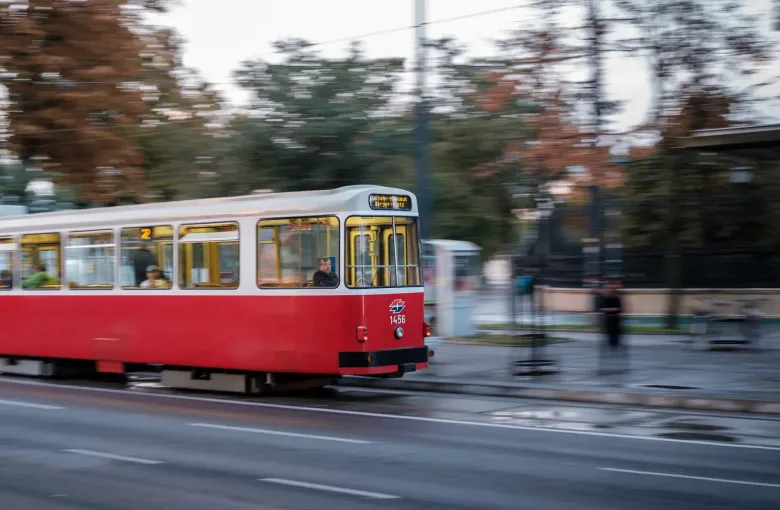
- Low-floor trams are standard in Vienna. The vehicle floor is level with a raised platform at the stop, so boarding is a roll-on rather than a lift. This is the single most useful accessibility fact about the city.
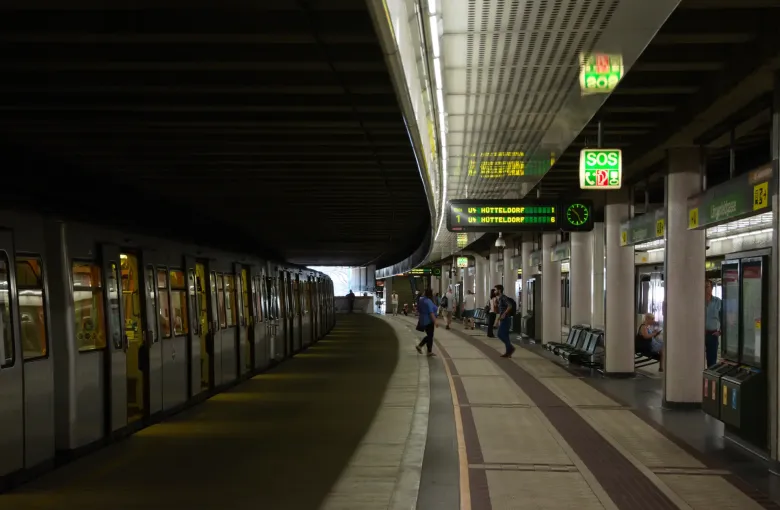
- The Vienna underground has lifts at the great majority of stations and tactile guidance on the platforms.
- Mainline trains in Austria have wheelchair spaces and accessible toilets on the long-distance services, and the railway operates an assistance service. It needs to be booked in advance rather than requested on the day, and the required notice is a question for the operator.
- The major museums in Vienna are largely accessible, including the ones on the Ringstrasse, because most were substantially rebuilt in the twentieth century.
What does not, and why
Historic centers are the constraint. Salzburg's Getreidegasse and the lanes behind the cathedral are cobbled and narrow. Vienna's inner district is flatter and better but still has cobbles and awkward thresholds. Hallstatt's lanes are steep and in places stepped, and the village is built on a slope between a lake and a cliff.
Churches, palaces and fortresses vary enormously and the variation is not predictable from the outside. A palace may have a lift installed discreetly and a church of the same age may have six steps and nothing else. This is why the practical advice below is to confirm building by building rather than city by city.
The mountains, which are better than you expect
This surprises people. Austria's mountain infrastructure includes a large number of funiculars, rack railways and cable cars, many of them modern, and several are step-free or close to it. A high viewpoint reached by cable car can be more accessible than a medieval street at the bottom of the valley.
The Hohensalzburg fortress in Salzburg and the Hallstatt salt mine are both reached by funicular. What the funicular does not solve is what happens at the top, which in both cases includes historic interiors. Ask specifically about the route beyond the upper station.
Mountain weather is a separate accessibility issue. Cable cars do not run in high wind, and a plan that depends on one needs an alternative.
Questions worth asking before you book
Ask these of the specific hotel, museum or operator rather than of a tourist board, and ask for measurements rather than reassurance.
- Is the entrance step-free, and if not, how many steps and is there a ramp or a lift?
- What is the clear door width of the room and the bathroom, in centimeters?
- Is there a roll-in shower or a bath, and are there grab rails?
- Is there a lift to the room floor, and what are its internal dimensions?
- For a site: how far is the accessible route, what is the surface, and is there seating on it?
- For a cable car or funicular: is boarding level, and what is the route at the top?
Equipment, medication and assistance
Bring spare parts and any charger you depend on, because a repair in a foreign country takes days rather than hours. Carry prescription medicine in its original labeled packaging with a copy of the prescription. Keep your insurance policy number and assistance number somewhere reachable without a signal, and confirm before you travel that your policy covers your equipment and any pre-existing condition.
The emergency number in Austria is 112.
Language
Having your requirements written in German on a card or on your phone is worth more than any amount of confidence in English. German is the only official language of Austria and the further you are from Vienna the more useful the card becomes.
Verify Before You Travel
- The Austrian railway's assistance service, for booking help with boarding and the notice it needs.
- Each hotel, museum, cable car and site on your itinerary, individually, for the measurements above. A city-level claim of accessibility is not a building-level one.
Sources
- UK Foreign, Commonwealth & Development Office: Austria travel advice: no advisory against travel to any part of the country. Accessed 16 September 2026.
- UK Foreign, Commonwealth & Development Office: Austria safety and security: the terrorism assessment and the attacks of February 2025 in Villach and November 2020 in Vienna, pickpocketing in city centers and parks, drink spiking, the requirement to have easy access to your passport, the refusal of a driving license as official ID, the face-covering ban and its fine, the public-transport ticket validation fine, and mountain rescue insurance. Accessed 16 September 2026.
Other Articles
Austria for Older Travelers
Historic Centre of Vienna: Visitor and Heritage Guide