The short version
The UK Foreign, Commonwealth & Development Office carries no advisory against travel to any part of Austria. There is no restricted province, no border strip and no area you are told to stay away from. We cite that office throughout this guide because its assessment of Austria is detailed and public, and because the facts it records are facts about Austria rather than advice aimed at any one nationality.
Read an advisory before you travel rather than taking this page's word for it. An advisory is a living document: it is restamped and rewritten, and the version you read the week you fly is the one that counts.
Four things actually reach ordinary visitors, and only one of them is crime.
The terrorism assessment, stated plainly
The assessment is that terrorists are likely to try to carry out attacks in Austria, and that attacks could be indiscriminate, including in places visitors use: public transport, transport hubs, music, sporting and cultural events, entertainment and nightlife venues, government buildings and international institutions, and places of worship.
Two attacks are named. On 15 February 2025 one person was killed and five injured in a knife attack in central Villach, in Carinthia in the south of the country. On 2 November 2020 four people were killed and twenty three injured in a shooting in central Vienna. The same source records that the Austrian authorities have disrupted a number of plans and made arrests in recent years, and that you can expect a visible police presence and additional measures in public places.
Nothing in that changes what a visitor does, which is the honest thing to say about it. Be aware of your surroundings and follow the instructions of local authorities.
Crime, and where it is actually done
Crime levels in Austria are generally low. The exception is petty crime, and the places named are specific: pickpocketing in the big city centers, and in city parks after dark. Thieves work by distraction, and the advice is to take particular care on public transport, in crowded city centers including the main stations, and above all on international trains and when taking your baggage off trains and coaches.
Austria sits on eight national borders and its long-distance trains are full of people getting on and off at night. That is where bags go missing, not on a Salzburg side street.
Drink spiking is raised as its own item. Drinks poured in bars abroad are often stronger than the ones you are used to; people have been robbed and assaulted after their drinks were spiked. Do not accept drinks from strangers and do not leave a drink unattended.
Two Austrian laws with no American equivalent
These are the two that reach visitors most often, and neither is intuitive.
You must always have easy access to your passport. That is the law in Austria. It does not require you to carry it on your body at every moment, but it does require that you can produce it quickly, so a passport locked in a hotel safe across the city is not compliance. And the part travelers get wrong: the Austrian authorities do not accept a driving license as official identification. A US driver's license will not answer the question. Carrying a copy of the photo page alongside your plans is a sensible habit.
⚠ This differs from the country next door. Germany has no legal requirement to carry identification at all, and the Netherlands requires it from the age of fourteen with a fine attached. Three neighbors, three different rules, and a single trip can easily cross all three. Do not carry Austria's rule into Germany or Germany's into Austria.
Covering your face in public is generally illegal in Austria, and the fine is up to 150 euros. There is a published list of exemptions. The law is written about clothing and objects that conceal the face, and it is enforced.
The fine nobody warns you about
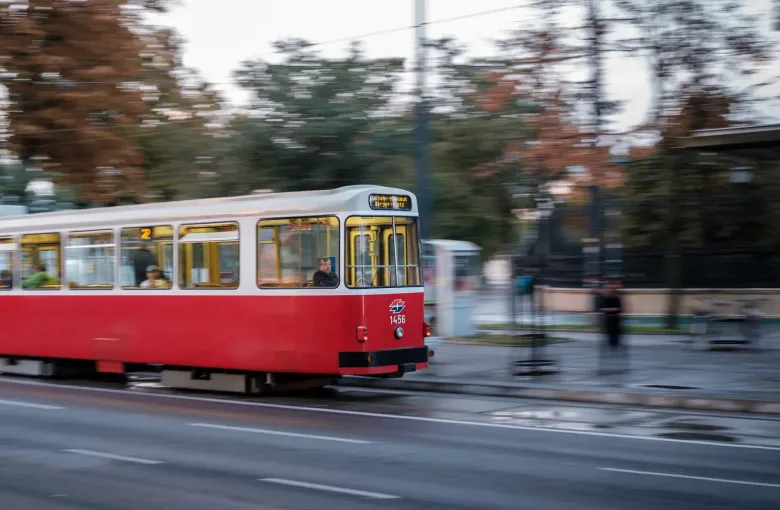
On public transport in Austria you must validate your ticket in a machine before you start your journey. Buying the ticket is not enough. If you travel with an unvalidated ticket you can be given an on-the-spot fine of 100 to 500 euros, and the inspectors are not in uniform.
This catches visitors on their first morning more reliably than any crime in this guide. There are no barriers on the Vienna U-Bahn, which is exactly why people assume there is nothing to do.
Drugs
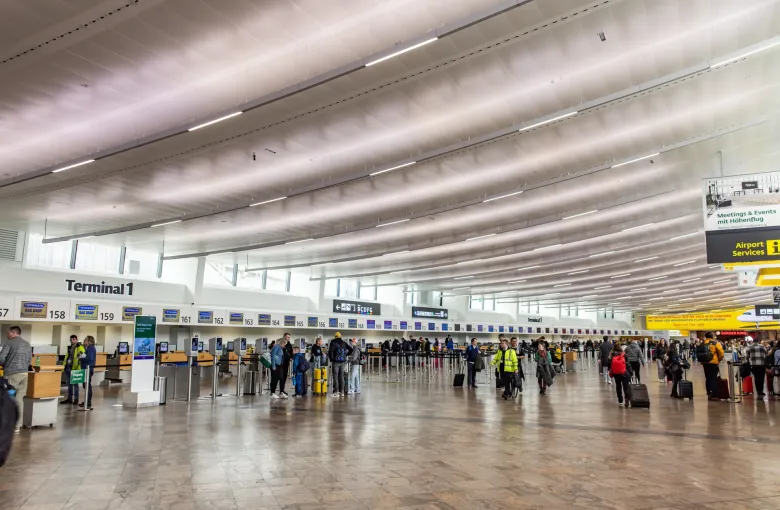
Illegal drugs, including cannabis, carry severe penalties: expect a long prison sentence and heavy fines for possessing, using or smuggling them, including while transiting an airport. Austrian airports have effective detection technology and it is used on the baggage of transiting passengers as well as arriving ones.
If you are going into the mountains
For skiing, potholing, mountaineering, and anything classed as particularly dangerous such as off-piste skiing, mountain biking, climbing or paragliding, check that your insurance covers that specific activity and that it includes mountain rescue services, helicopter costs, repatriation to your country of residence, and transfer to a neighboring country for treatment. Use a well established operator. Check the forecast and conditions, and be equipped for the worst case: map, compass, GPS and a means of communication.
Health and medical care
The emergency medical number in Austria is 112. Ask for an ambulance. Contact your insurer or medical assistance company promptly if you are referred to a medical facility.
On vaccines, the US Centers for Disease Control and Prevention advises being up to date on all routine vaccines before any trip, and lists chickenpox, diphtheria, tetanus and pertussis, influenza, measles, mumps and rubella, polio and shingles among them. Its Austria page names measles and rabies as risks worth reading about. Talk to a clinician four to six weeks before you fly if you can.
Verify Before You Travel
Read these yourself before you go, because both change and neither is long.
- The UK Foreign, Commonwealth & Development Office Austria pages, for the terrorism assessment, the crime picture and the two laws above.
- The US Centers for Disease Control and Prevention Travelers' Health page for Austria, for vaccines and health risks.
Sources
- UK Foreign, Commonwealth & Development Office: Austria travel advice: no advisory against travel to any part of the country. Accessed 16 September 2026.
- UK Foreign, Commonwealth & Development Office: Austria safety and security: the terrorism assessment and the attacks of February 2025 in Villach and November 2020 in Vienna, pickpocketing in city centers and parks, drink spiking, the requirement to have easy access to your passport, the refusal of a driving license as official ID, the face-covering ban and its fine, the public-transport ticket validation fine, and mountain rescue insurance. Accessed 16 September 2026.
- UK Foreign, Commonwealth & Development Office: Austria health: the emergency medical number. Accessed 16 September 2026.
- US Centers for Disease Control and Prevention: Travelers’ Health, Austria: routine vaccines, measles and rabies. Accessed 16 September 2026.
Other Articles
Getting Around Austria
Austria Visa and Entry Requirements