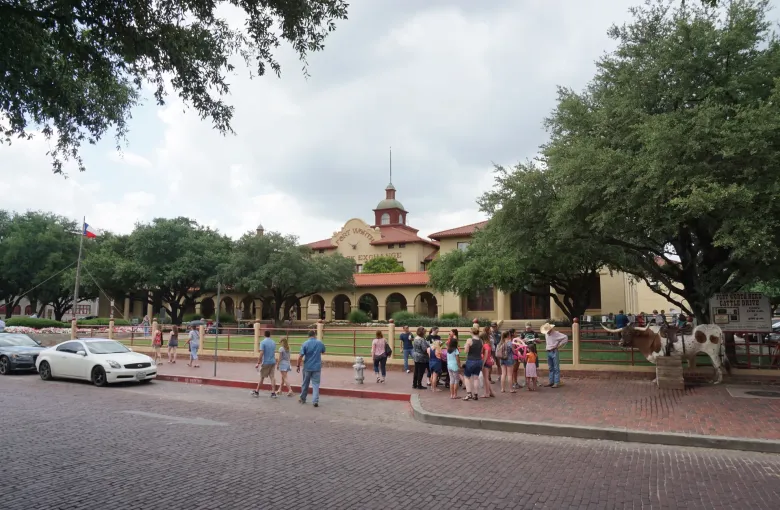
Texans are known for friendliness, and visitors usually find the reputation earned. People say hello to strangers, hold doors and start conversations in line. Behind the easy manner is a strong sense of place: Texas was part of Spain and Mexico, was an independent republic from 1836, and keeps those layers of history visible in its missions, battlefields, courthouses and small towns.
Many roots, one state
Tejano and Mexican American culture shapes much of South and Central Texas, in its food, music, language and faith. African American communities have deep roots across East Texas, Houston, Dallas and Galveston, where Juneteenth began. German and Czech settlers founded Hill Country towns such as Fredericksburg and New Braunfels, and their bakeries, dance halls and Main Streets are still there. Today's cities add Vietnamese, Indian, Nigerian and many other communities. English is the common language everywhere, and Spanish is widely spoken; a few words of Spanish are always appreciated.
Everyday courtesy
- Greetings matter. A "good morning" or a nod to strangers is normal, and service staff often call customers "sir" or "ma'am". It is politeness, not formality.
- Small talk is part of the transaction. A chat at the register or the gas pump is friendly, not nosy.
- Tipping follows the national custom and is part of how service workers are paid.
- Pride is real. Texans tease each other's cities and teams, but a visitor mocking the state rarely lands well.
Dance halls and live music
Old dance halls are one of the great Texas experiences. Couples move counterclockwise around the floor in a two step, so if you are not dancing, stay off the floor's outer lane. It is normal to ask a stranger to dance and normal to say no politely. Many halls welcome beginners and some offer lessons early in the evening.
Rodeo and the stock show
At a rodeo, stand and remove your hat for the national anthem and for any opening prayer. Cheer for every rider and roper, including those who do not score. At a stock show, the animals in the barns belong to young exhibitors, many from farm families, so ask before touching any of them.
Churches, missions and memorials
The mission churches of San Antonio are places of worship as well as historic sites. Dress modestly, keep your voice low, and if a service is underway, wait or come back rather than walking through it or taking photos. At the Alamo, at San Jacinto and at other battlefields and memorials, behave as you would at a cemetery: these are places of loss as well as of pride.
Firearms and private land
You may see signs at the entrance of businesses about whether firearms are permitted inside. Respect them. Much of Texas is private land, so stay on public roads and trails, and never cross a fence or a gate without permission.
The Capitol and public life
The Texas Capitol in Austin, a National Historic Landmark since 1986, is open to visitors with free guided tours. Texans take their state government and its history seriously, and the Capitol is a good place to see that pride on display.
Sources
- Ethnologue: United States: the language record for the country, with 199 living indigenous languages and 42 living non-indigenous languages established within it, English among them. Accessed 11 October 2026.
- Texas Parks and Wildlife Department: Lyndon B. Johnson State Park and Historic Site: no entrance fees, and the Sauer-Beckmann Farm, a living history German farm. Accessed 11 October 2026.
- State Preservation Board: The Texas Capitol: listed on the National Register of Historic Places in 1970 and designated a National Historic Landmark in 1986. Accessed 11 October 2026.
Other Articles
Texas and African American Heritage Travel

Texas Festivals and Events