The short version
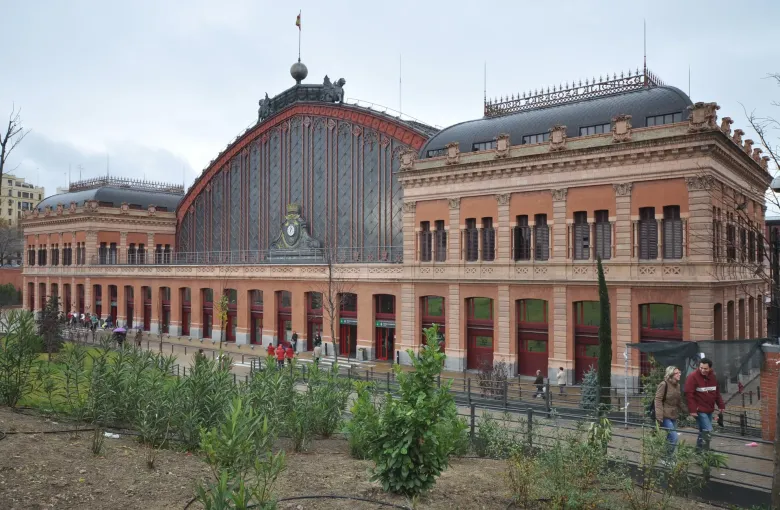
Spain is two countries for this purpose. The modern layer, meaning high-speed rail, newer metro lines, airports, purpose-built museums and most hotels above a certain size, is good and improving. The historic layer, meaning the quarters that are the reason people come, is medieval, cobbled and frequently steep, and no amount of goodwill changes the gradient of the Albayzin.
⚠ Our sources for this cluster carry no accessibility information for Spain, so nothing on this page is a sourced guarantee. It is a set of questions to ask and constraints to expect, and every booking needs confirming with the operator or the monument itself.
The ground, honestly
Granada's Albayzin climbs continuously on rough cobbles and narrow lanes with no consistent sidewalk. Toledo, Cuenca and Ronda are built on rock and reached by hill. Seville and Cordoba are flat, which makes them the easier pair in Andalusia, but their historic streets are paved in stone that is uneven and slick after rain. Barcelona's Gothic Quarter is flat and narrow; its Gaudi apartment buildings were built as homes, with the stairs and landings of homes.
This is worth reading before choosing a base rather than after. A flat city with good transport and day trips out is a stronger plan than a hilltop town with a view.
Trains
The high-speed network is the best-adapted part of Spanish travel: level boarding at most major stations, staffed assistance that can be booked in advance, and space for a wheelchair in the carriage. Book the assistance service when you book the ticket, not on the day, and arrive with the margin the operator asks for. Regional and commuter services vary far more, and a small station may have a platform and nothing else.
City transport
Metro accessibility in Spain is a station-by-station question rather than a network one. Newer lines and outer stations are usually step-free; deep central stations in the oldest parts of the network are often not, and a line can be usable at one end of your journey and not at the other. Check the specific stations on the operator's own map before you rely on them. City buses are frequently the better answer, because low-floor buses with ramps are now common and a bus is a street-level vehicle.
Funiculars and public lifts exist in several cities precisely because of the hills, and they are worth planning around rather than treating as a novelty: they are how residents avoid a climb.
Monuments and museums
Ask each one directly, and ask specifically. The useful questions are whether there is a step-free route rather than an accessible entrance, how far the route is from the nearest drop-off point, whether the route covers the whole site or only part of it, whether a companion ticket is available, and whether a manual or powered chair makes a difference on their surfaces. Purpose-built museums generally answer these well. A Nasrid palace, a hypostyle hall and a hilltop fortress answer them partially at best, and they tend to be honest about it if asked.
Hotels
Ask for measurements rather than a label. Doorway widths, whether the bathroom has a level-access shower or a bath, whether the bed height suits you and whether the route from the street to the room involves a step are all answerable questions, and an adapted room in a converted historic building is not the same thing as an adapted room in a new one. Confirm in writing.
Practical points
Bring spare parts and a repair plan for any equipment, because a wheel or a charger is not quickly replaced in a small town. Bring medication in original packaging with a copy of the prescription, as our packing list covers. Confirm what your travel insurance covers for equipment and for medical repatriation before you leave.
Plan the day around the heat as well as the terrain: the UK advisory notes that extreme weather affects much of Spain in summer and asks travelers to check AEMET's warnings, and heat compounds every other constraint on this page. 112 reaches the emergency services anywhere in the country.
Read this with our guide for older travelers, which covers pacing and the same gradients from a different angle, and our transportation guide for the network itself.
Sources
- UK Foreign, Commonwealth & Development Office: Spain travel advice: no advisory against travel to any part of the country, and no standing warning at the head of the advisory. Accessed 16 September 2026.
- UK Foreign, Commonwealth & Development Office: Spain safety and security: street theft and distraction teams, vehicle crime, the identification requirement, regional alcohol and swimwear rules, balconies, taxis, driving rules, wildfires and extreme heat. Accessed 16 September 2026.
Other Articles
Spain for Older Travelers
The Works of Antoni Gaudi, Barcelona