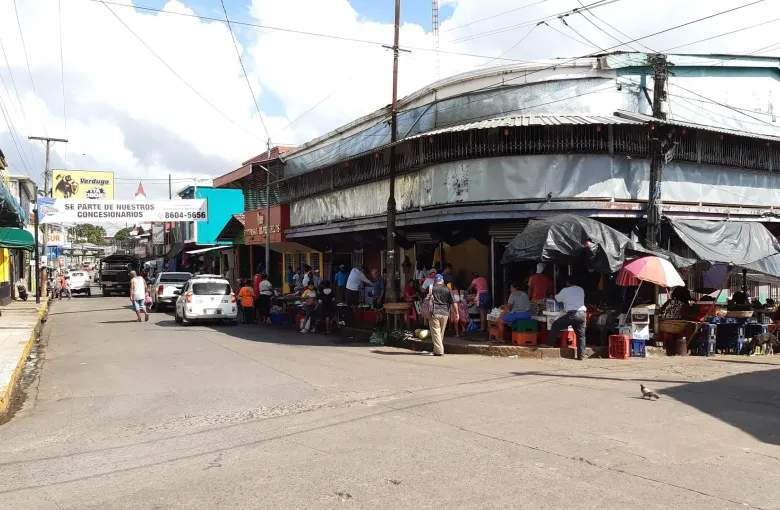
There are two Nicaraguan cuisines and they do not overlap much. The Pacific side is built on corn, beans, yuca, pork and beef, cooked simply and served in large portions. The Caribbean side cooks with coconut milk, seafood and root vegetables, and belongs to the wider Caribbean rather than to Central America.
The dishes worth learning by name
- Gallo pinto. Rice and beans fried together, eaten at breakfast with egg, cheese and fried plantain. The national staple, and every household argues about it.
- Vigoron. The signature dish of Granada: boiled yuca with chicharron and a sharp cabbage and tomato curtido on top, traditionally served on a banana leaf. Eat it in the market it comes from.
- Nacatamal. A large corn dough parcel with pork, rice, potato and vegetables, wrapped in plantain leaf and steamed for hours. Weekend food, usually eaten on a Sunday morning.
- Quesillo. Soft cheese in a warm tortilla with pickled onion and cream, sold from roadside stands. Nagarote and La Paz Centro on the Leon road are where people stop for it.
- Guirila. A sweet young corn pancake, usually eaten with cuajada, a fresh curd cheese.
- Indio viejo. Shredded beef cooked down with corn dough into a thick, deeply savory stew.
The Caribbean coast is a different kitchen
In Bluefields, Pearl Lagoon and on the Corn Islands the base is coconut milk. Rondon, a slow simmered stew of fish or seafood with cassava, plantain and coconut, is the dish to look for, and the local way with lobster and snapper is worth planning meals around. Coconut bread and pan de coco belong here too. If you have eaten only on the Pacific side you have not eaten Nicaraguan food. The Bluefields and Caribbean coast guide in this cluster covers how to get there.
Drinks
Fresh fruit juices are everywhere and excellent. Pinolillo, a drink of ground corn and cacao, is the one to try for the sake of trying it and is genuinely national. Nicaraguan rum has a strong reputation, and the coffee from the highlands around Matagalpa and Jinotega is very good and much cheaper at source than it will ever be at home.
Eating well and safely
Street food and market comedores are where the good eating is, and the usual travel sense applies rather than avoidance. Eat where there is a queue of local customers and a fast turnover, choose food cooked in front of you and served hot, and be more careful with things that have been sitting out. Peel fruit yourself.
Ask locally about the tap water rather than assuming one answer for the whole country, and default to sealed bottled or properly treated water where you are unsure. That matters more on the Caribbean side and in rural areas than in the main Pacific cities.
Practicalities
Lunch is the main meal and comedores serve a set plate at midday that is both the cheapest and often the best thing you will eat that day. Vegetarians do reasonably well with gallo pinto, cheese, plantain and yuca, though you should say so clearly, since a dish described as vegetarian may still be cooked with meat stock. Carry small notes: market food is cheap and change for a large bill is a nuisance.
Sources
- UK Foreign, Commonwealth and Development Office: Nicaragua safety and security: the record that it is illegal for foreigners to take part in any sort of political activity, that arrest, detention or deportation can follow from anything seen as acting against the government including campaigning or protesting with the national flag or colors, the express kidnapping risk attached to unauthorized taxis and the advice to use a radio dispatched taxi or an authorized taxi with red plates with the driver's ID number, name and photograph visible on the dashboard, the advice to avoid colectivos and never to take a taxi called by a stranger, the assault risk in changing money on the street, the prohibition on the possession and use of drones under Law 1230 of December 2024, the rule that right hand drive vehicles may not be driven or imported, the likelihood of detention after a serious or fatal road traffic accident, the absence of street lighting on the main highways, the hurricane season from June to November, the active volcanoes San Cristobal, Masaya, Cerro Negro, Telica and Concepcion, the fatalities from scuba diving off the Caribbean coast, and the record that the country's only hyperbaric chamber is in Puerto Cabezas, a 5 hour speedboat ride from Corn Island. Accessed 17 September 2026.
- Centers for Disease Control and Prevention: Nicaragua traveler health: a yellow fever record under which the vaccine is not recommended for travel to Nicaragua while a certificate is required of travelers arriving from a country with risk of transmission, and a malaria record naming the Region Autonoma Atlantico Norte and the Region Autonoma Atlantico Sur as transmission areas, rare cases in the departments of Boaco, Chinandega, Esteli, Jinotega, Leon, Matagalpa and Nueva Segovia, and no malaria transmission in Managua. Accessed 17 September 2026.
Other Articles
Nicaragua Culture and Etiquette Guide
Nicaragua Festivals and Celebrations