The quick answer
Kenya sits on the equator and is not uniformly hot, because most of the country people visit is high. Nairobi is cool enough for a jacket in the evening every month of the year. The Rift Valley floor, the northern rangelands and the coast are all much warmer. Rain arrives in two seasons rather than one, and neither is a monsoon in the sense of days of continuous downpour.
Four Kenyas, for weather purposes
The central highlands, including Nairobi
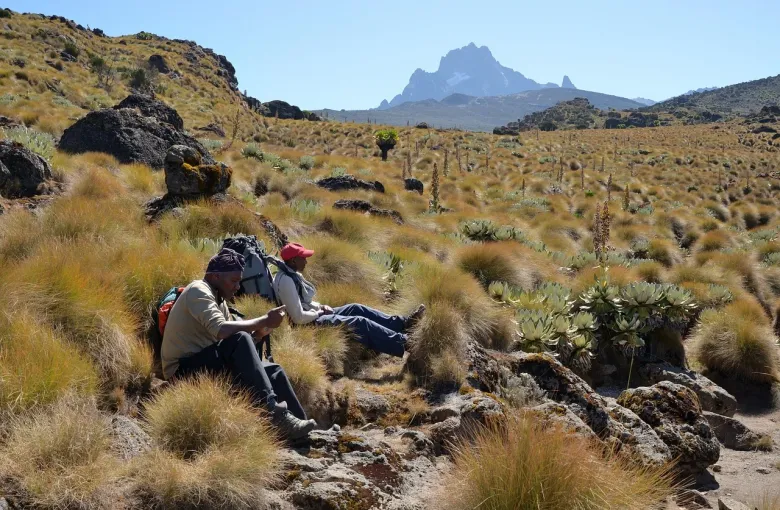
High enough that altitude, not latitude, sets the temperature. Warm bright days, cool evenings, and mornings that are genuinely cold in the dry season. Rain falls in the two wet seasons and is usually an afternoon event. Visitors consistently arrive under-dressed for the evenings here, because "equatorial Africa" does not sound like somewhere you need a fleece.
The Rift Valley and the southern parks
Warmer than Nairobi and drier. The Maasai Mara and Amboseli are open country with strong sun, big skies and very little shade once you leave the vehicle. Amboseli in particular is dusty in the dry months, and the dust is fine enough to reach a camera bag that has been left open.
The coast
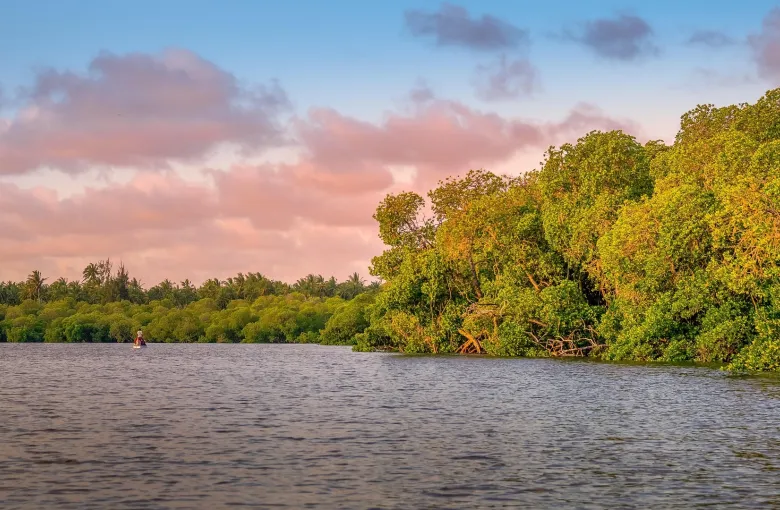
Hot and humid all year, moderated by the sea breeze and shaped by the monsoon winds rather than by the highland seasons. Humidity is the thing that surprises people arriving from the highlands on the same day: the temperature difference is noticeable, the difference in how it feels is larger.
The north
Hot, arid and much drier than anywhere else in the country. Rain is unreliable rather than seasonal. Days are severe and nights can be cold. This is a different kind of trip and needs different preparation.
The two rainy seasons
The Kenya Meteorological Department distinguishes the long rains, falling roughly from March into May, and the short rains, roughly from late October into December. The long rains are heavier and more sustained; the short rains are typically an afternoon storm that clears. Neither reliably prevents travel, and both vary considerably by region and by year — the highlands, the lakeshore in the west and the coast do not receive them in the same measure or always at the same time.
The cold morning nobody packs for
A game drive leaves before dawn in an open-sided vehicle, and at highland altitude in the dry season that is cold — not brisk, cold. By ten in the morning the same person is looking for shade. This single daily swing catches out more visitors than any other feature of Kenyan weather, and it is entirely solved by layers you can shed. Most camps put a blanket in the vehicle; not all of them do.
Sun, dust and what the forecast will not tell you
Equatorial sun at altitude is stronger than the air temperature suggests, and the plains have no shade. A day that reads as mild can burn badly. Dust is the other unreported variable: in the dry season the tracks are powder, and anyone with contact lenses, asthma or a camera with interchangeable lenses will want to plan for it.
Common questions
Does rain cancel a safari?
Rarely. It can shorten a drive, and it can make an unsurfaced track impassable in the long rains. Camps plan around it.
Is Nairobi hot?
No. Visitors are routinely surprised by how cool it is, particularly in the middle of the year.
How different is the coast, really?
Enough that you should pack for two climates. A fleece that is essential at dawn in the Mara is dead weight in Mombasa.
Seeing it on a LABUSA Travel journey
Our Kenyan itineraries are shaped around the daily temperature swing rather than in spite of it — early starts while the animals are active and the light is good, the hot middle of the day spent somewhere shaded, and a second drive when the light softens again.
Other Articles
Best Time to Visit Kenya
Kenya Packing List