The quick answer
There is no such thing as Italian food. There is Roman food, Neapolitan food, Bolognese food, Sicilian food, and a hundred more, and the differences are not decorative. A dish that is a birthright in one city is unknown a hundred kilometers away. Eat what the place you are standing in is famous for and you will rarely eat badly.
Region by region, briefly
- Rome and Lazio. Four pasta dishes built on the same few ingredients: carbonara, cacio e pepe, amatriciana and gricia. Offal, artichokes, and Jewish Roman cooking in the old ghetto.
- Naples and Campania. Pizza in its original form, cooked fast in a very hot oven and served soft rather than crisp. Tomatoes, buffalo mozzarella, seafood and the best coffee in the country.
- Florence and Tuscany. Bread without salt, soups made from it, beans, and the enormous grilled bistecca alla fiorentina, which is ordered by weight and shared.
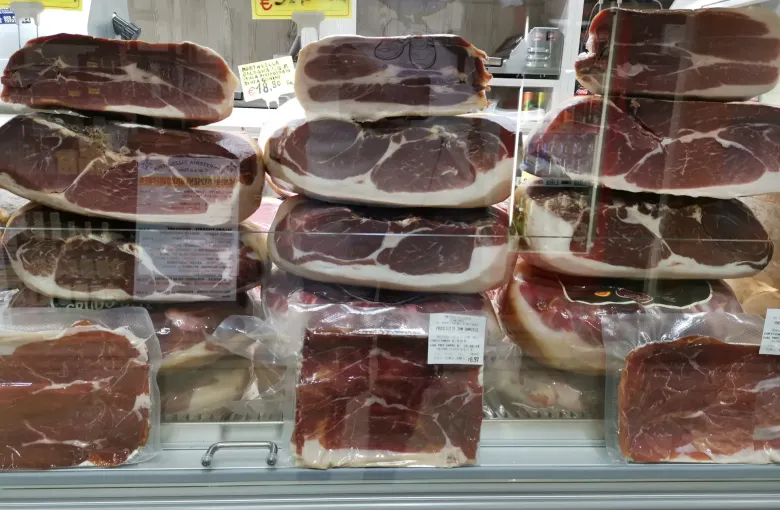
- Bologna and Emilia-Romagna. The rich end: egg pasta, ragù, prosciutto, parmigiano, balsamic vinegar. Ask for tagliatelle al ragù rather than spaghetti bolognese, which is not a local dish.
- Venice and the Veneto. Lagoon seafood, risotto, polenta, and cicchetti, the small plates eaten standing in a bacaro with a glass of wine.
- Sicily. Arab, Norman and Spanish layers at once: citrus, almonds, pistachio, sardines with raisins, granita for breakfast, and pastry that has no northern equivalent.
How a meal is built
A full restaurant meal runs antipasto, primo (pasta, risotto or soup), secondo (meat or fish) with contorni (vegetables ordered separately), then dolce and coffee. Nobody expects you to eat all of it. An antipasto and a primo is a perfectly normal order. What is unusual is treating pasta as a side dish next to a main: the primo comes before the secondo, not with it.
Lunch is roughly one to two thirty, dinner from about eight, later the further south you go. A kitchen that is open at six in the evening is usually cooking for tourists.
Coffee, and the rules that are only customs
A caffè is an espresso. A cappuccino is a breakfast drink, and Italians rarely order one after a meal, on the reasoning that a lot of hot milk after eating is heavy. No one will stop you, and no waiter will be rude about it: this is a habit, not a law, and it is worth knowing mostly because it explains the menu. Coffee is drunk quickly, standing at the bar, and costs less that way than at a table.
Aperitivo
The early-evening drink with something to eat alongside it, strongest in Milan, Turin and Venice. At its simplest, a spritz and a bowl of olives and crisps; in Milan it can extend to a buffet substantial enough to replace dinner. It is the most sociable hour of the Italian day and the easiest way for a visitor to eat well cheaply.
Finding the good places
The reliable signals are ordinary: a short menu that changes, a handwritten or daily sheet, Italian voices in the room, a kitchen that keeps Italian hours, and no photographs of the food outside. The warnings are equally ordinary: a menu translated into six languages with pictures, someone standing outside inviting you in, and a location with a direct view of a world-famous monument. Walk five minutes away from the sight and the prices fall and the cooking improves.
Water, gelato and dietary needs
Tap water is safe and public fountains are widespread; bottled water at the table is a habit rather than a necessity. For gelato, look for muted colors and covered tubs rather than bright peaks. Italy is unusually good on celiac disease, which is screened for in childhood and widely understood, so senza glutine is a phrase that gets a competent answer. Vegetarians eat well almost everywhere; vegans do best in the cities and should ask rather than assume, since stock and cheese appear where you would not expect them.
Planning with LABUSA Travel
We build meals into the itinerary that belong to where you are that day, including a cooking class on the Essence of Italy route, and we tell restaurants about dietary needs in advance and in Italian.
Sources
- ENIT, Italian National Tourist Board: the official destination, region and practical visitor information for Italy. italia.it. Accessed 11 August 2026.
- US Centers for Disease Control and Prevention: Travelers’ Health, Italy: vaccination and food and water guidance. wwwnc.cdc.gov. Accessed 11 August 2026.
Other Articles
Italy Culture and Etiquette Guide
Italy Festivals and Celebrations