The quick answer
Most visitors to Egypt need a visa, and there are three ways to get one: online through the official government e-Visa portal, on arrival at the airport, or in advance through an Egyptian embassy or consulate. Which of those is open to you depends on the passport you hold. This page explains how the system is put together and what is usually asked for; it does not tell you what applies to you, because only the Egyptian authorities can, and what they require can change between one trip and the next.
Check your own case on the official portal and with your airline before you book anything that cannot be refunded. The sources at the foot of this page are the ones that govern.
Who needs a visa
Egypt sets entry requirements by nationality, and the categories are not intuitive: some passport holders are exempt for short stays, some can be issued a visa at the airport, some must apply before they travel, and some need approval that takes time to obtain. Holding a residence permit somewhere other than your country of citizenship can change the answer, and so can traveling on a passport that is close to expiry.
Two places give you the real answer. The first is the official Egyptian e-Visa portal, which is the authority. The second is the IATA Travel Centre, which matters for a different reason: it is the reference airlines actually apply at check-in. An airline that believes you lack the right documents will not board you, whatever the rules say, so it is worth being sure both agree before you go to the airport.
If you are traveling as part of a group, do not assume the group shares one answer. Different passports in the same party routinely need different things.
How to apply
The official e-Visa portal
Egypt runs an official government portal for electronic visas. Apply there, and only there.
⚠ There are a great many commercial sites that resemble official visa portals, rank well in search results, and charge a substantial markup for submitting an application you could have made yourself — and some collect passport data with no reason to hold it. The official portal address is in the sources at the foot of this page. Reach it from there or from your own government’s travel advice page, not from a search result.
Visa on arrival
Many nationalities can be issued a visa at the airport on arrival, bought at a bank counter in the arrivals hall before you reach immigration. It is straightforward when it applies. It is also the option with the least margin for error: if you are refused, you are refused at the border rather than at home with time to fix it. Travelers who want certainty apply in advance.
Through an embassy or consulate
The route for nationalities that need approval before travel, and for anyone applying for a visa type the portal does not issue. Allow considerably more time than you think you need.
What a tourist visa usually looks like
The common shape is a single-entry visa permitting a stay of about thirty days, with a multiple-entry version available for travelers who will leave and re-enter — a trip that crosses into Jordan or Israel and comes back, for instance. Treat that as the usual shape and not as your case. Validity, permitted stay and the number of entries are set per visa type and can change, and the portal states the current terms.
Documents required
What is asked for at the point of application and again at check-in is fairly consistent, and it is sensible to have all of it whether or not you are asked:
- A passport with comfortable validity remaining beyond your intended departure. Six months beyond entry is a common requirement across the region and a safe target; a passport with only a few weeks left is a reliable way to be turned back at check-in.
- At least one blank page for stamps.
- Your e-Visa confirmation, printed as well as on your phone. Batteries fail and airport wifi is not a plan.
- Proof of onward or return travel. Frequently requested, sometimes not, easy to have ready.
- Accommodation details for at least the first part of the stay.
- Travel insurance documents. Not always required, and worth carrying regardless.
Take photographs of your passport, visa and insurance and keep them somewhere you can reach online, separately from the originals. It costs nothing and it is what makes a lost passport a bad afternoon rather than a lost week.
On arrival
You will clear immigration, have your passport stamped, and pass through customs. Keep the entry stamp intact and keep your passport with you; hotels may ask to see it at check-in.
The Sinai-only arrangement
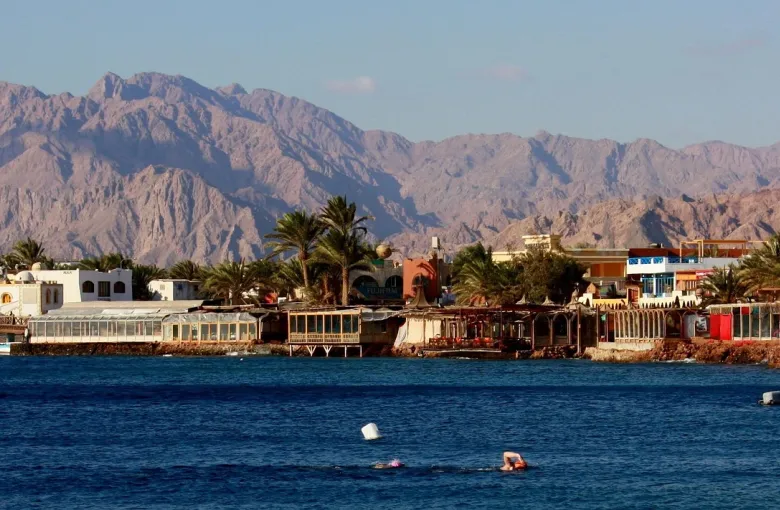
This is the single most misunderstood thing about entering Egypt, and it is structural rather than a rule that changes often. Travelers arriving at Sharm el-Sheikh and staying within the South Sinai resort area — Sharm, Dahab, Nuweiba, Taba and the Saint Catherine area — have long been able to enter under a free entry permit rather than a full visa. It is convenient if a Red Sea holiday is your whole trip.
What catches people is what it does not cover. That permit does not admit you to the rest of Egypt. If you intend to see Cairo, the pyramids, Luxor or the Nile, you need a full visa — and deciding halfway through the week that you would like to visit Giza is exactly when people discover the difference. If there is any chance you will leave the resort area, get the full visa. Confirm the current terms before you travel; the arrangement has been adjusted before.
Length of stay, extensions and overstaying
Your permitted stay is what the visa says, not how long your flight home happens to be. If you need longer, extensions are handled by the Egyptian passport authorities and are applied for inside the country, before the visa expires rather than after. Overstaying carries penalties and can create difficulty on departure and on any future application. If your plans change, deal with it while it is still an administrative matter.
Health requirements
Entry health requirements and travel health advice are two different things, and only the first belongs to immigration.
The one that is a genuine entry requirement is yellow fever. Where it applies, it is determined by where you have been, not by where you are from: travelers arriving from, or who have recently transited, countries with a risk of yellow fever transmission may be required to show a valid vaccination certificate. Anyone routing through sub-Saharan Africa or parts of South America should check this carefully, because a missing certificate is refused at the border rather than argued about.
Everything else — routine vaccinations, hepatitis, typhoid, rabies, what is sensible for your own history and itinerary — is travel health advice rather than an entry rule. See a travel clinic six to eight weeks before departure. The CDC and your own national health service publish current recommendations for Egypt.
Common questions
Can I apply once I have booked, or should I do it first?
Confirm what you need before you book anything non-refundable. Apply once your dates are fixed and well ahead of departure, so a delay is inconvenient rather than expensive.
My passport expires four months after I return. Is that a problem?
Possibly. Six months beyond entry is the target most travelers should work to. Renew rather than gamble on it.
I am only going to Sharm el-Sheikh. Do I need a visa at all?
Perhaps not, if you stay inside the South Sinai resort area — and yes, if you leave it for any part of the trip. See the section above, and decide before you travel rather than at the hotel desk.
Does LABUSA Travel obtain the visa for me?
No. Your visa is between you and the Egyptian authorities, and it stays that way. We tell you what your itinerary requires and when to act, which is the part people get wrong.
Before you rely on any of this
This page describes how Egypt’s entry system is arranged. It is not a statement of what applies to your passport today, and it is not maintained in real time. Requirements change without notice, and the official sources listed below are the ones that govern. Check them, and check with your airline, before you travel.
Seeing it on a LABUSA Travel journey
Every itinerary we send includes what the trip asks of your documents and the point in the calendar by which you need to have acted — earlier than most people expect when a group is traveling on several different passports. The application itself is yours to make, on the official portal.
Other Articles
Egypt Travel Safety Guide

Best Time to Visit Egypt