The short version.
Australia is about the size of the continental United States with a fraction of the population, and almost all of that population lives around the edge. Getting around is therefore two different problems: moving between cities, which mostly means flying, and moving within or beyond one, which is where the published advice becomes unusually specific.
Between cities, assume flying.
Sydney to Perth is further than New York to Los Angeles. Melbourne to Cairns is a long haul by any measure. Itineraries built on the assumption that a rental car can join the dots the way it does in Europe tend to collapse on contact with a map, and the usual remedy is to fly the long legs and drive the short ones.
Within the big cities, public transit is the sensible default for a visitor. Melbourne's trams, Sydney's trains and ferries and the bus networks elsewhere all run on stored value cards or contactless payment, and they remove the two worst parts of a city rental: parking and one way streets.
What you must carry when you drive.
The UK Foreign, Commonwealth and Development Office safety advice states that you must carry your driving license and passport when driving in Australia. Both documents, in the vehicle, whenever you are at the wheel.
That is worth flagging because the same source gives the opposite instruction for everyday life, advising travelers to keep valuables and their passport in a hotel safe and to carry a photocopy for identification. Both are true at once and they are not in conflict. Day to day, leave it in the safe. Driving, take it with you.
The rental exclusion that costs real money.
The same advice records that hire car insurance often does not cover driving on unsurfaced roads. A great many of the places people rent a vehicle in Australia to reach sit at the end of a dirt road, so this is a live exclusion rather than fine print. Ask at the counter, name the roads you intend to drive, and get the answer written on the agreement. A rollover on gravel with a void policy is the single most expensive thing that can happen on an Australian self drive trip.
Remote driving, where the advice gets concrete.
For travel away from the cities the safety advice is specific in a way travel advice usually is not. It records that you need 2 spare tires, that you should stay with your vehicle if it breaks down, and that cell coverage away from cities can be very limited or non-existent.
Take all three literally. Two spares, because one is a common failure and two is not rare on sharp gravel. Staying with the vehicle, because a car is visible from the air and a person walking in the heat is not, and because almost every fatal outcome in this scenario involves somebody setting off on foot. And no coverage, because it means telling somebody your route and your expected arrival time is not a formality, it is the safety plan.
Carry far more water than the drive appears to need, fuel up whenever you can rather than when you must, and plan the day around reaching the next town in daylight.
Driving on a beach, which is a real thing here.
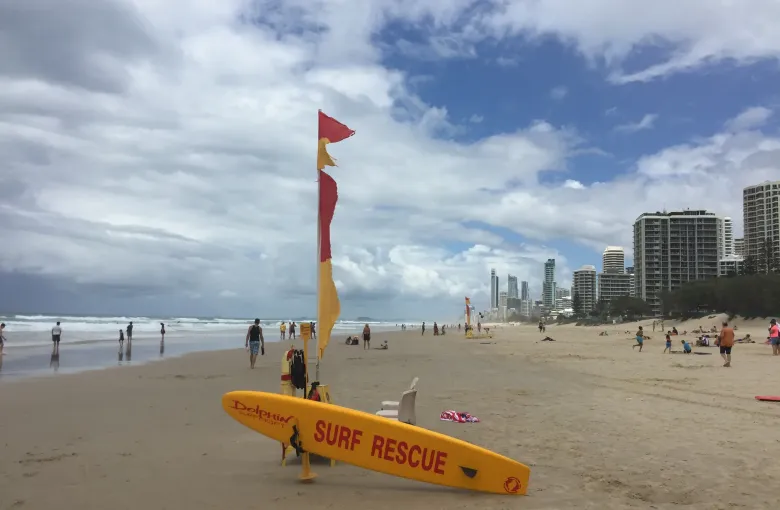
Some Australian beaches are gazetted roads. The same advice gives the limits as 80km/h on beaches and 30km/h in towns in those areas. If the itinerary includes a beach drive, check the tide before you check anything else, because the window is set by the water rather than by the clock.
Before you book the vehicle.
The office's general advice for Australia notes that no travel can be guaranteed safe and advises appropriate travel insurance. On a self drive itinerary that means checking the policy covers driving, covers the vehicle class, and covers the roads you actually intend to use. Tell us the route and we will tell you which legs are worth flying.
Sources
- UK Foreign, Commonwealth and Development Office: states that terrorists are likely to try to carry out attacks in Australia and records that 15 people were killed in an antisemitic terrorist attack at Bondi Beach, Sydney in December 2025 and that several people were injured in a terrorist incident at a church in Wakeley, Sydney in April 2024, records that you need a prescription to buy e-cigarettes containing liquid nicotine and that vaping laws differ between states and are under review, that it is illegal to smoke in enclosed public spaces, that drug offenses can bring a lengthy prison sentence and deportation, that you must carry your driving license and passport when driving, that remote road travel needs 2 spare tires and that you should stay with your vehicle if it breaks down, that beach driving limits are 80km/h on beaches and 30km/h in towns, that bushfire risk is highest from November to February, that rip currents are the main hazard at the beach, that Queensland law requires a medical declaration for diving or snorkeling, that crocodiles, jellyfish, sharks, venomous insects, spiders and snakes are present, that cell coverage away from cities can be very limited or non-existent, and that hire car insurance often does not cover driving on unsurfaced roads. Accessed 22 September 2026.
- UK Foreign, Commonwealth and Development Office: states that no travel can be guaranteed safe and advises taking out appropriate travel insurance before departure. Accessed 22 September 2026.
Other Articles
Staying Safe in Australia

What to Pack for Australia