Destination Guides · LABUSA Travel Journal
Experience the Great Migration - Wildlife and Maasai Culture
Imagine standing on the Serengeti at sunrise. The air is cool and smells like fresh earth. The sky slowly changes from dark blue to golden yellow.
Everything is quiet. Then you feel something - a soft rumble under your feet, like faraway thunder.
Suddenly, the land starts moving.
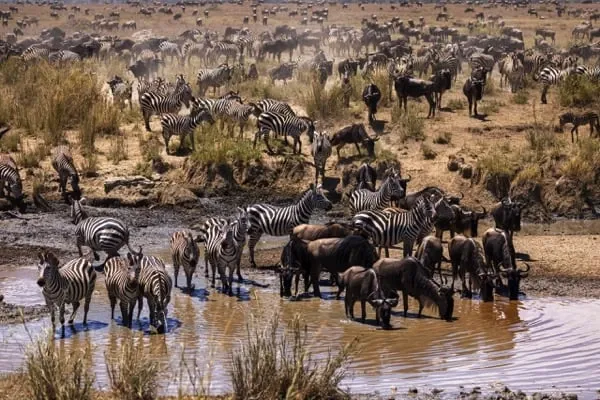
You see shadows in the distance. They become shapes. Then you realize - it's hundreds of thousands of wildebeest, joined by zebras and gazelles, moving across the plains.
This is the Great Migration.
What Really Happens During the Migration?
Every year, hundreds of thousands of wildebeest travel 800 to 1,000 kilometers between Tanzania’s Serengeti and Kenya’s Maasai Mara. Scientists once thought there were 1.3 million, but a 2025 study using satellites and AI suggests the number might be closer to 600,000. Even so, the sight is breathtaking (Duporge, 2025).
Survival Keeps Them Moving
The herds follow the rains. When new grass grows in one area, the wildebeest move there to eat. When the grass runs out, they continue onward. There is no leader - just instincts passed down through generations guiding every step (Duporge, 2025).
Here's Where Things Get Tough
From January to March, the southern Serengeti turns into a nursery, with thousands of calves born in February. By July and August, the herds move north and must cross rivers like the Grumeti and the Mara. These crossings are tough, and many animals struggle, but this is all part of the migration’s natural cycle (Expert Africa, n.d.).
The Migration Holds It All Together
This migration is vital for the land. Predators like lions and crocodiles rely on it, the soil stays fertile, and the grasslands thrive. Every move of the herd affects the entire ecosystem. Watching it is like feeling Africa’s heartbeat - powerful, alive, and full of life (Duporge, 2025).
Ever Wonder Who Lives Here Year-Round?
While millions of tourists come and go to see the migration, there are people who've called these plains home for centuries - the Maasai.
Most of them live across northern Tanzania and southern Kenya. About 800,000 live in Kenya and 430,000 in Tanzania. They don’t just watch this land - they live in it and are part of its story ( Gondwana Ecotours, n.d. ).
Why Cattle Mean Everything to Them
As the saying goes, “Cattle are life.” They provide food, wealth, and a connection to tradition. Every herd and grazing field is part of who they are, their life, and their heritage (Maasai Education Foundation, n.d.). According to their beliefs, the God Enkai gave all cattle to the Maasai people to protect (Sandberg, 2024)
So what does this mean for the migration? The Maasai move with the seasons, just like the wildlife does. They practice something called transhumance - moving their livestock to find fresh grass and water. And that bright red clothing you see everywhere? It's called shúkà - it symbolizes bravery, strength, and unity (Maasai Education Foundation, n.d.).
You're Going to See Something Special
When you visit a Maasai community, you’ll see traditions that are truly remarkable. Young men perform the Adumu jumping dance, soaring high into the air to show their strength - it’s impossible not to be amazed. At the same time, women create beautiful beadwork, where every color and pattern has a meaning. Each detail is intentional, sharing the richness of their heritage (Voyage2Africa, n.d.).
Best Time to Witness the Great Migration
The Great Migration in the Serengeti is one of the most amazing wildlife events in the world - but you have to catch it at the right time.
- From December to March: The southern plains near Ndutu and the Ngorongoro Conservation Area turn into a nursery. Thousands of wildebeest calves are born over only a few weeks. Predators like lions, hyenas, and leopards follow the herds, creating tense, unforgettable moments of survival.
- Between April and June: The herds move north through the lush Seronera Valley. Male wildebeest compete during the rut, making this a lively and dramatic time. The scenery is green, and there are fewer tourists, so you can enjoy a quieter safari experience.
- From July to October: The action moves to the northern Serengeti, where wildebeest tackle the Grumeti and Mara Rivers. Fast currents and lurking crocodiles make crossings thrilling and chaotic - this is the iconic moment you’ve seen in documentaries.
Remember, the migration follows the rains, so the exact timing changes every year (TOI Lifestyle Desk, 2025).
Top Places to Explore
The Serengeti–Mara ecosystem is vast and diverse, with grasslands, forests, rivers, and rocky hills, supporting both wildlife and Maasai cultural heritage.
For Wildlife Viewing:
Mobile tented camps are your best option. These camps literally move with the herds, putting you right in the middle of the action. You'll fall asleep hearing hyenas and wake up to zebras grazing near your tent.
For Cultural Experiences:
Near Arusha and the Ngorongoro Conservation Area, you'll find Maasai villages that welcome visitors. But choose carefully. Look for community-led tourism where locals benefit directly, not staged performances for tourists. The Maasai Cultural Heritage Centre in Kenya's South Rift showcases authentic Maasai history, crafts, and traditions through festivals and exhibits.
How to Experience This Fully (The Right Way)
There are many ways to see the migration, but some experiences truly elevate it.
Wildlife Experiences:
- Hot-air balloon rides at sunrise give you incredible aerial views
- Open 4x4 game drives get you close to the herds
- Guided walking safaris (in designated areas) show you details you’d miss from a vehicle
- Night drives (in private conservancies) reveal nocturnal animals you won’t see during the day
Cultural Experiences:
- Attend traditional ceremonies only if you’re invited (never just show up)
- Learn about Maasai beadwork and what different patterns mean
- Share meals and conversations in community bomas designed for visitors
- Listen to elders explain how they read weather signs and navigate by the stars
Honor the Land and the People
This is crucial. Sustainable tourism means authentic interactions that support tribal traditions and help communities earn income. Choose tour operators who:
- Work directly with local communities
- Ensure tourism money benefits locals, not just outside companies
- Respect tribal customs and privacy
- Support conservation efforts
Remember you're a guest. The Maasai are opening their homes and sharing their culture - treat that privilege with respect.
And This Is Where LABUSA Travel Helps
At LABUSA Travel, we create trips that go deeper than typical safaris.
What We Offer:
- Custom itineraries mixing wildlife viewing with real cultural experiences
- Partnerships with conservation-focused camps and community tourism projects
- Local guides who grew up in these areas and know them intimately
- Complete trip planning - flights, permits, accommodations, all logistics
- Group travel options for families, friends, or cultural expeditions
We believe in ethical travel that benefits the places you visit. Comfortable experiences that are still authentic. Deep respect for local cultures in everything we do. Your trip should leave both you and the destination better than before.
Let's plan the African experience you've been dreaming of.
Other Articles
Where the Mountain Watches You
A Raw Encounter in Bwindi's Jungle